The life and times of Merry Khaos and her alter-ego, Kristie Grey. A romp through the inner workings of a mind in roller derby athletics, training, and business management.
To pivot line, or not to pivot line … that is the question:
Whether ‘tis nobler in the mind to suffer The speed and angles of outrageous jammers, Or take direct hits against a sea of blocks And by opposing [hopefully] stop them.
Soliloquy aside, it seems like every time blockers step on the floor between jams now, they ask themselves “No seriously, where should we go?”
The answer is inconsistent and often comes with groans from one or more players on the track. How did we get here, and what does this all mean for the newer derby player?
Come children, gather around the Snapchat, and let me spin you a tale of a different time.
Let’s remember that our sport is still under 30 years old, and most leagues that exist aren’t old enough to legally imbibe in the US. The sport has undergone rapid change and development in that time, more so than other sports since we have the global sharing of knowledge known as the internet. At the beginning, tactics spread slowly and took time for adaptation. Now teams of 20 in New Mexico can see what is happening from top coaches in Europe at any time.
The sport was originally very fast, and focused on space and forward momentum. There were two starts to a jam: one whistle to release the blockers, a second set of two whistles (like lead jam) to release the jammers. Jammers would only be released after the last blocker passed the pivot line (or one other scenario but let’s pause on that). Blockers were fast, so jammers had to be faster.
Speed was always a challenge. Thank you to my teammates for getting me out of that one & getting me lead at ECDX 2011. Photo by Jim Rhoades.
Lining up at the pivot line was advantageous in those days because the quicker you released the jammer, the quicker you could earn lead and score points. Pivots would fight for their toe on the pivot line because blockers have to establish behind the hips of a pivot in that position (still do). A pivot in a superior position from the start could run away faster, and control the speed of the pack. Derby generally moved at a racing pace as a result. Blockers had to be fast, jammers had to be ungodly fast.
This was not just because of the rules, but because honestly, most of us were not very good at skating or control back then. With little experience, you could still be successful while skating fast in a straight line. It’s way easier than the cuts, edgework, and mobility that we see today from all positions.
And star passes? I think I saw 4 total between 2009 and 2012 (and I watched a LOT of derby y’all).
Then in 2010 there was a thing introduced that changed everything: the Knee Down Start (KDS). I saw it the first time when Gotham Roller Derby did it at ECDX (I believe against Philly). High level teams figured out that the jammers would also be released if there was a no pack called, and they challenged the idea that you had to start so far away from their jammers.
2012 Pennsylvillains vs Dutchland Roller Derby. We think the photo is by Jim Rhoades (If you know otherwise, please comment!)
If the pack is closer to the jam line, and the jammers are released right away, you have more opportunity to gain lead. ESPECIALLY if the other team is not used to the strategy and spends the whole time going “What is happening?” And further if you utilize good roller skating to keep the game slow, so that your ungodly fast jammers can just do laps instead of having to catch up to a pack.
EVOLUTION BABY
KDS became so popular that WFTDA quickly removed the two whistle starts, thus removing the need to start on the ground. There are so many more strats and reasons and background but let’s just say that KDS were a brief, but vital, moment in time for the sport.
Great, so now we all start on the jam line. Now we jockey for who can be closest to the jammer to contain them at the start. So for a minute there we all fought for the BACK line. Not every jammer (It’s me, hi, I’m the problem, it’s me) loves having to avoid their team before encountering the opposition.
So now we have people starting on the pivot line in order to force the other team to be on the back line, because ALWAYS blockers would roll back to the back line on 5 seconds. Why? It’s what we did, it’s what we were comfy with, it’s what we were told we should do, and we also were told, “Well if you roll back than the other team has to adjust to you.”
Jam line start between Concussion Roller Derby and Roller Derby Toulouse at the 2025 MRDA Championships. Photo by Life Thru Argo’s Lens.
Now we’re back. History class is over, and it’s time to head into Game Psychology.
When lining up as blockers you have an array of decisions to make for your initial placement. My favorite way to have people line up on game day is HOW YOU PRACTICE LINING UP. Don’t get weird until either 1) You’re way up or 2) You’re way down.
Photo by Wik’s Pix
Advantages of starting at the Pivot Line:
You have the ability to run away from jammers & other blockers. This is especially helpful if you are defending a power start where your jammer is standing.
You are close to the turn, which is helpful when ON a power start and you want your jammer to have more space to move.
Occasionally you can catch someone on a false start or Failure to Yield by doing the Pivot-touching-the-line trick if they are unaware of their hips & the rules.
It can freak out a jammer that’s not used to having space to run.
If you have a fast & powerful jammer it gives them a head of speed.
Disadvantages of starting at the Pivot Line:
Very close to the corner when you start. In order for a run tactic to work when defending on the power start, you have to be able to guarantee that all of your blockers will be faster and more evasive than the opposition. If someone gets picked off, the opponents now control the pack in the turn, where your team is split up.
If you’re on a power start and you start at the line, but the other team does not move forward with you, you risk a Destruction Penalty AND your jammer will have a regular wall to contend with.
If your team doesn’t know the Pivot-touching-the-line trick, you may lose someone to the box.
It can freak out your jammer if they’re not used to seeing this arrangement.
If the other jammer is a powerful or super agile, you may not be able to stop them as easily when they get that full head of steam.
What else can happen when you’re starting on the pivot line?
The other team can say “Nuts to this” and draw back to the back line.
The other team can say “Nah” and go HALFWAY back.
The other team can say “Raise you” and establish on the pivot line, forcing your blockers behind them.
The other team can position themselves to box in your blockers after the first whistle, abandoning the classic line formation.
Some of the fun of derby is getting to deal with these various scenarios as a collective group of individuals. It’s why a Pod System works well for many teams – if you can get like minded blockers working together consistently, when things get weird (and they will), everyone has a similar mindset of how to contend with it.
Photo by Life Thru Argo’s Lens
So what are some options when the other team changes it up?
If they draw all the way to the back line, you can stay or you can follow. Easy enough.
If you follow, YOU MUST COMMIT TO IT. You don’t want to be caught halfway, or still moving backwards when the start whistle blows. Chase back, set, smush, derbz. If you don’t follow, make sure your whole team is on board and at that Pivot Line; no one halfway. Let the opposing team be on the Jam Line, you stay on the Pivot Line.
The whole pack AND your jammer must be mindful of the No Pack scenario that is about to occur because of the pack being split at the start of the jam. During a No Pack, no one can meaningfully engage in a block AND the back pack must make an effort to reform. The temptation is for your pack to jump backwards when they hear the No Pack Call, however you need to give it a beat.
Your jammer can take this opportunity to come through the pack as long as they don’t hit anyone significantly off balance while doing so in the No Pack situation. Since the blockers are also not allowed to engage impactfully they can’t blast your jammer either.
Photo by WiK’s Pix
Can they be moving forward to reform and still position in front of your jammer? Yes, as long as they are doing so while reforming. A No Pack is not a guarantee that your jammer goes unhindered, but often the blockers will be too busy putting their hands in the air to make an effort to disrupt your initial pass.
Doesn’t that mean we, at the top, ALSO can’t meaningfully engage during a No Pack? Yes. Do we HAVE to make an effort to reform? No, we simply cannot skate forward.
By the time the opposing jammer reaches the pivot line, there should be a pack from the back players scooting up. However, if they do not, a Failure to Reform will be called. Make sure one of your blockers is assigned to keep an eye on this so they can drop back to reform the pack before the jammers hit so the other blockers can engage.
SPEED CHESS! Isn’t it fun? Y’all keeping up?
What if the other team decides to start halfway between the Jam Line and Pivot Line? That’s kinda weird honestly. They either are very unsure of what they’re doing or
To find out if it’s a trap, drift backwards a bit. If they respond, it’s probably a trap.
I’m a big fan of keeping my pack at the Pivot Line regardless, and waiting for the jam starting whistle. The moment it happens, have a solo drop for an offensive clear on the line, while your other three blockers come backwards in a tripod formation to catch the opposing jammer as they clear their own blockers.
Another fun option is, after the whistle, have the whole pack drop back and surround the tripod in an Old School Funnel Cake. Like this:
This is a quick offense for your jammer, while giving your blockers the opportunity to use the opposing team against their own jammer.
If they fight you for the Pivot Line, if you fight back, then we’ve got some Off to the Races 2010 Style Run derby that is not great for the longevity of your jammers. Effective for a box clear, not effective for long-term successful derby.
The other option is to drop back into a regular formation further back. If you go halfway to the Jam Line, congrats! You’re setting a trap! If the other team follows you and sets up a press at five seconds before the jam start whistle, then you drop back to the Jam Line at three seconds.
Finally [at least in this piece] there is the option of the other team boxing you in. With Four Corners, the goal is to take the Four Corners of the opposing team and at the right time, smush.
Photo by WiK’s Pix
If you do nothing with your positioning, some of you will get smushed, even if you try and jump at the Jam Start whistle. The front to opponents are positioned in a way to pick off two of your people. So once more, you are faced with the choice: Drop backwards or run forwards?
If your team is not well practiced at quick start & stops, running forwards will likely put you in the bad position of being slightly split up in the corner of the track; which is a jammer’s feeding ground.
If you drop backwards, do so at the last moment to prevent the other team from just resetting into Four Corners but with MORE space.
So To Pivot Line or Not to Pivot Line? It still remains the question. Getting “The Front” is not always about establishing yourself at the Pivot Line itself, but about being in front of the other team at the jam start, and using the Pivot Line is a handy way to do that.
As a team, or more specifically, as a Pod, you need to decide if you’re going to just take the back line regardless, or if you want to try and establish yourself up front. This is not just about your strengths, but also your jammer, if there’s anyone on either side in the box, game timing, and how well y’all are vibing in that moment.
Hopefully this quick glimpse into one part of the Psychology of Blocking has resonated with you in some way. Drop notes, thoughts, insights, or what I missed down below. Do you like this sort of blog? Should I do more?
You know how there are teams and groups where people are willing to go the extra mile, even without threat of punishment? Have you ever seen a rec sport team or a school group where people are putting out information to the public without being asked? Where members are talking up the team in their local coffee shop or favorite dining spot? Where members get sponsors just because they were at their favorite spot and talked to the owner about how great the team is and the owner asked about sponsorship?
You know that feeling when everyone is in for the same goals, everyone feels valued, and they all believe in the mission of the team?
That’s buy-in.
Why should we value the buy-in of our members?
The more a person buys into a team, the more likely they are to perform league duties without being begged, they are more likely to train hard, and are more likely to have a positive attitude at practice. I am speaking of skaters, coaches, announcers, officials, EMTs, and every other piece of the derby pie. We all matter, and we all make the derby machine run. When we feel valued, we are motivated to work harder on and off the track. When your membership works off track the result is:
Increased membership & volunteers
Increased in transfers
Increased membership & volunteer RETENTION
Increased sponsorship opportunities
Increased attendance at games
“I’m happy at practice, and I want to tell everyone, so I do! SQUEE!” When we value our people, and they work harder on the track, the result will be:
More effective practice sessions, thus an improvement in game play
More effective official training, bringing up the level of all who participate
More realistic scrimmage/game situations, with a more complete production element (when you have full officials and announcers show up to a scrimmage night, it is incredible)
Volunteers will travel outside of the league and bring back valuable information and experience to increase the quality of home scrimmages and games.
Buy-in for officials and announcers is critical too. Having people willing to spend money to travel outside of the league can bring valuable experience back home.
So how do we increase buy-in of our roller derby league, individual teams, and yearly tournament events?
Integrity
Do you have rules? By-laws? Stick to them. I don’t care who they are. If you want a special exception to be made, take it to a vote. “But that’s too hard!” It shouldn’t be, because you shouldn’t be breaking the rules to begin with. If you’re going to try to as leadership, you should have to do extra work. By-Laws should be reviewed regularly, and as situations come up within a league culture, the league or representatives of them can discuss actions and revisions. Nothing will destroy the buy-in of your membership like breaking the rules for certain people.
Integrity also needs to be in how we treat one another, on and off the track. If you say you’re going to do something, do it. If a league is going to do something, do it. That’s everything from donating money to the charity you’ve partnered with to being honest with skaters who are seeking feedback and a path to charter teams to following through on events and appearances with sponsors.
Let me say it a little clearer: Don’t lie to people. It’s not nice. People won’t trust you.
Transparency
Training, rosters, staffing changes, vision of the league, finances, and goals of the team are all things to be transparent about. If your charter team suddenly has new faces on it, while your B-team sits in the wings wondering where that person came from … chances are you have some things to come clean about. This goes for other volunteers too:
Let’s say you’re never staffing that announcer who’s actually pretty ok because you want to give your regulars more opportunities, but you never tell that announcer. You just let them keep signing up on the sheet. Maybe you don’t let the newer refs skate during home team games because you would rather bring in outside officials, but you never tell those home team refs what they need to do to improve. These are cases where you need to re-evaluate your communication and transparency about your goals. (‘You’ as in the grander ‘you’ of leadership).
In this sport, we all control our own destiny, we all get to decide what type of team and culture we give our beloved energy and hours for. We just want to know what’s going on. When skaters feel like secrets are being kept from them, resentment grows. Transparency and communication get easier as we practice it. Just like the sport.
Let me say it a little clearer: Don’t lie to people. It’s not nice. People won’t trust you.
Structure
There are plenty of studies that show that clutter raises anxiety. It should be no surprise that clutter and frazzle in an organization can have the same effect on its membership. Tryouts, charter changes, rosters, and training models all need to be structured. We crave structure. It keeps us informed, it gives us goals and focus. Structure allows us to be the best player and team possible!
How do you know where you’re going if you don’t know where you’re at right now? Photo by Down n Out Photography
Many leagues only have new skater tryouts during prescribed times of the year to keep the program focused and moving forward. Why not for your charter teams? Why not have quarterly skill checks that double as charter tryouts, but also to give feedback to your skaters so they all know what they should be working on? Some teams fear to change the charter because of seniority, having tryouts a few times a year can alleviate that pressure to not disappoint people. Overall, there needs to be some sort of path to the All-Stars, even if your team is not competitive. It gives people something to shoot for, and can up the commitment of skaters during practices and over the year. Remember that integrity thing I just talked about? Charters, feedback, and roads to higher levels of play are what we need the most honesty about.
Moving to the back-end, structure in your business is critical. If your league or team has shoddy leadership practices or business framework, then money is just going to fall through the cracks, and people are going to transfer as soon as they are brave enough. Lack of leadership or behind-the-scenes organization leads to last minute decisions, people getting left out of the loop, events being mishandled, and people being mistreated. We’ve all seen that league that might play derby well for a while, but their infrastructure is a hot mess and they are constantly turning over people.
Keep in mind: Just because you have structure, like by-laws, it doesn’t mean the work is done. Things need to be able to change over the years to accommodate the shifting trends of your league. I have seen many teams get stuck in the circle of “Well this is how we do it”. It’s fine that it’s how you do it, but is it the most efficient way to do it, or is that way to protect certain people/convenience/because you like it better? This means everything from charter team structure to board structure to captain expectations and behaviors.
Believance
Your people are awesome. Seriously. Even that one skater that is always nosing into people’s drama. Or the one that has severe anxiety and ends up doubting themselves by the end of most scrimmage practices. So is that one super bossy one that really is just covering up their insecurity. And the one that is really tiny that you think can’t be a successful jammer but really is. And the one who chatters when they’re nervous. And the one that always looks mad. And the one that is injured.
They’re all awesome.
No one is perfect, and that’s kind of awesome as it is! Embracing the fun, accepting each other, and believing in our friends is what can make this sport so amazing.
Guess what isn’t awesome? Telling people that they’re not good enough because they look mad. Or because talk to themselves. Or because don’t hang out at the pool with the team, but watch the derby instead. Or because they officiate. Or because talk a lot. Or because they’re trans. Or because they don’t fit the social norm. Or because they have a kid and can’t travel to outside tournaments to officiate.
Leadership has to put value and believance in all of their people. If you have a charter of 9 or a charter of 19, you have to value every person and build them up. Not just with words, with actions. Pumping them up at practice is necessary, but when it comes to game day, you need to keep up the high fives and positivity.
If you tell your jammer rotation that you DEFINITELY have faith in them, but then turn around and invite skaters from other teams to jam for you on game day – you are not showing that you have confidence. You have just undermined all your effort to build up the buy-in of your skaters because they were just benched for a ‘ringer’ from another team that didn’t practice with the squad all year. You have been shown that they are replaceable, and that a W on the scoreboard means more to leadership than their development and commitment.
If your team only does charter changes when an old friend comes back, while others continually struggle to get attention by the selection team, what motivation does anyone have to improve?
If leadership always gives feedback as, “Well you’re little so…” or “you’re big for a jammer so…” how is that going to make the skater feel valuable? They have just been told that their body is wrong, and so how can they think that leadership believes in them?
If you tell your announcer that they are great, and experienced and valuable, but then never staff them for home games, how long do you think that announcer will stick around?
Now I ask you:
Would you want to brag to your local coffeeshop about your team after these experiences?
Believe in your people and their abilities and you’ll never force someone to question whether they should pass out those flyers or tell their friends to transfer.
Flyering groups would go out after Saturday practices in Baltimore to promote. We believed in our league and wanted to tell everyone about it. Even when it was really cold out.
Conflict Resolution
When problems do come up (and they will) having an action plan of addressing it in an adult manner is key. Friends of mine who just moved to us from Albany introduced me to the OUCH / OOPS method that I absolutely love. If you hurt someone with something you say or do, you say OUCH. They are then obligated to take a second, digest what has happened, and say OOPS as the acknowledgement. From there you decide if you want to talk it out now, or deal with it later – either with someone or one on one.
We should also keep in mind to assume the best intentions. We have a lot of people in our sport, and a lot of delivery methods in our voices at different times. I speak way differently on the track then I do in coaching mode, with my team, or even with my pod of blockers. Voices are tricky to navigate, we all have different experiences. One person may hear inflection and be unaffected, and another person is going to hear a voice and subconsciously be triggered remembering the way their father would talk to them before hitting them.
We do not just navigate roller derby when we have interpersonal reactions, and we have to keep it in mind. Getting mad that someone misunderstood you only exacerbates the issue. We have to be understanding that people will hear us differently, since some of us just have inflection and cadences that do not always jive in the ears of others. People need to be open to the fact that they may have one of those voices that is going to be misunderstood and work to be understanding (while the people around them need to assume best intentions).
Trust me.
TRUST ME.
I’m pretty sure over the years that I (and a few of my friends) have been held off of teams, rejected from tournaments, and denied access to the pool because of our voices, cadences, and individuals assuming the worst instead of the best. We have to always strive to do better. I always preach self-assessment. That’s for both sides. Don’t assume the worst. If you have a question, you can always ask. Or OUCH it. That said, think about what you’re saying. How you’re saying it. How you can always say it better or different.
So what can we do? What are some action items to make things better?
Changing a league culture and leadership mentality is not something that happens overnight. Having a team of individuals that create a list of league norms and expectations is very helpful. And don’t just make a list. Talk about them. Post them. ENFORSE THEM. Empower everyone in the league to talk about how to make their time better, and how to hold people to the new norms.
League surveys are also a great easy and quick way to get a beat on the way your skaters are feeling. If you’re not doing one at end and halfway point in the year, you should. Ask the hard questions:
Do you feel valued? Why/why not?
How do you feel the tryout structure could be improved?
Describe the league culture in 5 words.
How long do you see yourself staying with our league? Are you considering transferring?
How would you rate the communication of leadership to skaters?
Are you satisfied with the roles everyone has in the league? How do you think they could improve?
Again these are just some example questions, there are a ton you could ask, just depending on where your league is, and how the vibe of the whole place has been recently.
Keep in mind: Officials, announcers, and individual teams can have their own cultures as well. If the overall culture of the league is healthy and happy, but a sub-culture has undercurrents of turmoil, that could spill over into the league culture eventually. Each team is responsible for creating and maintaining cultural norms within their groups.
If everyone is empowered to make it a happy place, and if issues are dealt with as they come up, and if we all assume the best intentions, and feel valued and heard – why wouldn’t you buy into that league?
ROLLER DERBY IS FUN. We forget that sometimes.
I truly believe that no one wants the experience of roller derby to be miserable for anyone, and if the buy-in of a team is low, it’s usually just because the people in leadership don’t realize there is a problem. In all my years, the most recurrent theme I have seen is this:
Leadership does not see the issues on the ground floor because they are not on the ground floor, and the system works great for them. Why would they actively change something that they don’t see as an issue?
So that means it’s up to the people who see the issues to raise the concerns. Be brave enough to come to your board with ideas and ways to solve the problems you see. Or at least ask if you can have a round table with them and some others to talk out personal issues. It’s not always fun. It’s definitely not comfortable, but to increase buy in of all skaters people have to be unafraid to say something.
Increasing how much you care about the buy-in of your league will have great results (maybe not immediate, but over time): More skaters, more sponsors, more people at games, more people promoting the events, more people coming to events, more opportunities to do events, etc etc
Alright so go out there, talk to your friends. Believe in your team. Encourage your volunteers. Hear what people say. Be fearless in the face of change. And go make the best team you can!
Harrisburg Area Roller Derby 2011 – we weren’t perfect, but we worked together for our goals.
This was my year to rebound from my ACL replacement surgery with a hamstring graft on my right leg, the surgery happened on March 22, 2016, and a subsequent partial ACL tear of my left knee which occurred in October 2016. This was my first full travel season with a single league since 2011, every other year had been interrupted by injury or transfer. I came into the year knowing I would be weak. I knew this year would be spent training my body to get back where it was, and if I was lucky, I would advance further.
I went into the season with a scattershot focus: I wanted to reintegrate into my league, gain back my fundamentals of travel team derby, and gain experience as an official and announcer.
I was hoping to make it onto the Bruise Crew (b-team) at some point in the year, but would have been super stoked to make the Sea Sirens (c-team) out of the gate. I applied for tournaments. I worked hard and came to practice, and I think I even made good impressions. I was put onto Bruise Crew. I got accepted to The Big O as an announcer. I looked forward to officiating in the northeast for the first time at Battle of the All-Stars.
Ok, look I’ve rewritten this paragraph five times now, not quite sure how to convey the things I’ve focused on this year, or the ways in which I’ve grown. This is a blog about reflections of a season spent with many hats. It’s going to be a rambling about the good and the bad in our community, and about how I hope we can continue to move and grow forward. How tradition for tradition sake is not always healthy, and change just for the sake of change can be just as bad.
PLEASE NOTE THAT I DON’T THINK I’VE EVER HAD THIS MUCH ANXIETY ABOUT A POST BEFORE.I’m kind of putting a lot of stuff out there from my brain that I didn’t think I’d be brave enough too.. I’m gonna shout out two of my favorite humans, NoMad and Foxxy. They put themselves out there in such a brave way that it inspires me. That doesn’t mean that you shouldn’t leave your thoughts on this blog, I just thought I should say it. And this is part 1 of 2 so good on you if you actually read the full novel!!
2017 BREAKDOWN
Games played: – As jammer: 3 (home teams)
– As blocker: 10 (1 home, 9 travel)
– As alt/stats: 3
– Mash-Up Scrimmages: 4
Games NSO’d: 2
Games Refereed: 39 (17 sanctioned)
Games Announced: 32 (8 streaming, 21 house, 3 production)
Games Recapped: 23 (I think… I deleted my D2 folder) Total games doing SOMETHING: 116
Tournament Totals: Attended: 10
– As Player: 4 (Tiny Tourney, Golden Bowl, Franky Panky, Hostile TACOver)
– As Ref: 4 (BotAS, Spring Break Swarm, Mayhem Tournament, Classic City Crush)
– As Announcer: 6 (BotAS, The Big O, Southern Discomfort, Spring Break Swarm, Franky Panky, Classic City Crush)
– As Writer: 1 (WFTDA International Championships)
These numbers don’t reflect coaching at Eckerd College the last couple months, all the hours of playing/reffing/coaching/announcing at RollerCon, scrimmages, boot camps, extra footage review, regular practices, league committee hours, or other training that I have done over the season. The numbers don’t reflect all the games I watched FOR FUN, blogs and social media I’ve done for sponsors, or partial blogs I’ve written for myself and then never finished.
In 2016 I was off-skates during tournament prime-time, saving and waiting for surgery. I was still able to announce 25 times, and ref 28 games at four tournaments (and go to MRDWC for funsies) that year.
Also keep in mind that this year, I moved to a new house this year and had a new job, as did my significant other. We took about six weeks off between February and June to move and settle a bit. This gives you a bit of background as to what I’ve been up to.
Got back to jamming this year with my home team, and had a blast challenging myself against incredible league mates! Photo by Phantom Photographics
On the subject of multiple hats
This has been the hardest part of this season. Not that I wear multiple hats and try to juggle them, but rather that no group seems to like the fact that I do. The vast majority of the time at practice, I am discounted on my assessment of a penalty or rule by my team because I’m “not really a ref.” The vast majority of the time the officials do not listen to my input because I’m “just a skater.”
Don’t get me wrong, I have had my fair share of misinterpretations, missing new clarifications, or simply having been told the wrong information, but there have also been times where I have been correct.
Regardless, it is infuriating that both groups look at me as if I’m just pretending to be an official. It has been easing a bit, but in home state especially, I run against scrutiny because of the stereotype that skaters cannot ref well, and vice versa. Even though people like Ninja Sass’em, Keiran Duncan, Spin Diesel, and Jazzy (to name a quick few) have shown that crossing the streams does not end in disastrous results. All have been outstanding officials and players. The mentality that the groups must be separated hurts our game in the long run.
Skaters make easy transitions into officials because we’re familiar with the game, and referees have to be better at rollerskating that the people playing. Remember they have to do all the skating, every jam, with particular body positioning, while doing advanced calculus and geometry equations and assessments in relation to the case and rule books. It is not easy. If you have to think about your feet while you’re watching the pack, you’re already a step behind.
Now, my skater/ref examples have all picked one primary job at this point, but it’s not really a surprise based on the attitudes we come up against. Sometimes we choose because we’re ready, sometimes it’s because we’re told to. We’re told that you shouldn’t do more than one thing in derby. We’re told that if you play too much, you won’t rack up resume-building games which will affect your cert and tournament applications. We’re told that if you officiate too much, your team will see that you are not dedicated enough to playing, even if your hit all your attendance. Better to focus on one, or the other, as to not upset those around you and cause yourself more strife in the future.
Maybe if we taught more vet skaters how to officiate, and the value and fun of it, we wouldn’t be so desperate for trained eyes in some parts of the world. If we wouldn’t shrug off a cringe-worthy four-whistle blast as “oh well, it’s just a skater, no need to teach”, maybe we would have more people willing to drive down the road to another league and help jam ref.
Now, the announcers embrace the ref/skater combo. I can’t tell you how many games I’ve sat down to call and my announcer buddy has remarked something like: “Oh good it’s you! You’ll know all the things!” (Ironically, this group too has told me that I need to settle down and just choose what I want to be. The knowledge I bring to the table is valuable in game calls and is the reason I’m a good announcer. However, I’ve been told if I want to go anywhere, I need to focus on just one thing.)
When I wasn’t playing, reffing, or coaching, I nab the mic at RollerCon with friends.
Before I get into more problematic stuff I noticed this year
I need to say that I learned so much from so much since I’ve been back on skates. I have had an opportunity to work with people of all levels and from all over the world. I rework and recreate myself as an official every time I have a new encounter. They have pushed me to be a better communicator, quicker responder, and more accurate in my impact assessment.
THE LAST 14 MONTHS OF OFFICIATING HAS BEEN COMPLETELY OUTSTANDING FOR ME. Regardless of anything problematic that I have experienced or learned of, I need all the people whom I have interacted with to please know that you make me better. I am going to be getting into observations I have made that reflect the community as a whole. I do not want it to detract from the individual friendships i have forged, and thank you for teaching me, helping me, and being patient with me.
One of the best crews I worked on at RollerCon, I was given the chance to jam ref a full length bout with one of my best friends. The East v West game came down to a single point difference. The crew was supportive & communicative. It was high pressure, but still fun to officiate. It really was close to officiating perfection in my mind. ^_^ Photo by Tristan King Photography
The Volunteer Tournament Trap
I love tournaments. I love them. LOVE. ALL THE LOVE. I played softball growing up and the All-Star season was my favorite because we would load up the van and go sit on the fields in the blazing July sun in Central Pennsylvania and I would play and watch the sport my heart beat for. I got accustomed to marathon days of cycling activity and recovery.
The first derby tournament I ever went to was East Coast Extravaganza and I was immediately hooked. I love overdosing on my sport. When I thought about getting to volunteer at tournaments around the country (and world) to officiate and announce, I get really excited. There are always new people to meet, new leagues to discover, and an array of levels of derby to enjoy. The first tournament I ever officiated was the first State Wars, and I was hooked. I knew I wanted to officiate in tournament settings. The amount of practice, feedback, and ability to meet and connect with new people was off the charts. The challenge of it thrilled me, all while helping other people compete in the sport I love. So I decided I would put emphasis on officiating tournaments.
Tangent: NO LEVEL OF DERBY IS EASY TO OFFICIATE. “Low level” derby is not easier to officiate than Top 10, it’s just challenging in different ways. I have had conversations with very experienced officials that commented on how hard it was for them to shift into a D3 game because their eyes were trained for D1 experience. It’s not that the rules are different, but you will see a trend towards different kinds of penalties, different kinds of impact assessment, and a different game flow. If you are one of those people that ‘doesn’t waste their time’ on anything but D1 derby – you’re wrong, and your experience is narrow, and you are doing a disservice to other leagues as well as yourself.
____________________________________________________________________________
D3 level game play can be just as exciting and challenging as D1; the challenge of officiating it just comes in a different form. Photo by Phantom Photographics
Here come the chicken and egg circles of logic. Let’s break this down…
Where I live, within a 90 minute drive, I can get to maybe seven leagues including my own (and that’s assuming they are all still functional). Out of those leagues, two are sanctioned (we are D1 the other D3), and there is one apprentice. To get to another D1 team, I must drive 4.5 hours.
This is magic compared to places in New Mexico or Montana, I know, but keep in mind that if I still lived in Harrisburg, Pennsylvania, I would have 15 leagues at minimum within a 90 minute drive of my old house. That’s assuming that others haven’t popped up. Eight of them are sanctioned (a mix of D1 – D3), and at least three are apprentices. I really feel like that number’s low. I’m sure I’ll have people popping on here to tell me I’m wrong (or right) about how many leagues exist in that circle.
This season, only one regular season WFTDA game on my resume for officiating was in my home rink, and only one other was in the state of Florida. I did four JRDA home games in The Wrecking Hall. Were there not other games to officiate in Florida? Sure, but they were 3 hours away, or they were on the same day as our home game, or the crews were full. See, while we sometimes experience the ‘shortage of refs’ crisis seen around the world, there is also a healthy enough community of officials where I am that the local games fill quick. And while I have no problem traveling a long way for derby now and again, it cannot be an every weekend adventure. It’s not possible.
Officiating at Molly Rogers, a 2.5 hour drive is always a great time, but not something I can do every weekend. Though it is a great excuse to visit the family… Photo by Eric Vicara
And I certainly can’t do it to be an alt. While alts are important (and trust me they are very important), too much emphasis has been placed in the last two years on the idea that you have to “just suck it up and be an alt for a while to prove that you’re willing to work hard.” I see it primarily at tournaments where old standards get in easily, and new blood gets shunted to the side as an alt. THRs want to accept new people, but aren’t willing to decline someone who has been coming for a while. Seniority and Nepotism, even in Learnaments, have become pervasive problems.
“No problem,” I think to myself, “Pete [bf] goes to tournaments all the time. I’ll go to tournaments for games! I like them anyway! In the last two years I have refereed 67 games. Not a mind-blowing amount, but that’s a pretty healthy number… Especially because I know that I have shown improvement and some really great officials are my references! I’m sure I’ll get into tournaments!”
Getting into the tournaments started to prove tricky
Whoops, nope. 67 games is not as many games as Joey McJoeFace from an area where there are as many leagues as there are Starbucks. And the tournament experience, including having done 9 games in a weekend three times (thanks State teams!), does not count for much because they weren’t regulation. The couple of tournaments I was able to get with some sanctioned games, well they just weren’t enough to impress.
I KNOW THAT THOs WANT TO ACCEPT EVERYONE AND HAVE TO MAKE TOUGH CHOICES. Honestly, I don’t think I’d want that job. I had a hard enough time putting together crews for a small league in Florida. However, here are some things I have heard at least once in the past three years:
“Your experience isn’t as good as their experience.”
“Well if you had done ALL your tournaments as an official, you would get into more tournaments.”
So I have been told that my experience on my resume does not count as much, thus I cannot get into tournaments, but if I want to get more experience and be accepted more often, I should do more tournaments. And then there’s my favorite feedback:
“You have the chance to do something else. I would rather staff someone who is actually an official.”
This isn’t just one chick on a rant: I have heard this from MANY other officials this year, and most of them are also women. Women are more likely to have responsibilities at home and with children than men are, and thus are not able to dedicate as much time to travel. Women are more likely to also be skaters or hold other jobs within their league, thus limiting how much time they can miss from their own practices and board schedules. Without getting to travel to do all the learnaments in every region, you do not get to meet and network. No network, no acceptance.
I’d venture to say that this cycle of ‘you need to travel more to get into tournaments’ probably has a lot to do with the lack of PoC in officiating as well. Lower wage earners have less chance to travel, and there is a direct link to gender identity and race when it comes to earnings. Low wage earners often don’t have the ability to sink $500 into traveling six hours to officiate two games for a league over the state line. Remember, there’s food, gas, wear and tear, hotel stays, and possibly child or pet care to worry about when we travel. So it gets skipped, and that lack of travel translates to the resume, which often gets misinterpreted as the person being UNWILLINGto travel instead of acknowledging that they are simply UNABLE to travel. No experience outside of the home league means less likely to be picked up for larger events, particularly in other regions.
Even within a tournament, the newb is at risk. I was alted because I was an unknown value in that region. Our crew’s first games were messy so I understand that things had to change. However, I had gotten positive feedback about how I handled the situation and was confident that I at least didn’t muck it up over the course of the day. However, one official just did not keep it together (which happens), and another just did not seem up to the speed of the tournament (which happens). One had a patch on his arm, and the other had worked with the HR previously. I was sat, being the unknown. The patch was moved to my position, the other official continued their performance, but mercifully they added a third OPR (yes you read that correctly).
Again, I would not bring this up if others had not shared similar experiences with me (or if I hadn’t had something similar happen at another game). This is not me whining that I got benched (though I can understand that it sounds that way). I absolutely chewed this situation to death in my mind, trying to figure out why my performance had been substandard. What things I had messed up in a 2 person OPR rotation to show that I needed to be the one taken out. In the end it turns out, I did nothing wrong. I had a positive experience by the time I left the tournament, getting feedback from several people about having a strong showing.
I was going to chalk this up as an outlier;a thing that happened but is mostly unheard of. Then I overheard a group of officials talking at RollerCon with similar experiences. Getting benched last minute because someone in the crowd was known to the HR, or getting moved from their spot because a patch showed up with the traveling team so they got first dibs, or not getting put onto a game with the team they traveled with in favor of friends with less experience. While I’m sure some anecdotes were overblown, or not a true representation of the events that happened, the fact that SO MANY people have stories to share indicates that something is going on.
But this leads me into the next note…
Cert Patches don’t matter & we should stop acting like they’re the end-all sign of a good official
Guess what? Your certification no longer shows me that you are up-to-date on the rules or a reliable official. Two years ago, perhaps, but even then a patch did not guarantee you were better than the non-patched ref.
I have met my fair share of officials who had racked up 100 games (which is easier when you can’t walk down the street without tripping on a regulation game), had good relationships with people, did well on a test, and got their Level 2 ref patch. Impact assessment cannot be gauged by a written test. You might be able to recite the rules and clarifications having to do with star pass procedures, but if you can’t tell that the clockwise block from white 0-2 prevented the pass from red 3, it doesn’t matter.
I know this section is going to incense people, but think about it: a person has the ability to spend the time and money to officiate, conservatively, 150 games. They happen to squeeze out enough evaluations to apply to cert, and those evals are handed off to a board who has never even met the person. Often, these evals were written days after a game or tournament, sometimes by other officials, sometimes by teams. I know I have been given eval forms to fill in, in the past, because I “actually know what should go on them and what to look for.” These evals were the basis of awarding certifications, and it is common for them not even to be filled in DURING the game in question.
In the last two years, you could have not read the new rulebook once but still display the patch. You could still check the box on applications. You could ditch on tournaments and still be picked up because you passed a test, got enough positive evaluations, and maybe were lucky enough that they did not dredge up team affiliation social media posts from three years before you even started to officiate. *ahem*
Hell, I might be barred from ever getting certification simply for writing this blog, but I think I’m ok with it.
Yes, there are many THOs that recognize that the patch is no longer a true symbol of consistency, simply because being committed two years ago does not imply commitment in the now. However, many people still think it matters. There was a thread where a guy essentially said, “Well I have a Level 2 patch so I’m going to use it to my advantage, and I hope tournaments still ask about it because it shows that we have done more.”
NOPE.
You’ve got two years of officials who were waiting for one more tournament to apply, or got serious about their learning after the cert closed, or who just forgot that they were in their grace period. I am not a cert level official, don’t get me wrong. I can’t pass that damn written test for starters, but we need to stop making it out as if the certified officials are the only ones who matter.
PS that goes for after cert opens up as well. Not having a patch does not make you a bad official. Having a patch does not make you a good official. What makes you a good official is effort to grow, in my humble opinion. As long as you are always getting better, always listening to feedback, and always learning from mistakes, you are a good official.
When playoffs are announced, if they say you need a certification for it I am going to flip a table. Hell, if they even ask about your certification on the application I am going to be angry. While I was ecstatic to see so much fresh blood at the WFTDA International Championships this year, I can’t help but be salty for all of my friends who were not accepted to skate D2s because of non-cert, while high level refs got a chance to work at multiple tournaments. How is that training up new officials? How is that going to help us replenish as we lose our Level 4s and 5s at alarming rates? And how is the serious tone of officiating, on top of being barred from entry at the tournament level going to keep newer refs interested in continued progress?
OK So what does this mean for Khaos officiating in 2018?
All of these things are why I’m seriously thinking I’m not going to apply as an official too much next season. I’ll apply first as an announcer, and then as an official, especially if I enjoyed the tournament this year, or if I have friends in the crews. There has been too much frustration. Over the last two years (I have been officiating for three), it has become clear to me that, on the whole, our sport does not want part-time officials. They do not value hard-workers if that person cannot throw themselves at 100 games a year. My main focus next year will be playing roller derby, and doing the other things when I have a chance.
Maybe it’s because I talk too much, or am too open about my feelings. Resting Sad Face™ and Foot-In-Mouth Syndrome™ have gotten me in trouble in all areas of my life, and it probably has impacted me in the official world as well. Do I still have the ambition to be a certified official? Yes. Do I still plan to study and practice? Of course. Will I reach out to Florida & Georgia leagues to keep up my skills? Hell yea.
Officiating locally is always great. Even if my “Scuse me why are you not looking at me?” face may get me in trouble now and again. 🙂 Photo by Eric Vicara
I love reffing, and I love the officials I work with, and I love the tournaments I’ve been to… but I can’t keep putting so much effort into a thing that keeps showing me that it doesn’t care if I am there. I wanted to focus more on skills as a player this season anyway, and with Pete’s new job our travel was already going to be cut. These are things that have just been brewing inside me all season.
I see so many people struggle with the same concepts and roadblocks: people that are rejected because they’re ‘not from the right region’ or ‘are seen as an NSO’ or ‘haven’t worked with the right people.’ Meanwhile the guy standing next to them is accepted. And then when the next sanctioned game comes around, guess who’s got a stronger resume? Certainly not the person who was rejected from tournaments.
So … despite consternation I will post this blog and I hope that I don’t too much heat from the community as a result.However, I really feel that it needs to be said. Yes, there is a great push to have skaters be nicer to us (that’s a whole other blog that’ll happen), but I also feel like we need to fix it within ourselves (and from the higher ranks). Not having a private organization for officials does not help the issues at hand. We have to tackle things from a grassroots, social issues problem, instead of creating ways internally to handle what’s up.
So I just got back from a magical 5 week romp around part of the world. Along the way I acquired some new stuff, and I also got to really put some other stuff to the test. I decided to review them all in separate blogs now that I’ve gotten back. In this issue: Roller Derby Elite’s new skate bag.
THANK THE DERBY GODS FOR THIS BAG.
Seriously, Tony Muse is awesome at designing skates, but I believe his true talent lies in designing luggage.
Ok, so I am tentative to post this review first because I don’t want the world going, “Of course she loves it, they’re her sponsor.” It’s not why I love this bag. I will tell you why I will not need or desire another gear bag ever. This is a two-part bag (as are many), where your backpack and rolling bag zip together. But this is OH so much more.
Yes, it’s waterproof (I knew I’d be in Manchester, waterproof is necessary). Yes, it still is easy to sew on patches! Super handy when I was at MRDA champs and everyone had one. I could easily discern mine!
Spaciousness
I tested the backpack previously for space. It was able to hold: Size 6 skates, 187 pro knee pads, 187 elbow pads, Atom Wrist guards, my ACL DonJoy brace, full water bottle, mouth guard, 8 wheels, 8 helmet hats, 2 scrimmage shirts, shaker cup, extra shake container, and the little extra things I carry like re-wetting drops and chap stick. I clipped the helmet on the outside of the bag, and rode my bike 16 miles. The backpack clips across your chest, and the clip slides up and down, so you can adjust it to sit wherever is most comfortable on YOU. Note: while abroad, I added in ArmourFlex shin guards, and Steaks padded shorts/tank and it still fit comfortably.
The bag holds up to size 12 skates comfortably, though I personally prefer using my Skate Noose when utilizing my backpack as my gear bag, so I can put my helmet INSIDE the bag and not scuff it up. The helmet does swing a bit when attached to the outside, but that’s physics for you. If you clip your helmet through the loop with the shorter side through first, and the longer side coming over top, you can pull the longer piece through and the helmet will sit more flush to the bag.
ALL THE STUFF
The backpack has a separation in the largest compartment so you can put a laptop in safely. It has several separations in the smaller pocket, including a zippered pocket that was great for keeping my passport and cash in. All the separate parts are waterproof too, and overall the bag seemed really resistant to stank (throughout the trip I flip flopped between the backpack as gear storage and a regular clothes storage).
The rolling bag will hold any size skate comfortably plus gear, plus multiple braces, plus helmet. The rolling bag also has a handy wheel section on it so you don’t have to throw your wheels and bearings all willy-nilly into your gear bag. Or if you don’t want to keep wheels in it, store your extras. Honestly, it was my eye drops/tools/cash/tampon/whistle pocket while I was away.
Both bags individually fit as carry-on baggage on airplanes, though if you’re in Europe, do not overstuff the backpack. I got guff from a British Airline security lady because she thought I “brought way too much” in my backpack. I showed her that my backpack squished down really nicely into the bin sizing thingy and she reluctantly agreed. She was not happy about my skate noose, but everyone else in security oo’d and aah’d over my pretty new skates.
Durability
I gotta be honest, I wasn’t sure how this bag was going to hold up. Not every part of the world I was going to was involving smooth surfaces. Den Haag and Lincolnshire were particularly cobblestoney, and Manchester was just a perpetual puddle. I decided that since I had the option of a checked bag, I was going to take advantage:
Enter the beautiful option to zip the bag together!
Now, with other bags, I have seen a lot of strain on the zipper when stuff is in the backpack and attached to the rolling bag. I was worried about that with this one, since it is very obviously front heavy when the backpack is attached. That said, because of how close the zipper is to the ground, and how the backpack is designed, there is actually not much pressure on the zipper at all. When you rest, the backpack takes the brunt of the weight of the bag, instead of the zipper being a force to keep the backpack in the air. The bottom of the backpack could use a little rubber coating, just to guarantee it won’t scuff or rip, but the bottom is really durable already. I have no tears, no wear and tear from it resting in the airport or on buses.
The full bag
The zipped and stuffed bag didn’t just survive cargo holds on four different airplanes, it looks damn near close to new regardless. There was a little strain on the zipper in the lower right hand corner of the backpack attachment when everything was stuffed in there, but I found that once I unloaded and reattached, the zipper was back to normal.
Convenience
Aside from the convenience of all the big storage, there’s a ton of little pockets everywhere on the backpack. The outside flap has a ‘tools’ slot, which was another prime place for easy access to credit card and identification while I was traveling. The front of the bag has two pockets, and the smaller one has headphone access. Admittedly, I never used it for that. The pocket itself is too small for my iPhone 5, but could be the right size for MP3 sticks, or other cells. I used it for chap stick, my portable battery, and to hold my headphones and USB cable. The second front pocket was large enough for my mouth guard case, finger whistle, and some random odds and ends.
There’s also a mesh water bottle holder on the side of the backpack that saved my life. My 32oz Nalgene fit PERFECTLY in it. I was worried about it stretching and tearing when the water bottle was in it, but the mesh is in good condition. The top of my water bottle had its attachment tear off (so the lid no longer attaches), and there’s a couple sharp bits of plastic that did a little bit of damage to the mesh, but I consider that a special scenario. It never caught on things while stretched taut.
The smaller, front pocket has an added bonus: the sides unzip so you can reach into the depths (which does have a tendency to eat small items) more easily! Often I would put my my eye drops or headbands into the deep pocket, and then when I needed to fish something out, I’d take down one of the side zippers for better access. SO NICE.
The wheel bag, when filled, provided a small shelf on the rolling bag, so I could wear my backpack, roll my bag, and keep another large handle bag (one of those enormous RollerCon bags from a couple years ago) on top of the rolling bag. It ended up looking cumbersome, but being quite easy to manage. Couple that with the fact that the bottom of the bag has a little handle that helps with balancing it when standing, but also with hoisting the thing (particularly when the backpack is attached), and you’ve got a great multipurpose travel bag.
The rolling bag also has a front that unzips to reveal two layers of mesh. You can unzip the front completely to vent your gear (or partially as I did sometimes while traveling). You can also keep things in between the two layers of mesh! I find it a good spot for helmet hats, spare Herbalife Liftoff and Hydrate packets, or bandanas. The mesh keeps it all just a little bit separated to give everything air to breathe. Again, the bag has been really resilient to maintaining stink.
The second layer of mesh unzips for easy access to your gear if you need to grab something without messing up your packing genius.
In conclusion, while there are little things that I would like to improve (like a more convenient spot for a cell phone/headphone combo), I am in love with this bag. The comfort level is high up as well. The outside is durable, but woven in a way that it’s comfortable. I am a huge fan of backpacks that include a strap across the front to help distribute weight. Not only does this bag have one, but the height is adjustable! I didn’t discover that until halfway through my trip, but once I did my world changed! I didn’t have to adjust the tightness of the arm straps in order to shift where the clip sat (which, as a woman, can sometimes be placed in awkward and uncomfortable spots).
The bag retails for around $100 USD. You can find the bags from Wicked Skatewear, Bruised Boutique, and Sckr Punch (they’re not on the website, but call them up they have them). Buy from derby-owned shops!! Support our community!! Make sure you like Roller Derby Elite Series on Facebook, and follow Elite on Twitter @RDEliteSkates.
Starting my adventure, waiting for my plane out of Dallas. What an adventure, and I’m super glad I had my Elite bag in time for the trip!
Khaos Theory Blog is run completely off my own funds. Make a donation now to keep the blog going!
Kristie Grey (Merry Khaos) has been playing roller derby since 2009 and has coached almost as long. She has worked with over 20 leagues in 11 states, and five countries. She has coached on and off skates at Beat Me Halfway 2014 & RollerCon (2012-2015). She currently skates with Tampa Roller Derby. Active in health and wellness, she is an active Herbalife Health Coach, rock climber, and power lifter. For questions, booking, requests of topic, or help with a nutrition plan, message Khaos at DerbyAmerica@gmail.com
I have been a skating member for leagues of different sizes, ranking, and cultural expectations. I have visited, coached, and reffed more than 50 leagues in 20 states and five countries. Each league’s BoD was structured slightly differently, each coaching staff ran a different way, each team dynamic was different. There are threads of familiarity throughout each, however. There are commonalities of good and of bad, of support and of discord. When a league is split into separate teams, there can be either an equal share of positive growth, or lines drawn in the sand.
My time at Charm City was spent on home teams and on the C Team. It gave me a chance to really get my mind right and my goals straightened out. Photo by Tyler Shaw Derby Photography (http://tylershawprintscharming.zenfolio.com/p417558588)
I was given the opportunity to referee and stream announce the B-Team Championships held in Atlanta, Georgia in October 2016. I got a chance to talk to the skaters from different teams and I heard comments that I have heard across leagues across the world. You would watch these teams and think “How on EARTH are they not on the All Star team?” In some cases, it’s a matter of the league having too much talent, so they [essentially] have two All Star teams. In other cases, you hear skaters talking about how they are passed over because of a conflict or lack of commitment seasons ago, negative talk from coaching, or flat out Elitest dismissal from All Star coaches and team members.
I have been pondering this blog for over a month now, to express how we can build a positive environment for our skaters and be sure that no one feels negative connotation in being “Just a B Teamer”. Also, substitute “Home Teamer” or “C Teamer” etc as necessary.
Before I dive in, you may be thinking to yourself already, “BUT OUR LEAGUE IS A MESS TO BEGIN WITH! HOW CAN WE EVEN START MAKING OUR B TEAMERS FEEL IMPORTANT??”
Creating a positive space for your league members is very important to the mental health of everyone. When I say ‘positive spaces’, I mean track times where no one is insulting each other, scrimmages where abuse towards the refs is not tolerated, and times where league members can talk to their coaching staff about goals and concerns.
Too often I have heard recounts, or experienced myself, stories of the All Stars and B Teams not trusting one another, or shouting when receiving big hits, or sneering on the line when a new jammer steps up. I have also seen All Star and League coaches ignore B Team skaters completely. I have talked to skaters who feel as if they are blown off when they look for feedback, or that coaches neglect to offer words of encouragement to anyone but the ‘superstars’.
As a coach, a captain, a league-mate, be aware of your attention and energy. It is easy to fall into the trap of only complimenting the top skaters, since they probably are doing rad things on the track. Make sure to be aware of your skaters that are learning and progressing, and offer them compliments (and critique) along the way as well. Sometimes, all it takes is for someone to get the occasional “Hey, your plows are looking way better!” to keep them happy, positive, and on track. Being the All Star coach and making a guest appearance at league practice to help with developing skaters (even just once in awhile) can make a huge difference in morale.
Too often I have heard officials talking about abusive skaters on the All Star team. The skaters are know to shout and scream at their team and the officials, with no repercussions; no disciplinary action. To allow top skaters the right to be abusive creates a culture of acceptance of such actions, which then lets other skaters (the proteges) believe it is acceptable behavior. When one level of skater is punished for behavioral issues, and the other is not (the ‘lower level’), you have a recipe for dissent and anger among the ranks, all in the name of “keeping talented skaters”.
This is not a safe space. This not a place where players or officials will continue to come with a happy face to learn. They will become despondent, bitter, and (if lucky) they will transfer. If derby is unlucky, they will quit altogether. Nurture and support people, do not beat them down for imperfection or for penalty calls you did not agree with. Do not tolerate those who do either, no matter how many apexes they jump per game, and no matter how many jammers they soul crush.
Building Cultural Value in Your Other Teams
What are the goals of your All Star team? To win games? Gain rankings? Beat other teams they come up against with strength, strategy, and increasing skills?
Now how do you practice those things? Against one another, of course, but there will come a time where your All Star blockers will understand the fundamental tactics and tendencies of your All Star jammers, and vice versa. Yes, they will continue to push each other, but there comes a point where a team must play against another squad to keep from plateauing.
Who, then, does your All Star team have to compete against on a regular basis?
Yup. Your B Team.
Tampa Roller Derby’s Sea Sirens (C Team) are so dangerous with skilled players like Cookie Jarr’d, that they have been known to beat all star and B teams from all over the state. Photo by Phantom Photographics
So what I’m trying to say is this: If your coaches, captains, and All Stars promote the idea of “Our All Stars are stellar because our B Team is stellar” you have a happy bunch of skaters who are all striving to push each other more. If you build a structure of ‘everyone getting better so that everyone gets better’, then each skater will build their personal skills with the goal of the team in mind, instead of the self.
Most B Teams I have come in contact with don’t promote any specific B Team cultures. Skaters are subtly encouraged to keep self preservation in mind – either to boost themselves up to the All Stars, or to maintain their seniority on the B Team. Training is not about making the team better, or about the team’s impact on the All Stars/C Team/Home Teams, but is seen as a way to showcase individual talents in order to impress the decision makers.
The other side effect of B Teamers not understanding their effect on the All Stars is this: a division can be created. It is one thing for a skater to say, “I’m ok with the level of play at this level, I can’t give more commitment or more of myself,” or “I love my team, we work well together, I fit in here.” It is another thing to hear skaters say, “Well I have to be happy at this level because the All Stars will never have me,” or “The All Stars only care about themselves, the coaches care only about the All Stars, they don’t see me and I won’t ever get better.” I have seen the ‘self-preservation’ mentality of individuals manifest into an US VERSUS THEM culture within leagues.
Jacksonville Rollergirls have been putting concerted effort into creating a positive place for their B and C team skaters. Photo by Phantom Photographics
It is not healthy for the league to have B Team players feeling as if they are their own island. It is not healthy for them to feel as if they are detached from the All Stars, as if they were left behind, or blotched with some derby curse.
And, shocking to say, it’s not helpful when coaches and captains ignore that such feelings have manifested. Keep your eyes open and be diligent when you are in places of higher standing, since it is so easy to shield yourself from negative vibes while going “Lalalalala everything’s great!”. It’s easy to think that everything is going swimmingly, but I implore you to listen to the heartbeat of your league. Keep an ear to the ground and be open to critique and criticism. Your league could be sprinting up in the rankings, while still harboring negative practices that will effect the longevity of those rankings.
Changing the culture of a league is not easy, but it can be done with persistence and positivity (and maybe some stern stuff on the part of leadership). Separating the All Stars from the B Team can cause an elitist attitude to manifest which will be felt by your developing skaters, who are the core of your league.
Practice Spaces
Part of the culture change comes along with the idea that the A and the B teams are not separate. Might there be skill differences? Absolutely. I have written before that the best way to improve as a skater is to practice with those better than you, and if you are curious about combining skills you can also check out this blog: The House that Derby Built: 4 Corners of Training with Mixed Levels.
Combining forces of A and B squads have many advantages to a team. See above for cultural implications.
When skaters practice in the same space, they can inspire each other. They can challenge each other. They can give feedback to each other. They learn the same skills and strategy. B Team skaters can learn from All Stars, All Star skaters can be infected by the enthusiasm of B Team skaters. Also, skaters get more track time.
“But Khaos! There will be more people, that means LESS track time”
Actually no. If you have all your skaters coming to two practices instead of one, you’re already giving them more time on skates. There’s no reason you can’t split the track to work across from each other. Attendance low? Use the same side of the track and just alternate in A team or B team walls/jammers. Most of the skills and drills we do only require part of the track anyway. Managing two to three teams of skaters (who will probably only have 10-15 people showing up to practices anyway) is not too hard if you break it down.
PLUS it has been my experience that when you’re drilling over and over and over and over in a good, quick rotation, skaters get fatigued and then you cannot drill over and over again. By having more bodies, you can run drills longer, more effectively. People can get short rests while their teammates practice, and it also gives the team a chance to OBSERVE what everyone else is doing.
The Molly Rogers have been practicing with mixed skill levels, to the advantage of A and B skaters alike. Photo by Phantom Photograhics
“But Khaos! We need to practice WITH our teams!”
You can have each team practice with their lines while still encouraging a team environment. It also makes it fun when you can have lines of A and B face off in certain drills, or if you tell the B Team jammers to go play with the All Stars and vice versa. Nothing helped me grow in blocking quicker than learning how to stop jammers like Lauryn Kill and Taz with my Bruise Crew team mates. Could the B Teamers be a hot mess at first? Sure. Persistence, diligence, patience, hard work … it pays off.
What’s the pay off? 30 All Stars to choose from instead of 14. Especially with the opening up of charter changes, as games approach that require different styles of skaters, you can more easily tweak a team to be a powerhouse. Also, life happens.
People move. People retire. People transfer. People get injured. If you have to “move up” a B Team skater, don’t you want them already on track to be successful with the All Stars? Would you prefer taking a month or two for the process of “training them up”?
You know what I’m talking about: “We’re rebuilding. A bunch of our All Stars left, and we moved up some B Team skaters, so we have to spend a lot of time getting them up to speed.”
Why not have them up to speed? Why not be able to bounce back the way Philly, Rocky Mountain, and Windy City have over the years? Why not have players ready to step into All Star roles easier?
Not only has Tampa’s Bruise Crew raised the level of play within the league, but friendly rivals Dub City has benefitted from the tough competition. Dub’s A & B team are now solidly placed amongst as the 3rd highest ranked WFTDA league in Florida (#82), and several Dub City members are part of Team Florida
Should A and B be separate sometimes? Sure. Why not? It’s good to have a team only building session now and again to focus down on the specific needs of your team. On a week to week basis, the teams that practice with the travel skaters combined tend to be the more successful leagues.
Language Counts
I have already mentioned this but it should be stated again: Being a B Teamer should not be considered a slur. You’re not “Just on the B team”, you’re a member of a team and are striving to be strong and to improve. You are the reason the A team is successful. You are not “JUST” a B Team skater.
League members and leadership need to be ready to correct the language when it happens. “Eh, it’s only the B Team,” or “No, I won’t pair up with her, she’s only B Team” … just stop. This kind of language is not helpful. It is not positive for anyone (and makes you sound like a bit of a jerk actually).
“No I’m not going to game this weekend, it’s just the B Team.” NO. Bad. One, because you should go and support your B Team, since chances are they are supporting the All Stars (through attendance, bout production, and volunteering) and two, because they are your family. They are the future of the league. They are the next Luz Chaos, they are the up-and-coming Serelson. What potential could you be harboring within your B Team that you don’t see because they “have only been skating a couple months and are not good enough to skate with us.”
Final Thoughts
Being on the All Stars is not always strictly about skill level – it’s about skating styles, how one meshes into the team’s strategy, how coachable one can be, attendance, drive, and sometimes (yes it’s true) social integration.
Most of the Manchester Roller Derby Furies (I couldn’t get them all in the selfie!). Lots of enthusiasm, lots of coachability, lots of fun to coach.
If you are a B Team skater and you have not made it onto the All Star team (yet), and you’re starting to get salty, don’t immediately jump to the “THEY DON’T LIKE ME AND OUR CULTURE SUCKS” conclusion. If you’ve read my blogs, you know I’m all about self-analysis and honesty. And it is HARD to look at yourself and ask, “Self, what could we improve on?” It’s possible that it’s not your league that is the ‘problem’ but maybe your attitude, your dedication level (as compared to the stated goals of the All Stars), or your style of game play as compared to your team mates.
There are many different structures to travel team practices and schedules that can work, but my observations and opinions are based in my experience across a range of countries, levels, and cultures. The teams that were most successful in achieving strength, consistency, and meeting their league goals were the ones that unified, not divided. The teams that realize that the B/C/D Teamers are the lifeblood of the league and the future of the All Stars, those are the leagues that I have found the most positive team environments over time.
You don’t have to take my word for it though. Do your own research. Talk to leagues with different structures, ask players how they feel about ‘being left behind’ by their league mates, and observe differences you see overtime between those leagues that nurture their travel teams together, and those that create derision through culture and language.
Khaos Theory Blog is run completely off my own funds. Make a donation now to keep the blog going!
Kristie Grey (Merry Khaos) has been playing roller derby since 2009 and has coached almost as long. She has worked with over 20 leagues in 11 states, and five countries. She has coached on and off skates at Beat Me Halfway 2014 & RollerCon (2012-2015). She currently skates with Tampa Roller Derby. Active in health and wellness, she is an active Herbalife Health Coach, rock climber, and power lifter. For questions, booking, requests of topic, or help with a nutrition plan, message Khaos at DerbyAmerica@gmail.com
What song pumps you up? Anything I can sing and dance to. I mostly love acapella with my teammates
What is your favorite city to play derby in? I really loved skating at Craneway Pavillion, in Richmond, CA. It was like something out of a dream.
Who was your first WFTDA derby crush?/Which WFTDA skater inspires you to work harder? I think my first derby crush was Miss Fortune. I wonder how many skaters know that name! Lol!
Which MRDA skater and why? Oh man, that’s hard. I’m a big men’s derby fan. I have so many favorites. I had to choose someone that is not on my Denver team. I fell in love with Dylan Botts and Michael Jensen when I attended my first MRDA Champs in 2013. But to tell you the truth, I fell in love with A LOT of skaters that weekend. The talent in the MRDA is unreal but if I had to choose one, it would be Jamie Williams of Bridgetown Menace. If you want to talk about someone that is inspiring, Jamie Williams is 100% that person.
When you travel with the team, who are your roommates? My bedmates are Stacie Wilhelm and her pillow boyfriend she uses to keep her and I apart. She gets me.
What is your preferred post-bout meal? Post game is whatever I can shove in my face the soonest. But I shove it in my face really athletically. Pre-game I love a good eggs benedict in the morning.
What song pumps you up? B.I.N.G.O. by The Puppies. Give it a listen – your life will never be the same.
What is your favorite city to play derby in? I don’t have a favorite city to play in (unless you count Richmond, CA only because of one of B.A.D.’s home venues, the Craneway Pavilion. It’s one of the most gorgeous and scenic venues I’ve ever played in), but I enjoy playing in Florida as it means that my family and more of my friends can watch in person.
Who was your first WFTDA derby crush?/Which WFTDA skater inspires you to work harder? If I recall back to 2011, my first “derby crush” was former DC Rollergirls teammate, Yankee Scandal. So fast and agile on her skates, full of smiles, and such a considerate and supportive teammate.
Honestly, every single member of my team – skaters and coaching staff – inspires me. When you have 20 plus other women pouring in countless hours of sweat and tears to work on their own game as well as team cohesion, practices are intense and can be emotionally and physically draining at times. But they push me to work harder and become a better, stronger, bigger, and faster version of my self with each rep, each drill, and each practice.
Additionally, every blocker I’ve encountered throughout my derby career has inspired me to work harder on footwork, strengthen my drive, and play smarter. Thank you fiercely competitive opponents!
Which MRDA skater and why? Can’t say I’ve ever “derby crushed” on any MRDA skater-gents. I enjoy watching men’s derby though and have played with/against various guys. I think it’s fun and challenges me to adapt and play derby with a slightly different physical and mental approach based on sheer size difference.
When you travel with the team, who are your roommates? It changes every trip and I like that. Gives me the chance to bond with more teammates.
What is your preferred post-bout meal? If I have another game that day/weekend, I go for my chocolate almond milk protein shake and something Thai — chicken, rice noodles with some veggies and lots of garlic and ginger.
But if there are no more games to be had, I make it a priority to hunt down a juicy cheeseburger or pizza accompanied by a whiskey beverage, cider, or glass of vino.
What is your favorite city to play derby in? Definitely St. Louis, MO (Ohhh, the irony)! AND my of course, my hometown, Milwaukee, WI!
Who was your first WFTDA derby crush? First WFTDA Derby crush: Rice Rocket- Texas RollerGirls
Which WFTDA skater inspires you to work harder? If I had to pick just one skater, (because my whole team inspires me and pushes me to work harder), I would pick my teammate, Atomic Mel Down! She plays the same position as me, but in another pack, so it’s easy to vibe off of her when we line up against each other at practice. She is strong, feisty and always gives 100%. I’m scared of the Red Dragon!
Which MRDA skater and why? I really have to give credit to my first two coaches, Streak and Powder. They not only pushed me personally as a skater, but they pushed the whole team to realize that our possibilities are limitless.
Also, I will always and forever crush on Percy Control (SLGK), Sugar Boots (YMMRD) and Screecharound (SLGK).
When you travel with the team, who are your roommates? Erin Jackson (Baybee), Fancy Schmancy and Jamsterella.
What is your preferred post-bout meal? Olive Garden!
What song pumps you up? Arch Rival plays A LOT of music in locker room prior to a game. I would say GDFR has been the pump me up song of the 2015 season.
What is your favorite city to play derby in? I have found year after year that Milwaukee is a blast.
Who was your first WFTDA derby Crush? Which WFTDA skater inspires you to work harder? Honestly, I have no idea who my first WFTDA derby crush was….I’m currently crushing hard on the Arch Rival All Stars. I have been skating for six years and I have never had to work as hard as I did this season. Our blocking line up is amazing this season which requires me to be focused and give it everything I have at every practice. Knowing that everyone on my team is fully committed to reaching the same goal is inspiring in itself and naturally makes me want to work harder to be the best that I can be for my team.
Who is your favorite MRDA skater and why? Percy Controll of the St. Louis GateKeepers. His dedication and hard work go unmatched. He strives to better himself and others around him on and off the track. He is committed to bringing St. Louis roller derby to a level to which it has never been. Given his role and the success of Arch Rival and the St. Louis GateKeepers in 2015, I would say he has been pretty successful!
When you travel with the team, who are your roommates? Arch Rival loves each other! Who my roommates are going to be is always a surprise. We mix up roommates whenever we travel to enhance team bonding. We all end up partying in the same room once skating is done anyway.
What is your preferred post-bout meal? Does beer count? It’s loaded with carbs…
Luna Negra “The Lunacorn” #911; Rat City Rollergirls
What song pumps you up? I cannot pick one! This question makes me crazy!
Alright by Kendrick Lamar
Fragile by Techn9ne, Kendrick Lamar, ¡Mayday! and Kendall Morgan
Ambition, by Wale Featuring Meek Mill and Rick Ross
Flawless, Beyonce and Nicki Minaj
What is your favorite city to play derby in? Seattle. I love this city. I am so grateful that I get to travel to play a sport that I love, but the derby community in Seattle is so great! There is a lot of love and competition. The junior teams here are so competitive. We all work together to push each other and everyone is pretty nice.
Who was your first WFTDA derby crush?/Which WFTDA skater inspires you to work harder? My derby crush is Freight Train, Texas. She skates with such power, grace and determination. It’s beautiful to watch.
Really, I have to say it’s the junior skaters that inspire me to work harder. These kids have moves and drive like I’ve never seen. They work so hard and they don’t hold back. I strive to play and practice like them. They are truly my heart and inspiration. Once they age into adult derby the game will be on a whole new level!
The kids are amazing….They are my derby heroes. Truth. Gal of Frey from Eugene Reservoir Dolls. Afro Jamurai and B. Moye, from Mob City LykkaLive Wire, Threatening Thunder, Elly/DisLykeHer and Lil Fist Fight, from Seattle Derby Brats, also, Mad Taco and Frank the Bunny from I5.
Even though….Lil Fist Fight is my kid, she hits me really hard. She doesn’t hold back on me. I try to steal her moves, but I can’t do them. We talk trash to each other quite a bit. She challenges me every day to be the best. I am biase and don’t tell her, but she is my favorite skater.
Who is your favorite MRDA skater and why?
Quadzilla challenges me every day. His skill is amazing. He is so quick and light on his feet, yet strong. I just watch in amazement.
When you travel with the team, who are your roommates? My roommates are Astrid Suchy-Dicey AKA Belle Tolls and Sintripetal Force. All that happens is overanalyzing everything, eating, reading, sleeping, laughing and perhaps a prebout/postbout freak out or two. It’s fun.
What is your preferred post-bout meal? Patron, ice cream, and a steak or hamburger in that order. Don’t tell the kids.
Mary Lou Wretched #79; Kansas City Roller Warriors
What song pumps you up? I have a couple of songs I have liked to play on repeat before bouts. Wolf Like Me by TV on the Radio does its job of turning me into a little beast. And Boys Wanna Be Her by Peaches is my jam. Plus, Tech N9ne just released a new KCMO Anthem thanks to the Royals and I’m pretty sure that’s going to be what gets our blood pumping this weekend.
What is your favorite city to play derby in? Chicago! That’s partially because of the company (the Chicago Outfit is the girlfriend league to KCRW) and partially because as an Illinois girl, I’m in love with that city. That’s followed closely by San Francisco, but only because I didn’t actually get to play in San Francisco (I was a rookie when KCRW played there) yet I thoroughly enjoyed the experience of being in that amazing city.
Who was your first WFTDA derby crush?/Which WFTDA skater inspires you to work harder? I love that you ask about my first WFTDA derby crush because I’m actually writing about her right now in a memoir I’m working on. It was Knoxville’s Goblynn, who I met during my first-ever travel bout in 2010. Her face was painted and their fans were telling us it was because she was some kind of public investigator and she needed it for protection. So whether it was true or not, I found her backstory fascinating. She also was an incredibly fast jammer and a sweetheart off the track. It was obvious the city of Knoxville adored her. I was so starry-eyed over her.
And today, my own teammate Bruz-Her inspires me to work harder. Despite just earning MVP for our Cleveland tournament, she is incredibly modest about her skills. She just makes me want to be a better teammate and skater in general.
Which MRDA skater and why? Bled Zeppelin from the Gatekeepers! I used to skate with his wife before we both transferred to our current leagues, so I know first-hand that he started from scratch to get to where he is today. That guy can stop on a dime and has so much agility it’s insane. And to see how much he and Kayla inspire each other honestly just makes me gaga over both of them. They both make me realize how far you can get with hard work.
I’d also like to mention Bat Wing from the Gatekeepers, who was a very dear friend of mine. During the short time I had him in my life, he gave me an immense amount of encouragement and inspiration. I’ll have him in my heart—and on my helmet—during Champs.
When you travel with the team, who are your roommates? My roomies are Mayhem Myers, Baby Buster, and Bruz-Her. I feel jammer-on-blocker snuggling brings us closer as a team.
What is your preferred post-bout meal? I dine on the still-beating hearts of my vanquished foes! Unless I’m home, and then post-bout I like to grab a veggie pizza from my favorite place in Lawrence, Kansas: Pizza Shuttle.
Photo by Steve Beard
_______________________________________________________________________ Sassy Long Legs #3; Sacred City Sacrificers
What song pumps you up? My team prefers to dance to warm up before games so it’s usually some booty shaking hip hop. Recently we have liked Hood Go Crazy by Tech N9ne What is your favorite city to play derby in? LA! It’s not too far from Sacramento and we usually combine it with a trip to Disneyland. Who was your first WFTDA derby crush? Bay Area Derby Girls’ Murderyn Monroe. She effectively plays offense while playing defense and is a true force to be reckoned with on the track. Which WFTDA skater inspires you to work harder? Stephanie Mainey from London Rollergirls. Her training style is so effective and motivational. Which MRDA skater and why? Thorsome of Tasmanian Mens Roller Derby. I had the chance to play with him the past 2 RollerCons and I think he is underrated. His height, track awareness, and agility make him effective on the track. When you travel with the team, who are your roommates? Xerox and Neill N Weep. We spend much of the time being silly and singing random songs much to the dismay of our teammates What is your preferred post-bout meal? Making sure I am not hungry before a game allows me to focus on my mental game leading into a bout. A filling burrito for breakfast does the trick and then I don’t eat until after the bout.
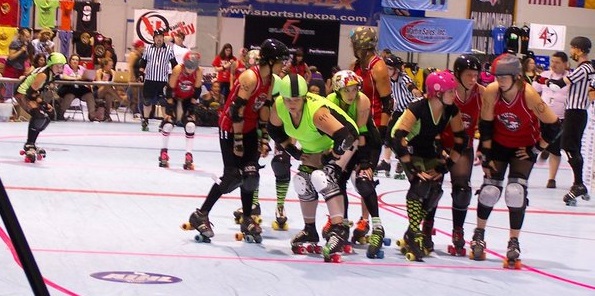
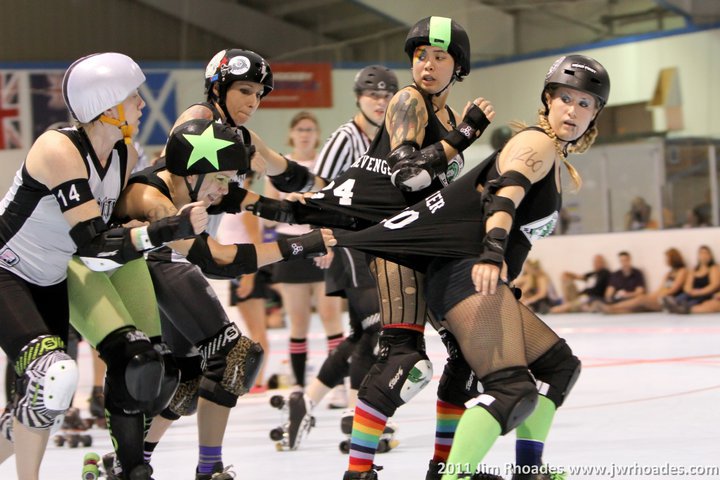
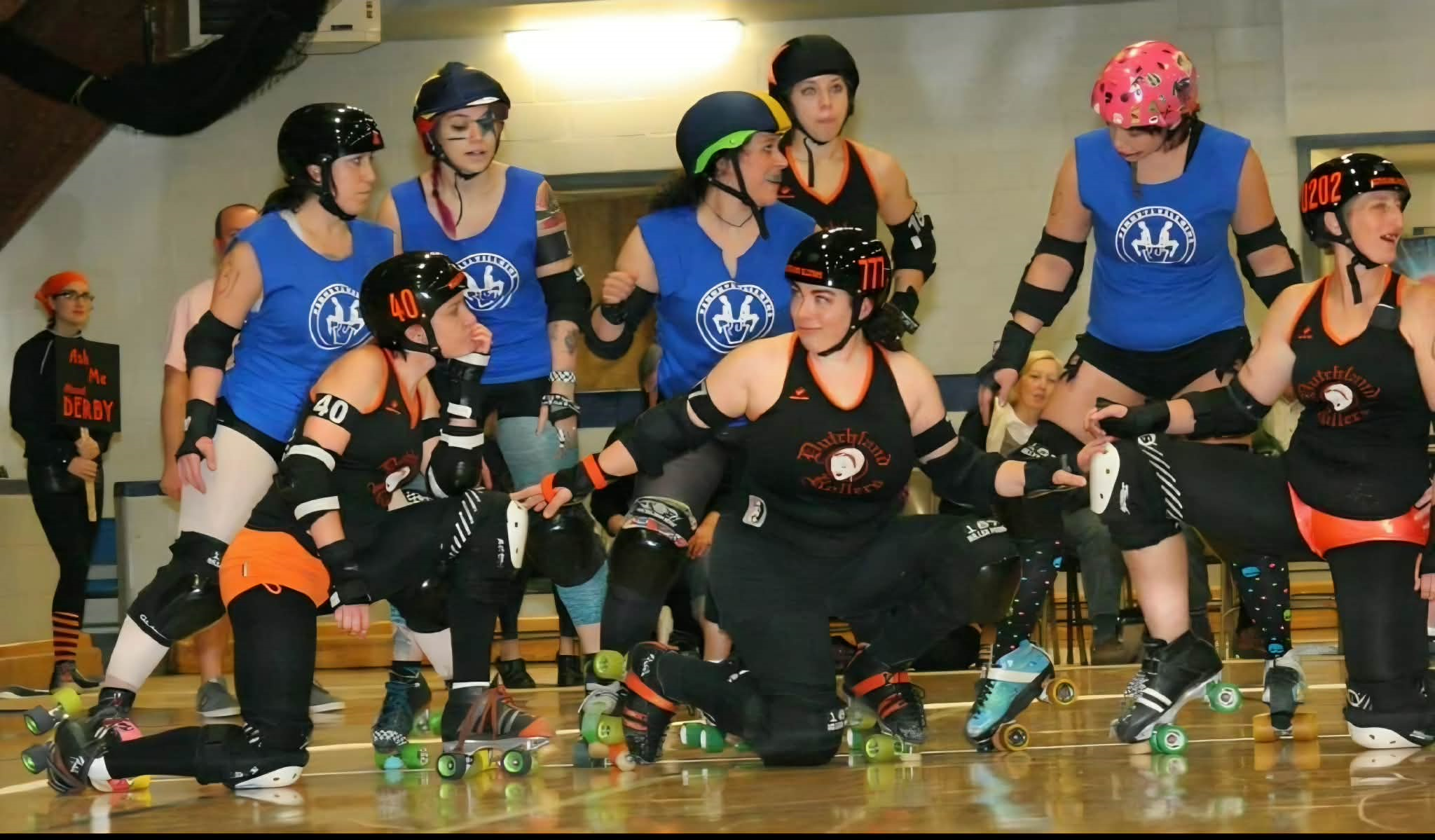
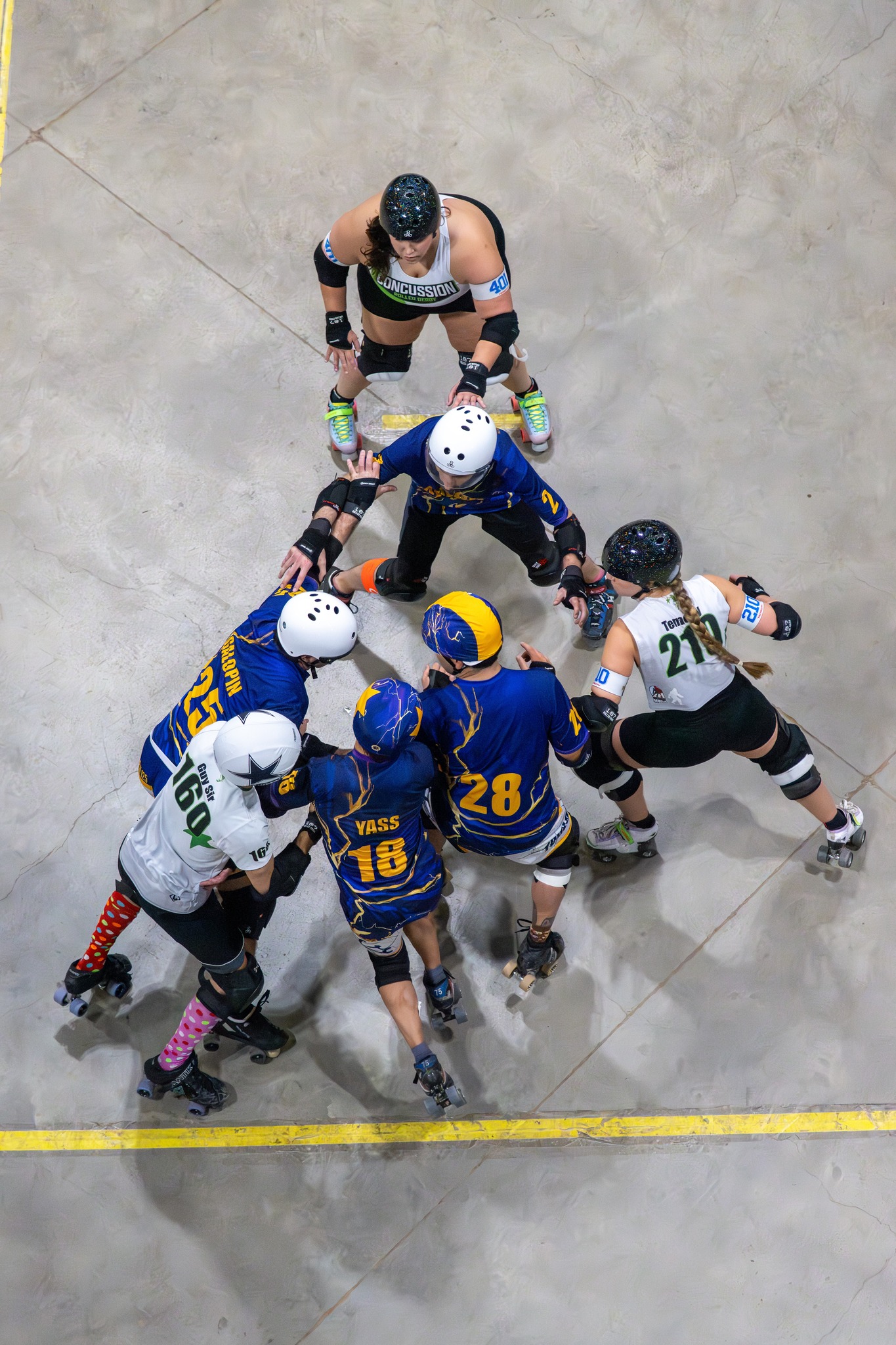

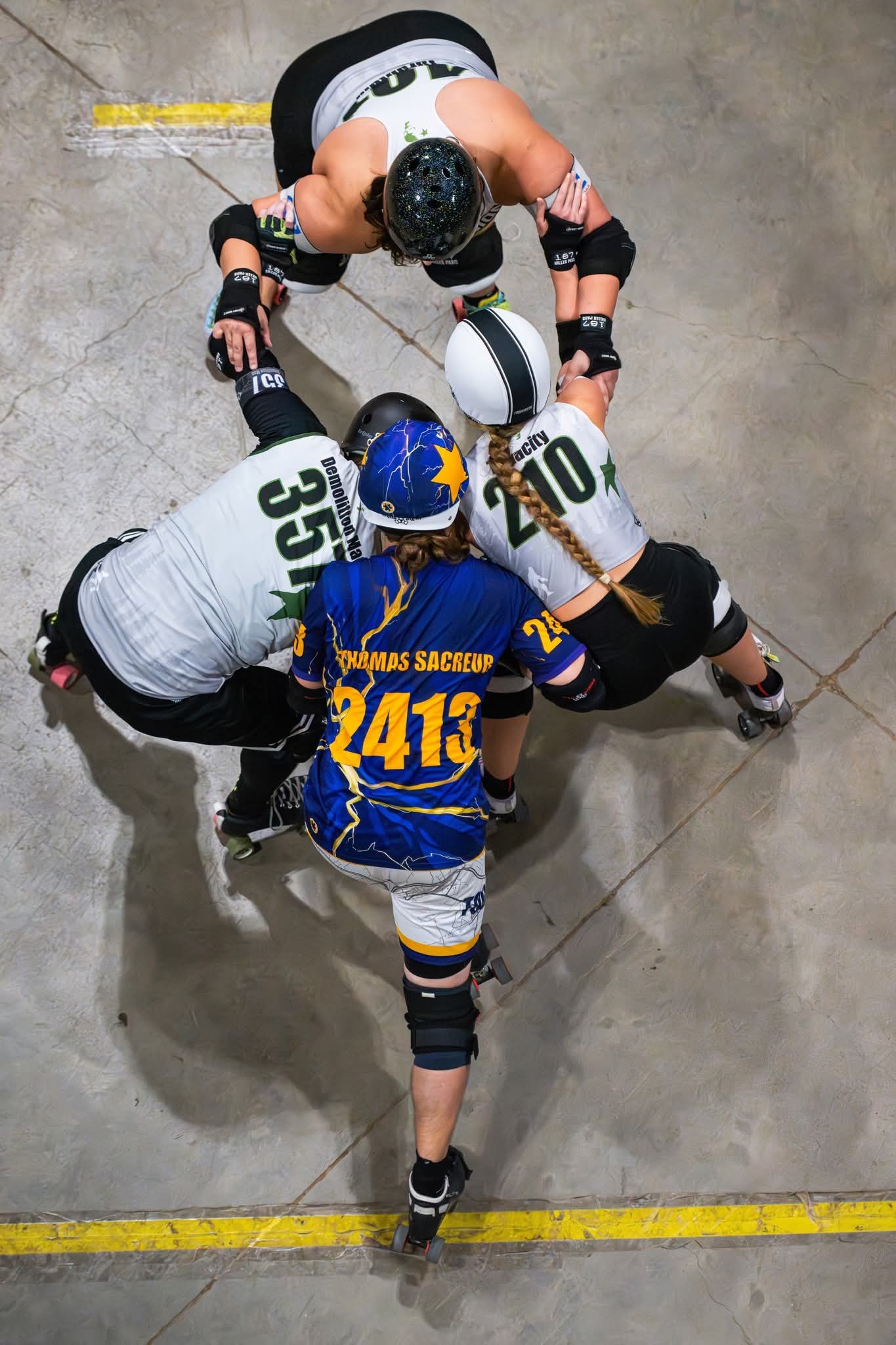
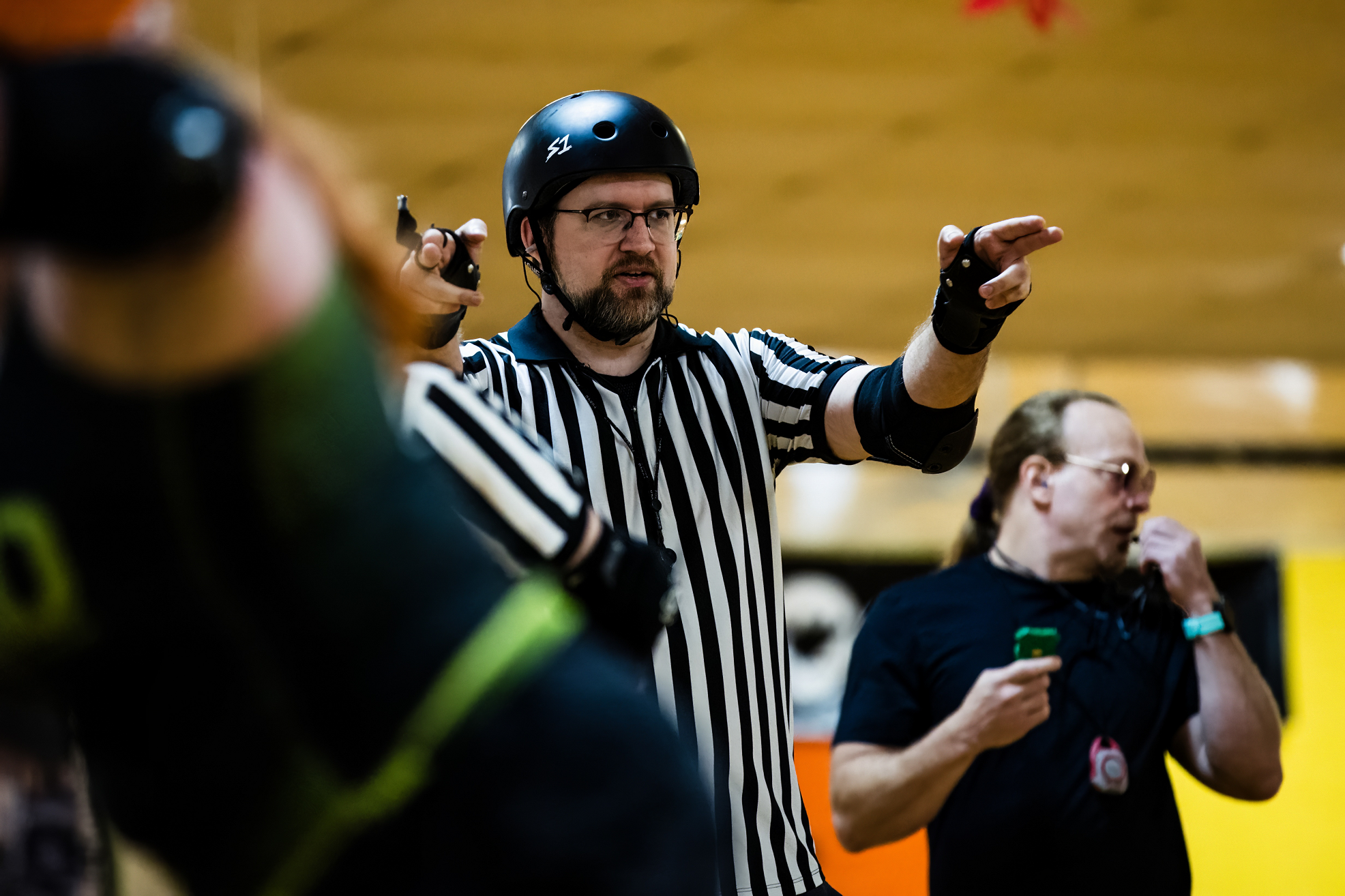

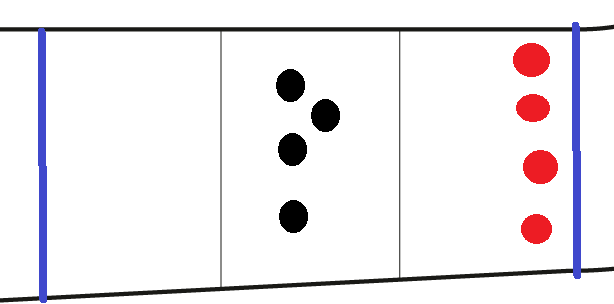
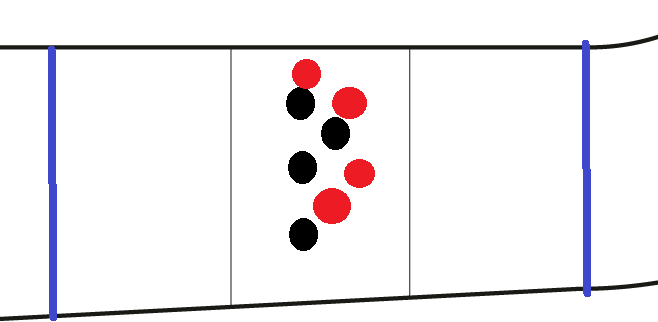
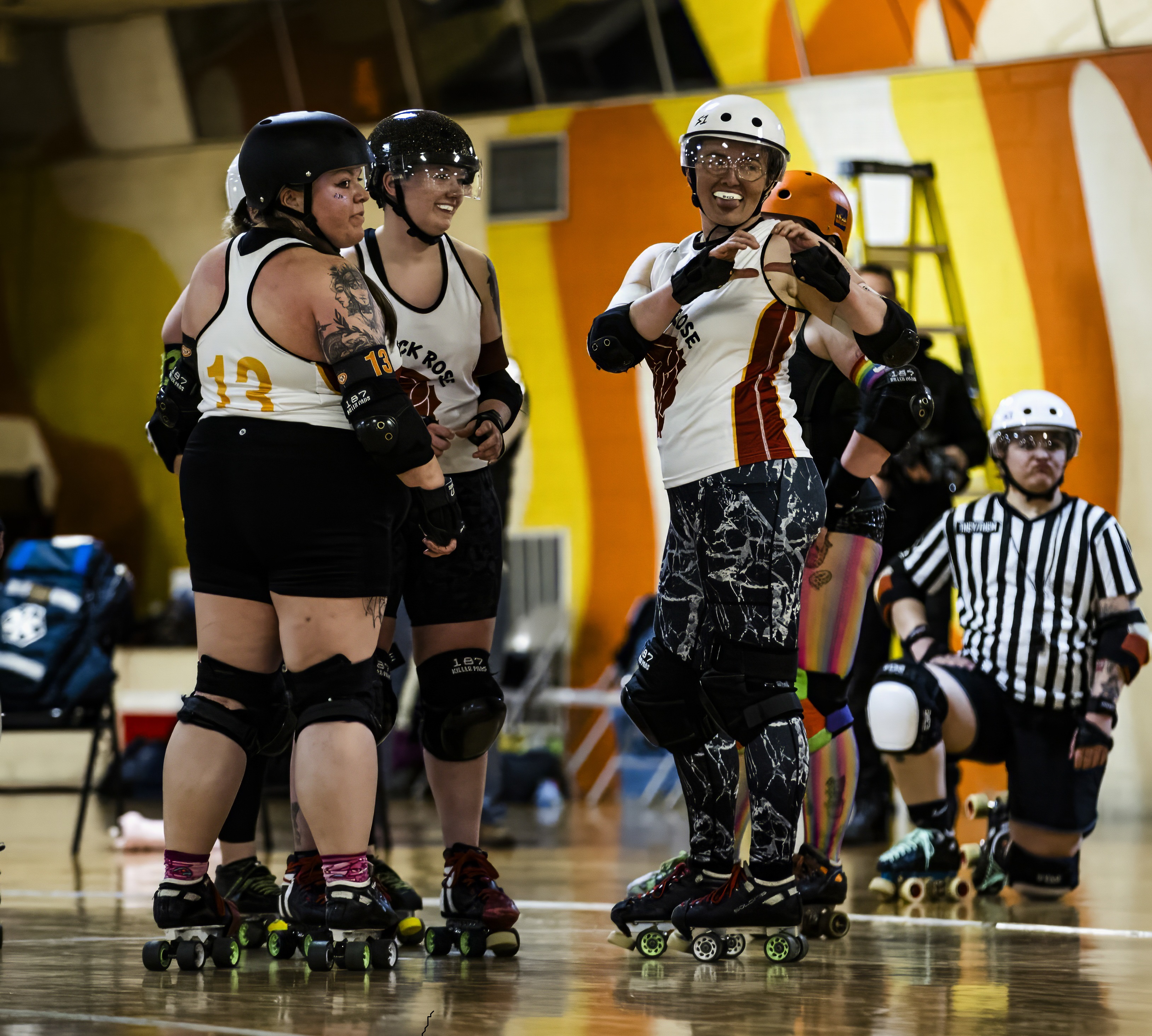



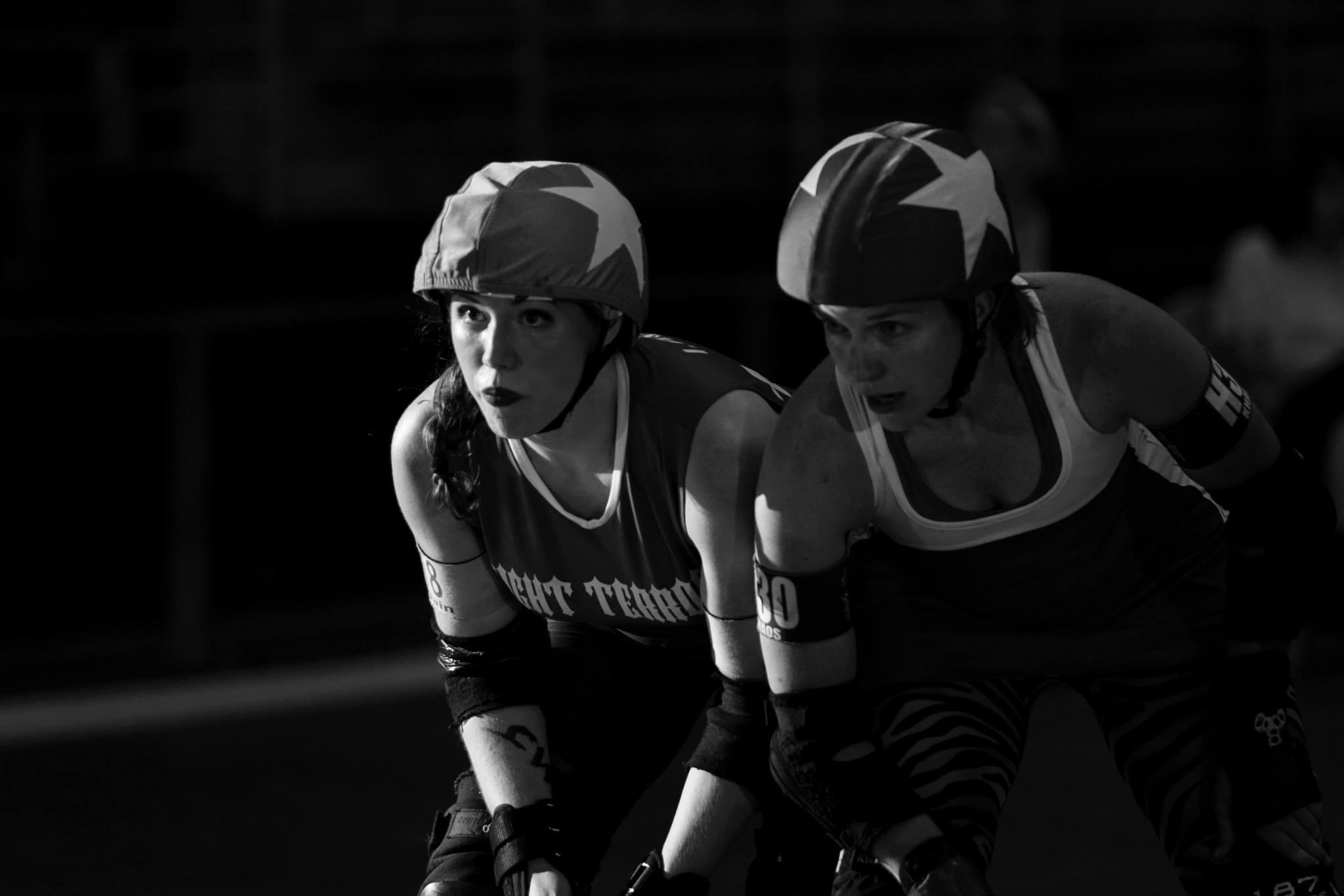
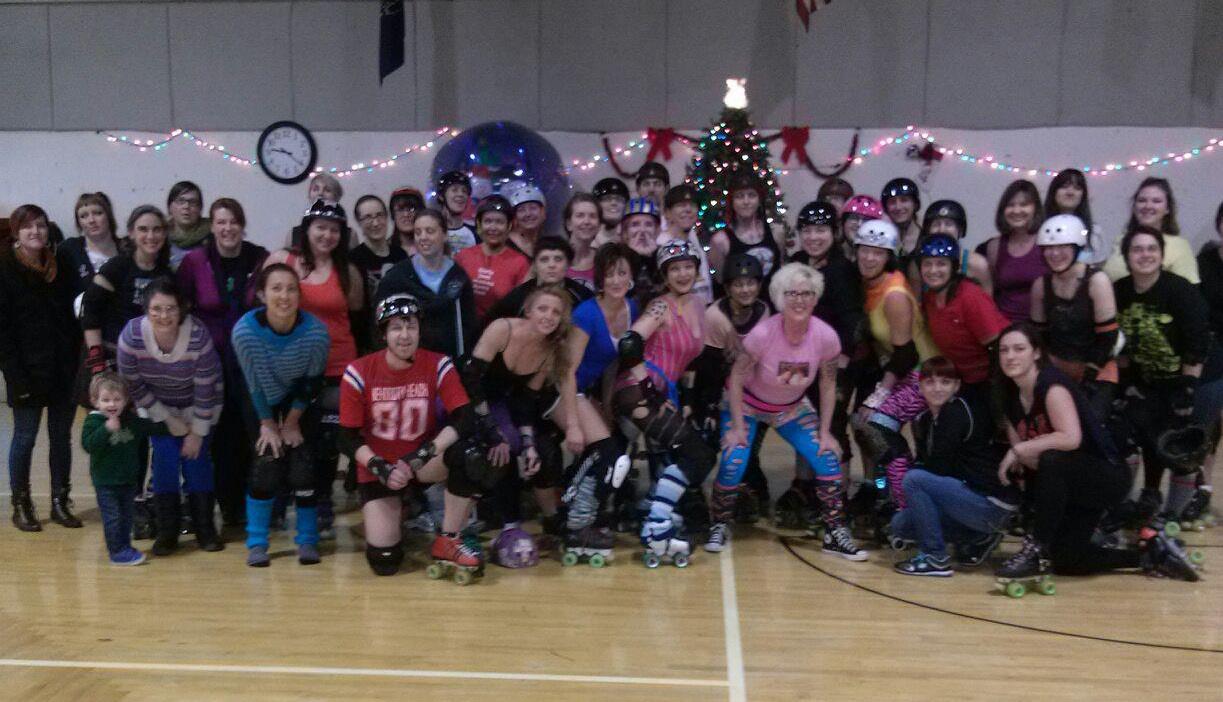


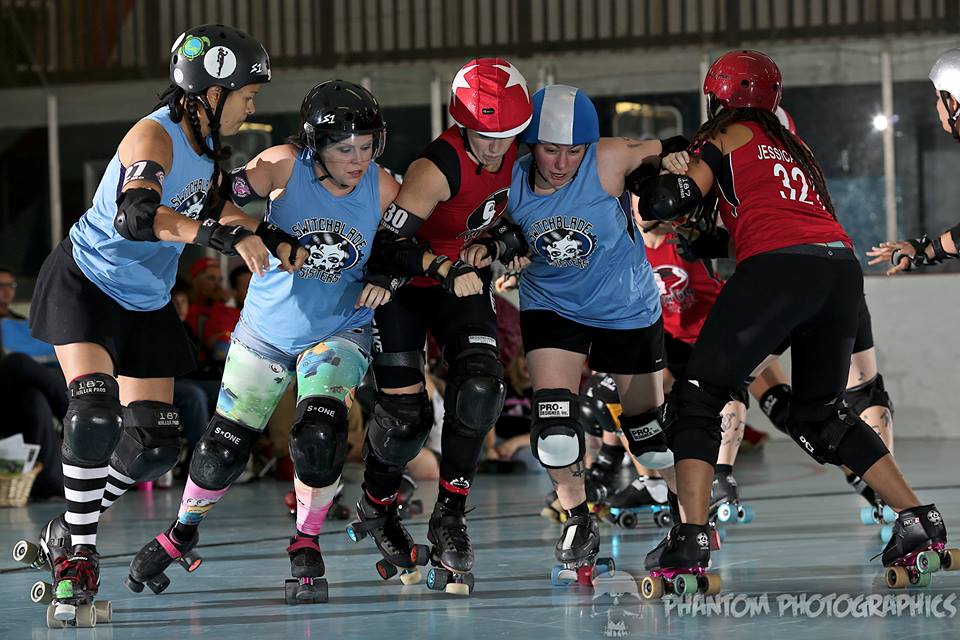
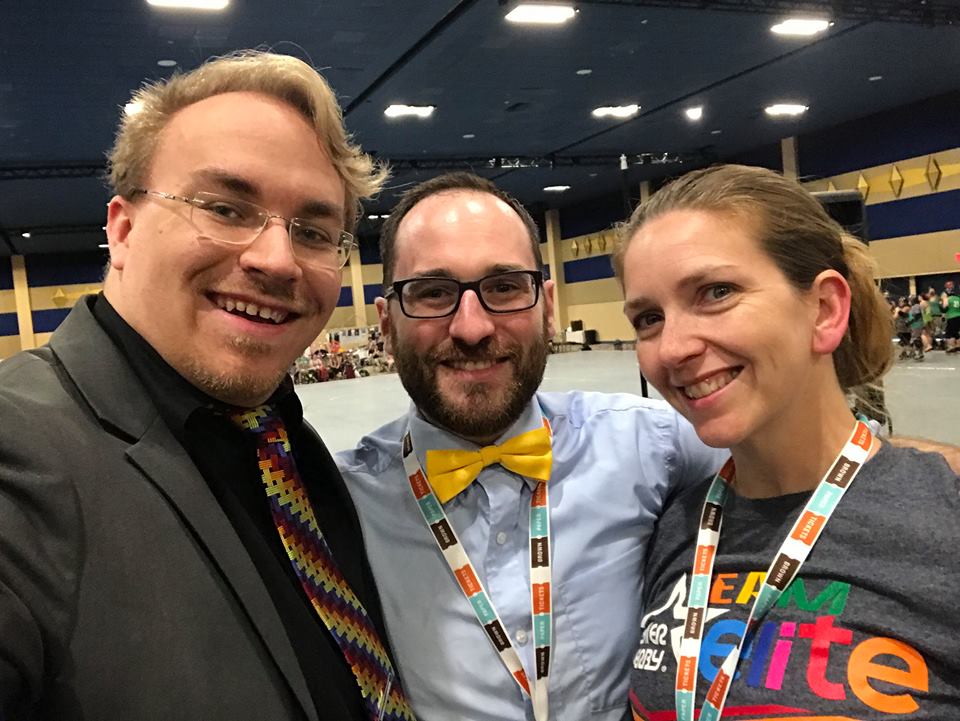

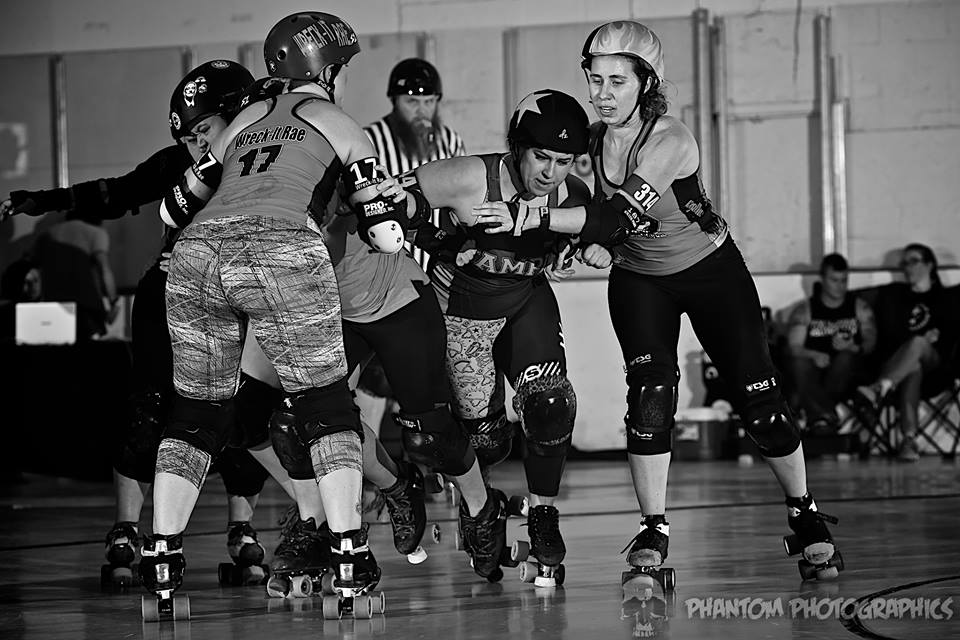
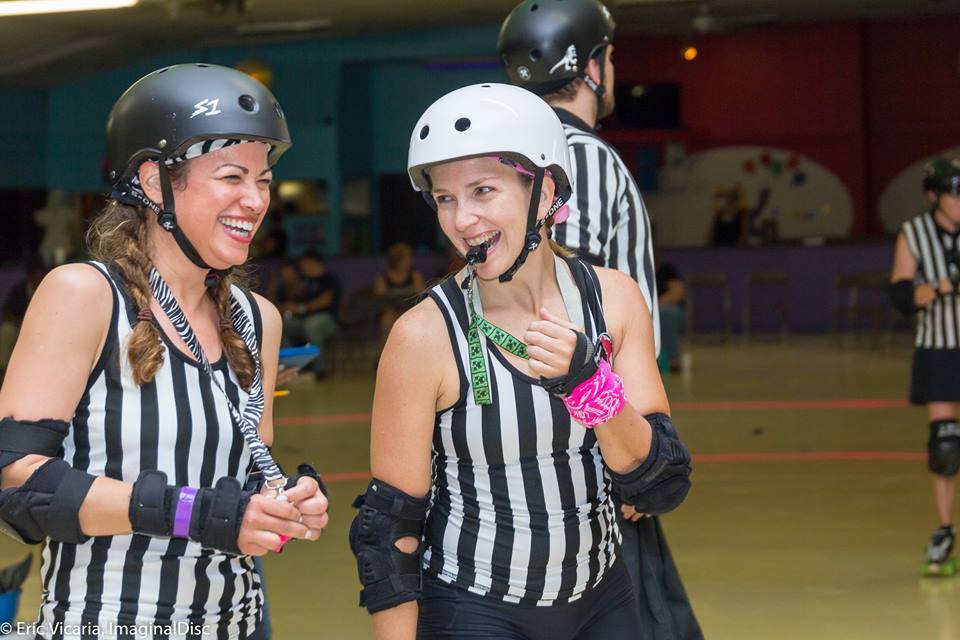
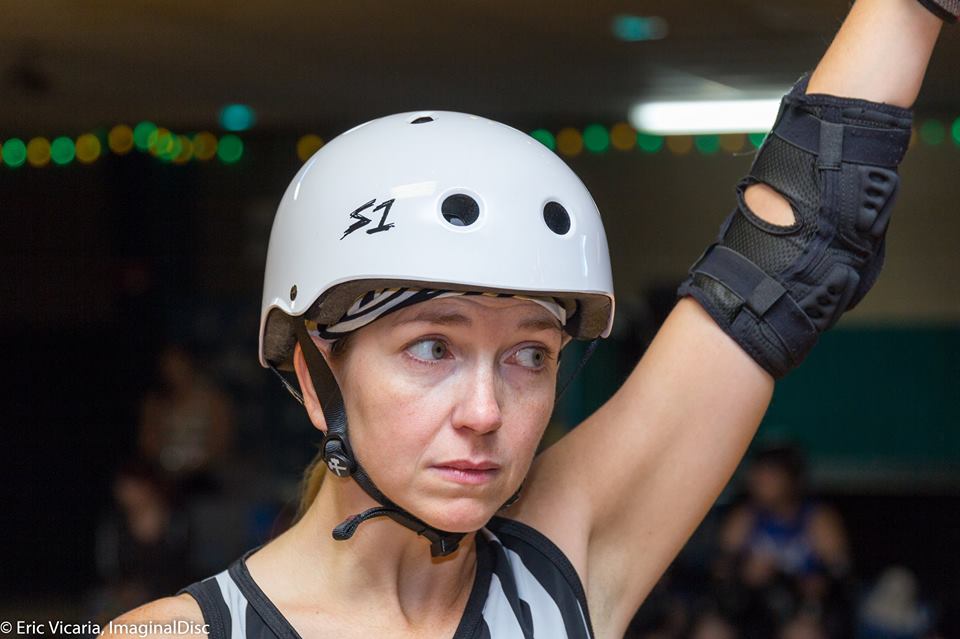
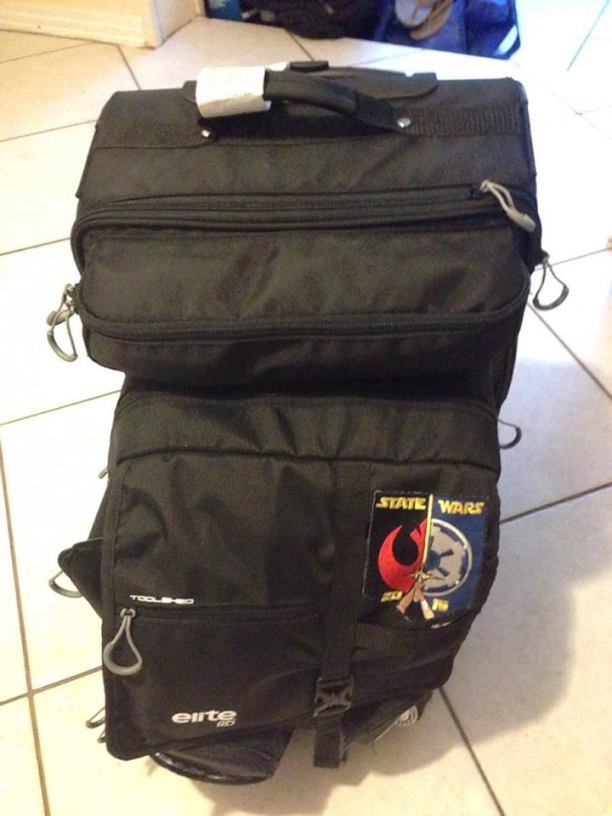
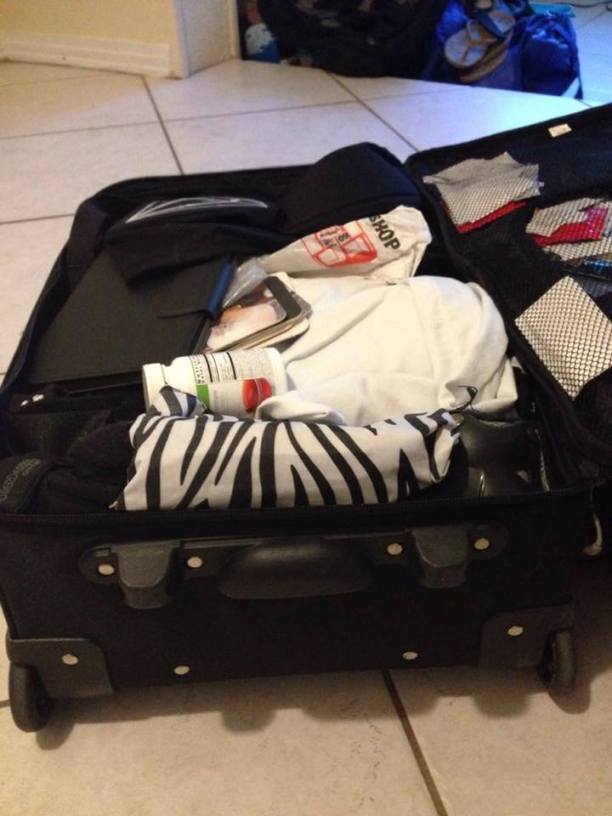
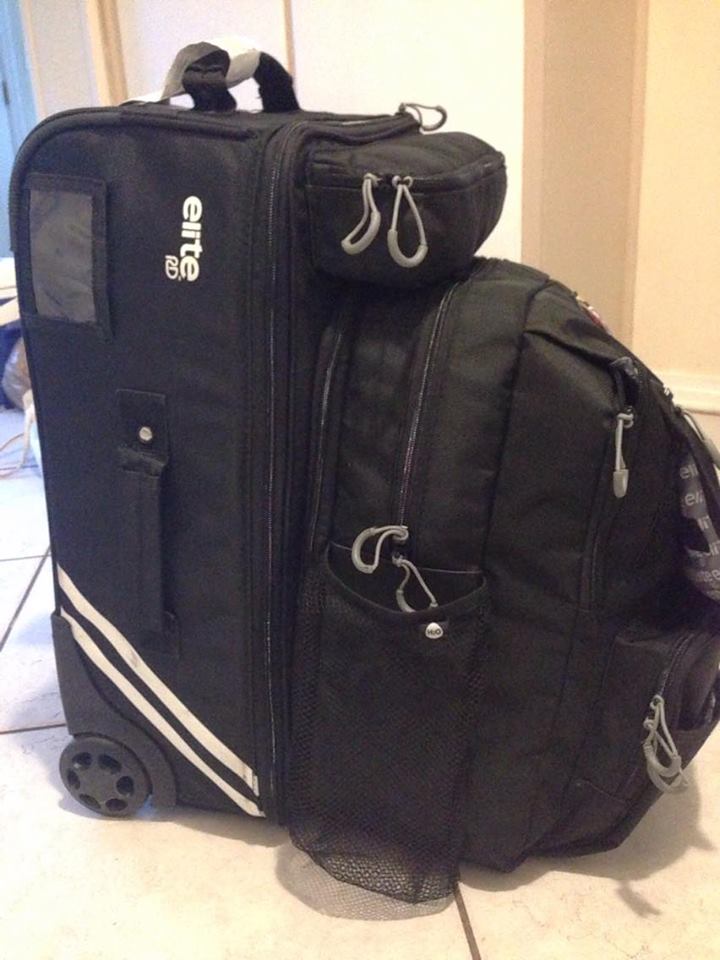
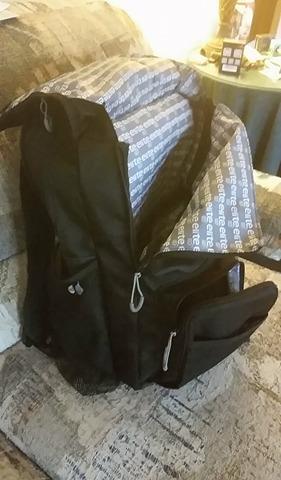
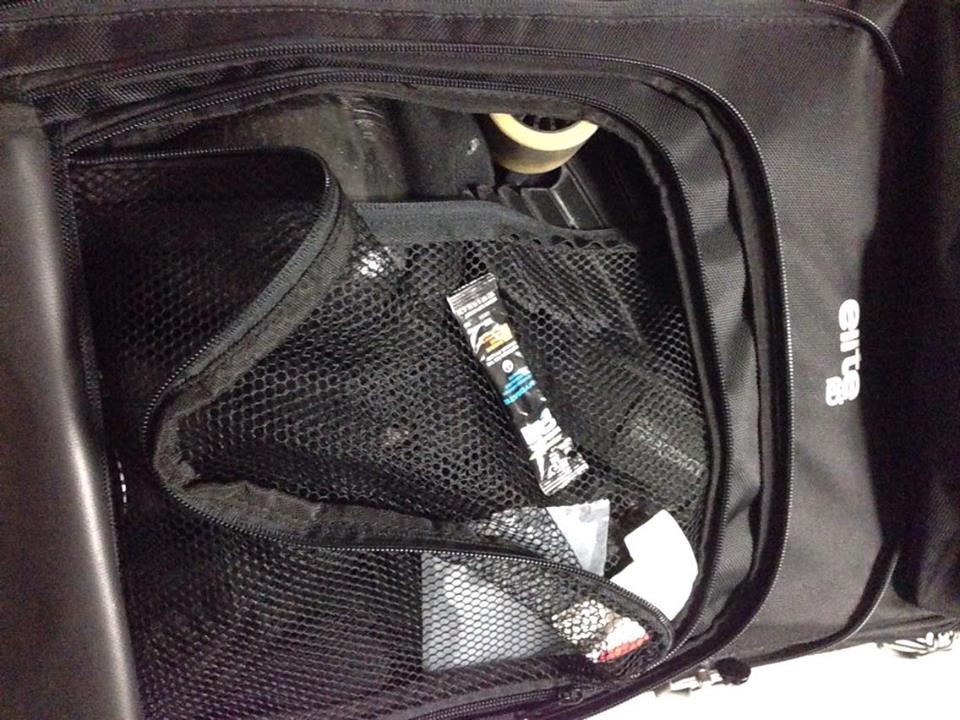


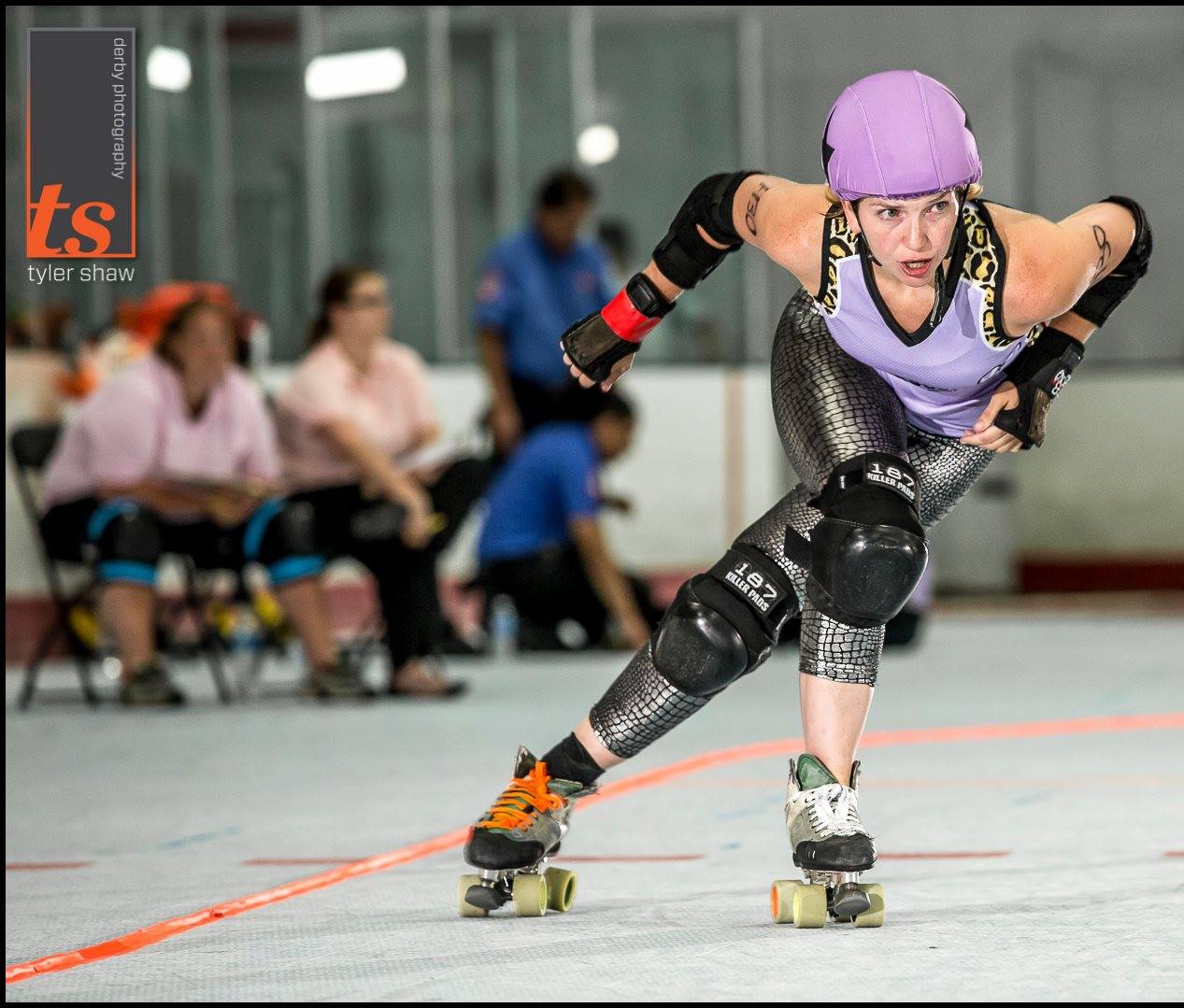


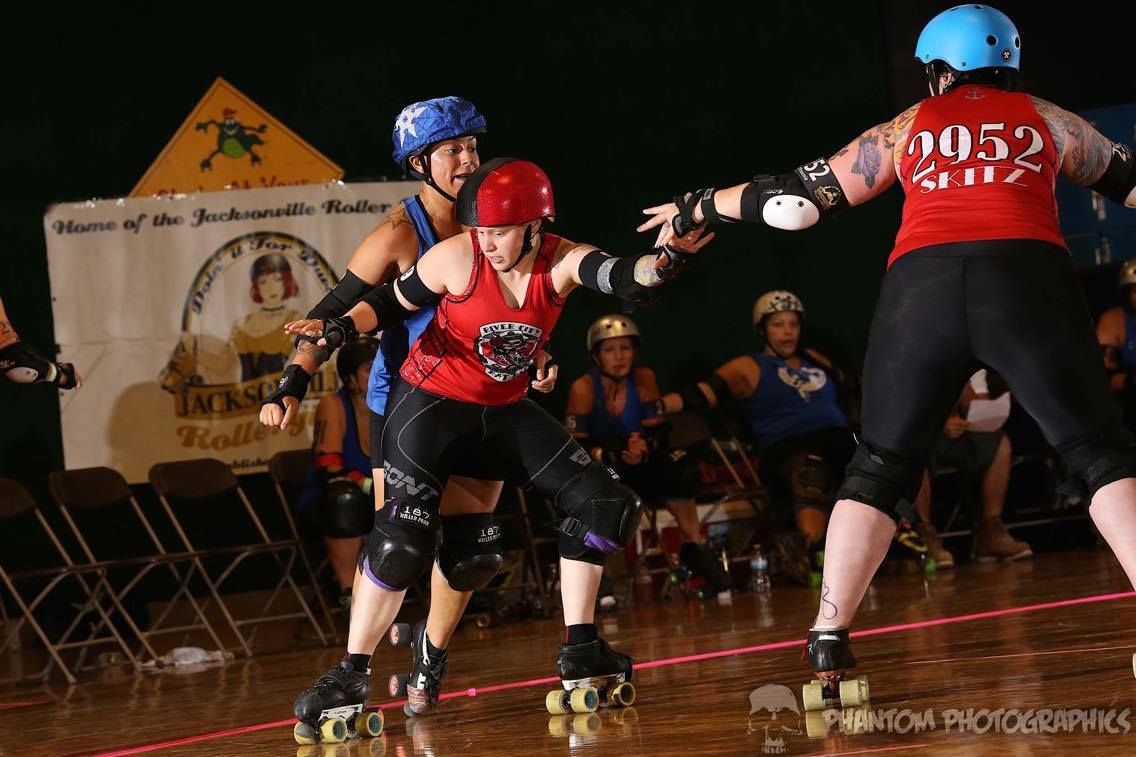


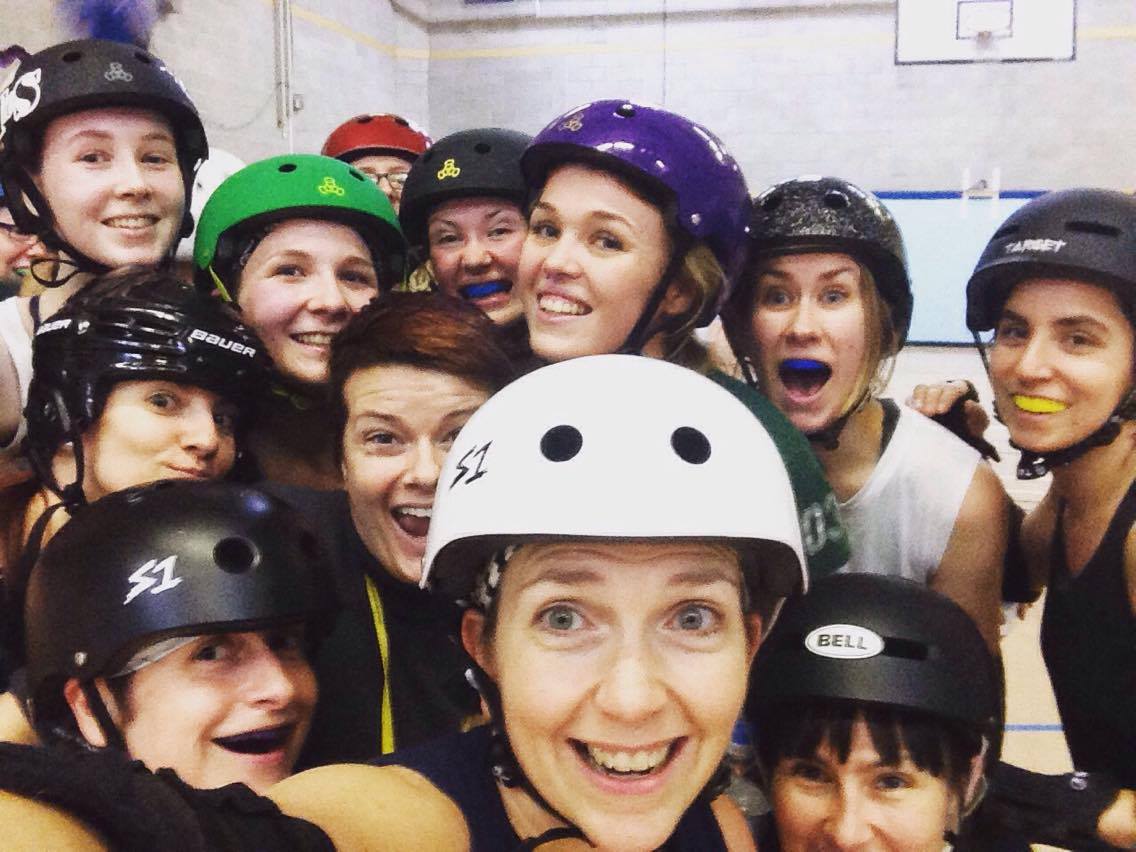



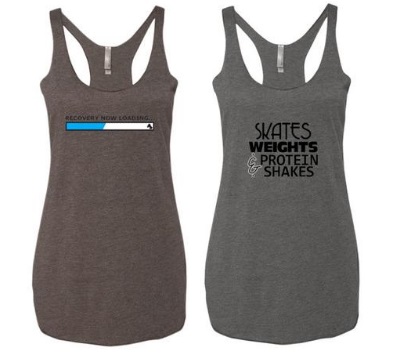

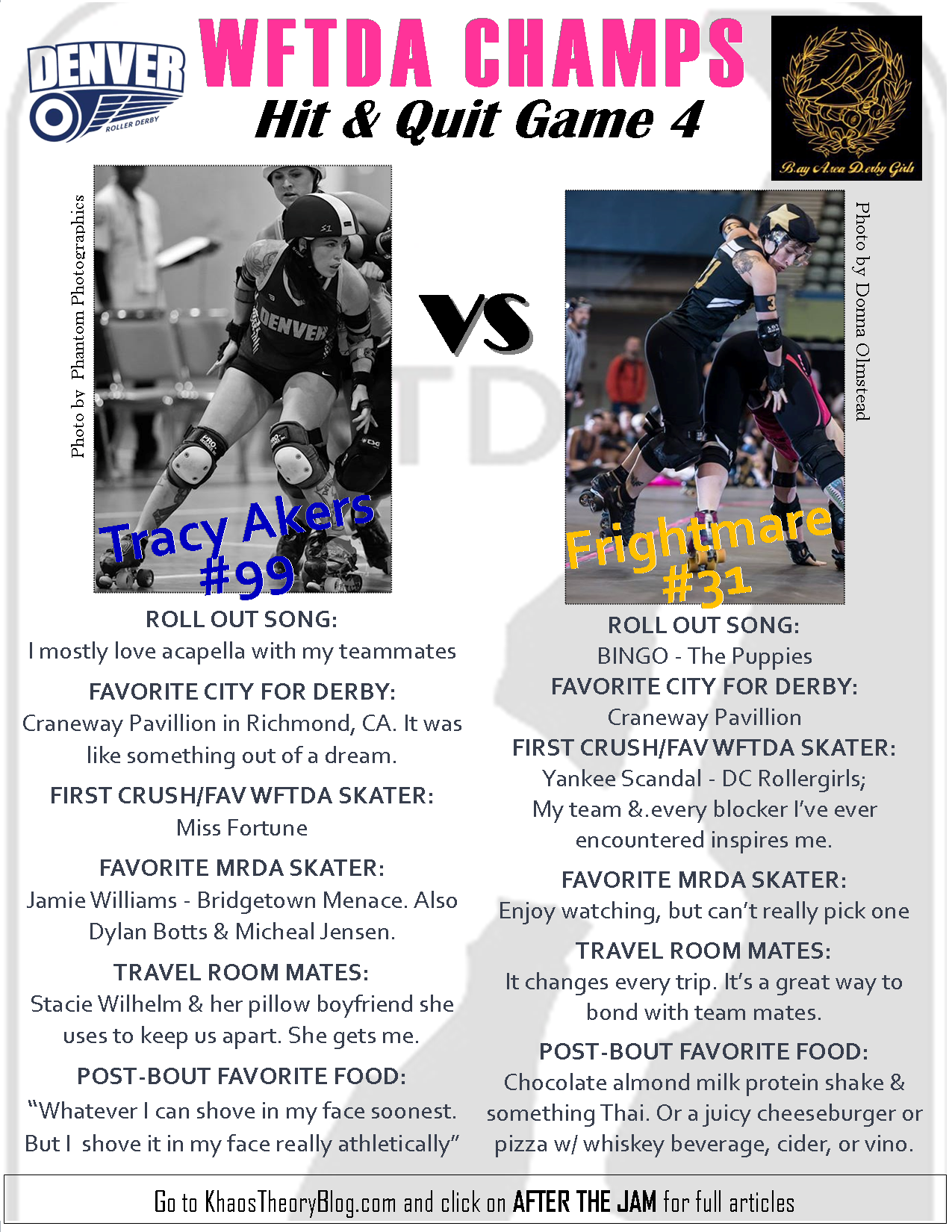
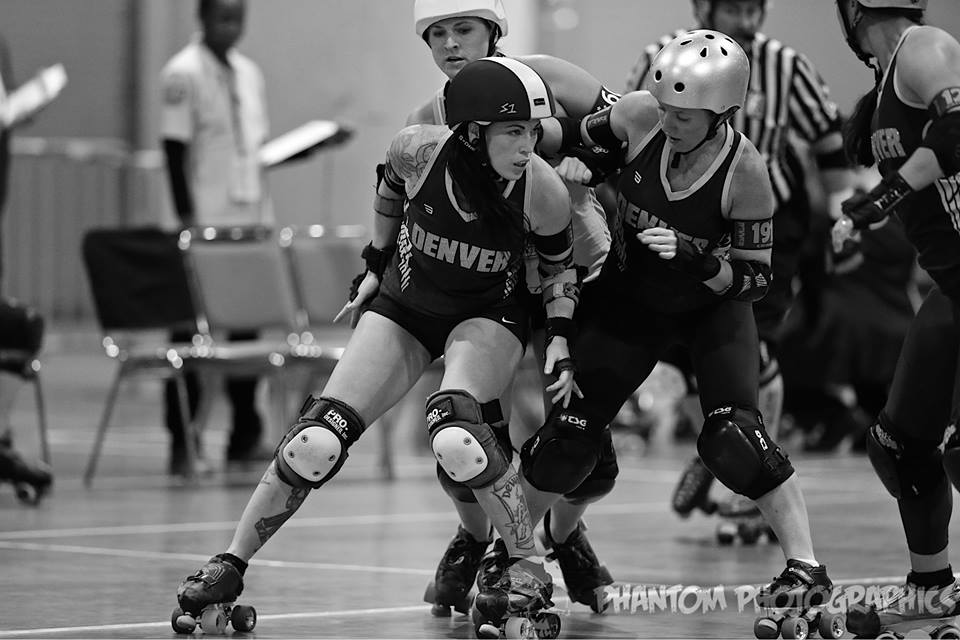


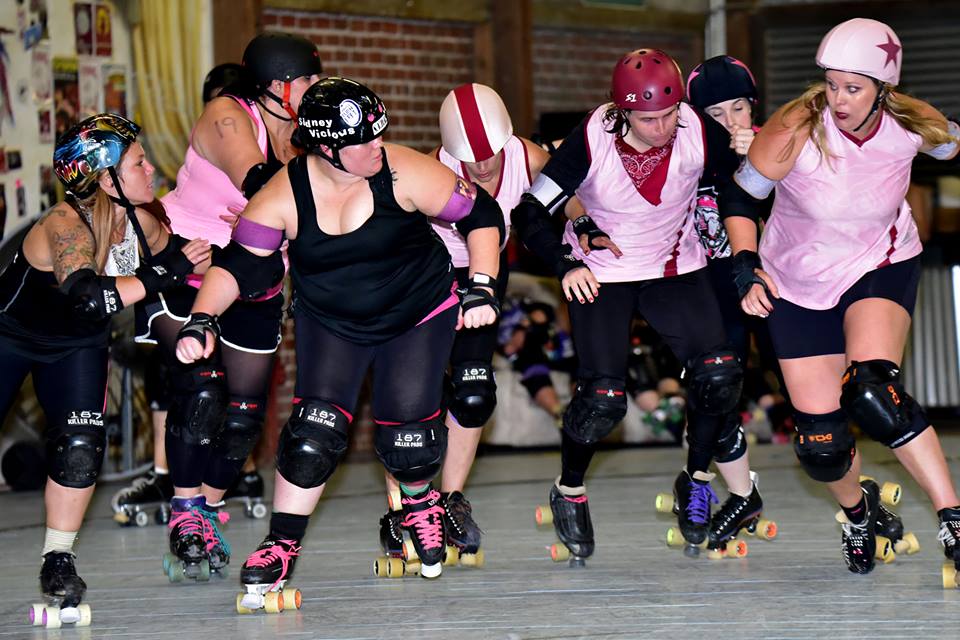
 Khaos Theory Derby