The life and times of Merry Khaos and her alter-ego, Kristie Grey. A romp through the inner workings of a mind in roller derby athletics, training, and business management.
I love this class. I love this class so much, and I will submit it again next year! I hope that it gets on the schedule more than once, because everyone has a blast. The point of this class is to do something OTHER than derby in order to work on fundamental skills.
Many of us get White Jacket Syndrome when we practice plows, hockey stops, edging, etc at training sessions. We have our coaches watching. We want to impress them. We want to get on that next roster. We’re worried about the skills of the people around us compared to our own. These games take that out of the equation. This is great to mix skill levels into, because you’re taking derby out of the equation – so EVERYONE is learning at the same pace. Though advanced skating skills can definitely be an advantage, there is more than pure experience on skates involved for most of these games.
Ultimate Roller Derby Props needed: 2 balls larger than a baseball
Focus skills: Teamwork, communication, awareness, multitasking, periphery vision
This is the game closest to roller derby. Only with an Ultimate Frisbee twist.
Each jam is 2 minutes. Teams field the same players as usual, and we play on the derby track. Each team on the track has a ball. Players on that team must pass the ball THREE TIMES, successfully, between themselves in order to let their jammer try to leave the pack.
The ball must always be PASSED, not handed off and opposing players are allowed to block passes. If the ball hits the floor, or is caught by an opposing team member, the 3 count is reset. After 3 passes are successful, the jammer (and to make it more advanced, the jammer OR pivot) may attempt to break the pack. Your points are counted by how many times the jammer has left the pack.
So yes, when one team completes their passes, the other team should be trying to stop that jammer from leaving the pack!
Duck Duck GOOSE No props needed
Focus skills: Speed, agility, endurance, speed control
While you can play this game in the classic “everyone sit on the floor” way, I like it better when it’s moving.
Get your team into a pace line. I recommend doing this at a moderate speed for YOUR team (obviously London Roller Girls’ All Stars would be able to do this faster than a start-up league). The person at the back of the line goes first to make it easiest. As the advance up the pace line, they call out “duck” for those who are not chosen. When they decide that someone is the “goose” they complete a legal hit on that individual. That begins the race around the track back to the goose’s position in the line.
Beginner version: It does not matter who makes it back to the goose’s place first. The GOOSE is now IT, regardless. They drop to the back of the line and begin playing.
Advanced version: Whoever reaches the goose’s place in line successfully first (as in, they’re in the line and matching the line’s pace), are safe. The other person is now IT and drops to the back of the line to start playing.
I will run this until everyone has been chosen at least once.
DODGEBALL
Props needed: As many balls as you desire. I like to do 4-6 of varying sizes.
Skills: Footwork, avoidance, awareness
Level 1 –
Split your players into two teams. Place the balls in a line directly between the two groups. Blow a whistle to release them and let the dodgeball commence!
Note: I had an interesting thing happen this year during this game. One team hung at the very back of the ‘engagement zone’ because they realized the balls wouldn’t fly that far. If you have players not participating in this way, don’t be afraid to shorten the boundaries they must stay within.
Level 2 –
No one is on a team. Every person is on their own team. Have all the skaters line up at one end (or you can split them into two ends). Those on the sideline each take a ball. The players are told that when the first ball hits the ground, they are released!
You can either play this to the end, or do it until there are 3-5 players left. These players step to the side and then you play another round. Eventually you do a “championship” round!
SOCCER Props needed: A net, or other boundary marker for the two goals. An empty water gallon jug (you may want to have multiples for back-ups).
Skills: Footwork, edging, stops, avoidance, awareness, teamwork, short endurance
This is exactly what it sounds like: you play soccer on roller skates, but you use a gallon jug instead of a soccer ball (the jug does not roll the same way, so it makes the game actually playable).
Level 1 – NON CONTACT!
Level 2 – Legal contact
Feel free to have refs around to regulate things like low blocks, back blocks, illegal contact, and hand balls (it is soccer after all).
I play 5 v 5 and let the rounds go for 4 minutes OR until a team has scored 2 goals in that period. Then you switch out.
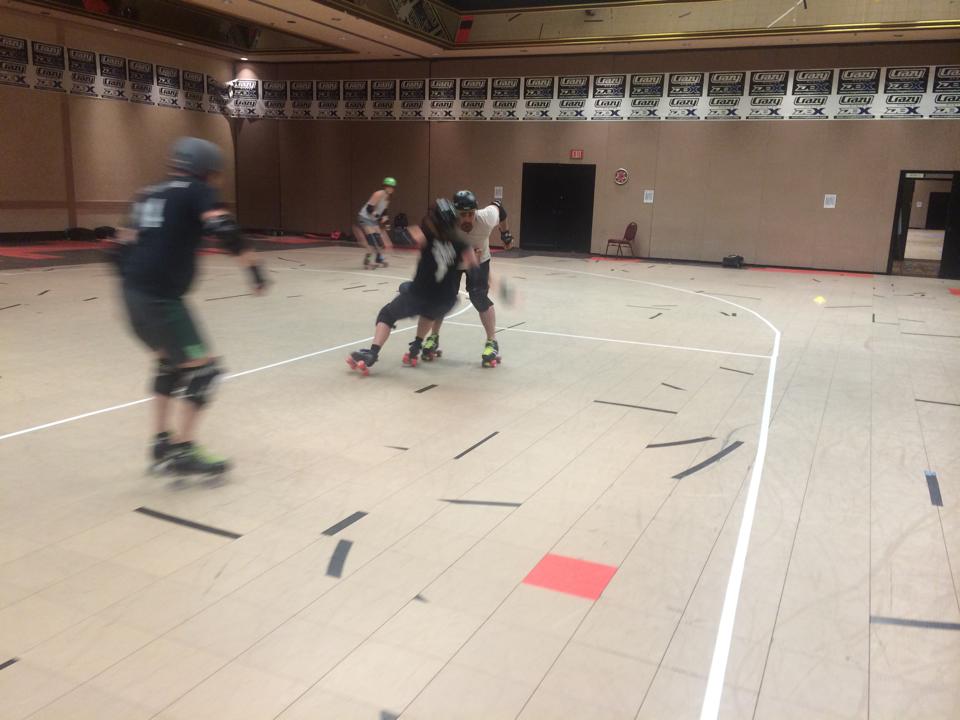
Blood and Thunder. King of the Mountain. Queen of the Rink. Last Man Standing. There are a ton of names for it, but in derby most of us have played the game where we all get on the track and hit the snot out of each other until one person remains. This is a version of that.
Everyone starts skating, and when told to go, the carnage begins. When a skater is knocked down or goes out of bounds – they are out. In this version, do NOT have them stay on the track unless you have advanced skaters. You can also have refs calling penalties, and if anyone commits a penalty, they are also out.
With this version, when two skaters connect, if NEITHER skater goes out or down, than BOTH of them must flip to begin skating the opposite direction. Every skater will always skate DERBY direction, it’s just a matter of whether they are forward or backward. You should have people on the outside reminding skaters to spin around when contacted. There’s always one that just doesn’t understand/remember that they have to flip around whenever someone touches them.
This is another game that I like stopping each round when there are 3 people left, so that you can do several rounds, ending in a Championship.
MUSICAL CONES Props Needed: As many cones (minus one) as you have people playing.
Skills: Stops, speed, awareness
Every person playing gets a cone, except for one person. Each person should place the cone on the inside or outside edge of the track. The person in charge decides what stop the round will focus on. You can do an entire game of ONE stop, if you want.
Everyone starts skating at pack speed. When the person in charge decides, they blow the whistle and everyone must get to a cone and use the stop APPROPRIATELY and without falling or advancing past the cone. If they are unsuccessful, a ref or wrangler should call them out and they must go to the NEXT cone and try it again.
Follow me on Facebook: Facebook.com/MerryKhaos1918
Twitter: @DerbyAmerica
Instagram: @Khaos24Fit
And if your league is looking for coaches and trainers, drop me a message at DerbyAmerica@gmail.com – DNA Coaching is currently booking boot camps and sessions and we’d love to talk to your league!
During Blood and ThunderSliding out during Musical ConesDuring Blood and Thunder
I designed this class for beginners and intermediates (though advanced skaters could possibly get some tips and tricks out of it). Often, as you learn the sport of roller derby, there are little pieces that are missed. I’m talking about finesse pieces of the game; so you may be told “become a wall”, but you’re not told to “become a wall pretending there is a skewer through the four of you”. Little details make a skater great, and when you don’t have the little details [that no one told you about], you may be the one on the track getting yelled at by vets.
Before we got into anything we did a review of EDGING. Get into your proper derby form. Feel where the pressure is. Chances are it’s straight down through the middle of the wheel. We want to think about our wheels like the edge of an ice blade. Pushing through your EDGES, instead of the middle of your wheels, are how you get better at carving, stopping, and juking (and derby in general). Move around on your skates and feel where the weight goes when you’re on your edges.
General rules for roller derby that everyone should know and practice:
– DON’T LOOK AT YOUR FEET
– BEND YOUR KNEES
– YOUR ARMS ARE UNNECESSARY FOR ROLLER SKATING. Practice “Bonnie-Thunders-Floppy-Arms”
– GET NATURAL AT TRANSITIONS. Do them and do them and do them. Every chance, for hours, both directions
– DON’T SAY YOU CAN’T DO IT. You can do it, you just haven’t YET
Proper Form
Often when we say “Drop into good derby stance”, people bend their knees, or lean over, and stick their butt very far out. For your form, you want to work on your legs being at 90 degrees, your tail bone TUCKED under your spine, and your back flat and strong. No, you will not be able to maintain this at every moment during skating, but we want you to develop that tucked tailbone and strong back. The legs at 90 degrees will build strength for you to use in skating.
Crossovers
Crossovers are critical to the ability to play roller derby because they are the basis of roller SKATING. You don’t just do crossovers when you are making a lap or going fast, you need to be able to do crossovers within packs, and have the confidence to keep your balance and make the moves during game play. Crossovers are two parts:
STEP WITH YOUR RIGHT FOOT
PUSH WITH YOUR BACK FOOT
If you are bad at crossovers right now, here are things to practice:
– Getting lower: The more leg you have to use, the more strength you can put into your push.
– Balance: Get a big push and then pick up a foot. The one foot glides we do for certifications are there for a reason
– Confidence: Do Drunken Sailor steps. In this drill, you bring your leg as far and big off of the floor as possible, in order to crossover to the ground as far as possible. Then you do it with the opposite leg. When you get good at it, your legs will be making HUGE arches and you will continue in a straight line, despite veering off from side to side as you do your crossovers.
– Back foot push: We have all done the ‘eggshells’ (when you keep all 8 wheels on the ground, and your feet go in an hourglass shape on the floor to propel). With the back foot push, it’s the same idea. All 8 wheels stay on the floor. Your front foot does ZERO work, it simply guides you. The BACK foot makes an S shape behind your front foot in order to propel you forward. Notes on this: Your back foot should not come next to you front foot at any point. If you can’t do it, bend your knees. You have to wiggle your hips a bit to make this happen and it is A VERY DIFFICULT DRILL – especially if your hips are tight.
Two lines of cones should be placed about every ten feet in a line, and just wider than the track. Skaters are to ‘lead with their knees’ and move their feet in small, edging motions to get across the track. Toe stops are not to be used (in fact, I would recommend doing this drill during a practice where no toe stops are allowed). This is not a shuffle step, or a crossover. They are small, sometimes gliding, steps and stops where you control your speed and balance with your edges.
Your hips are always faced forward. Once a skater has reached the cone by going across the track, they should move up to the next cone at a diagonal, and use a one foot plow stop at that cone, in order to move across the track again. The first time through, the crazy legs should be moving to the right, and they’ll be gliding to the left. Reverse it for the second time through.
ADVANCED VERSION:
Do it again, but this time, keep your head over your shoulder. Pick ONE shoulder to look over the whole time. Move across trying to keep your eyes on that spot behind you for as much of the crazy legs as possible. You can also reach your hands behind you, pretending that there is someone on your back, and you are just making a one second contact in order to know where they are.
The very last gif on this page has an example of the “3 second check”. This is Tony Muse (Peter Pan) of Your Mom executing in perfectly. Look for the gif with the description: The “less-than-3-second-hand-check” rule can effectively widen your wall by up to a few feet on each side. Just be careful it doesn’t turn into a forearm block.
When jamming against a wall or individual that you are trying to get around on the edge, it is helpful to start low and end high. This was the best gif I could find, and though she trips at the end, she got all of her points and you can see she was starting to stand up into the block:
The idea is to hug the blocker with your body as you come through. You want to be as close to them as possible so that way they have no space to wind of for a hit. This is not a hit from the jammer, you are curving yourself around the blocker to get by them.
As Jonathan R of NYSE comes in for jammer on jammer action, Don Juan of Bridgetown Menace gets lower, in order to put his foot in front of Jonathan, leverage against him, and stand up to push off. Photo by Hispanic Attack
Pair up and take turns being the ‘jammer’. Do this slow at first; have the jammer start an arm length from the blocker. The blocker should be in a defensive position. When contact is made, the blocker should lean into the jammer. The jammer needs to make contact on the blocker low, leading with the shoulder (NOT THE HEAD), and try to curve around the body of the blocker. It is difficult to do at low speeds, but we are looking for form and the feeling first. You can increase the speed as you go, so that as the blocker is leading in, the jammer has something to hit against. As the jammer makes contact with the blocker, they press into their legs to stand up, leveraging themselves against the blocker, and establishing themselves in front of the other person.
Getting By the Swing
When an opponent is telegraphing that they’re coming in for a hit you have two options: burst past them, or hit the breaks.
Burst past: In your pairs, have one skater take small swings at the ‘jammer’. The jammer’s job is to change their speed the moment before they are hit by hopping forward. It is a burst of acceleration to get them past. I couldn’t find a gif. But watch Quadzilla of Puget Sound skate, he does it often.
Hit the Breaks: The swings will continue here, but this time, instead of the jammer bursting past the blocker, this time you will practice coming out of your derby stance, and (essentially) standing straight up in order to let the blocker swing by you. The goal is not necessarily to hit your toe stops, you are just putting all your weight into your toes to slow your momentum.
DISCLAIMER: Even when you’re good at this, sometimes you misjudge and you end up with an ass in your quadriceps and it hurts like hell. Often, even if they hit you, they will continue to move past you, however, so you can then begin running like hell again and escape them.
Hit the Breaks and Hop: This time, instead of the jammer just stopping dead in order to let the blocker swing by, they are going to hop the other direction, parallel to the blocker’s motion. So if the blocker is swinging from outside to inside, the jammer will hop from outside to inside. The jammer wants to be as close to the blocker as possible when they do this. These are last ditch moves.
As the Dutchland blocker moves to the outside, Rainbow’s Revenge hops to the in, where a huge hole is waiting for her. Photo by Jim Rhoades
Roll Off of Hits
This is something you see often in derby now, but no one tells you how to do it. Look at Mace as she rolls off of the hit by Akers:
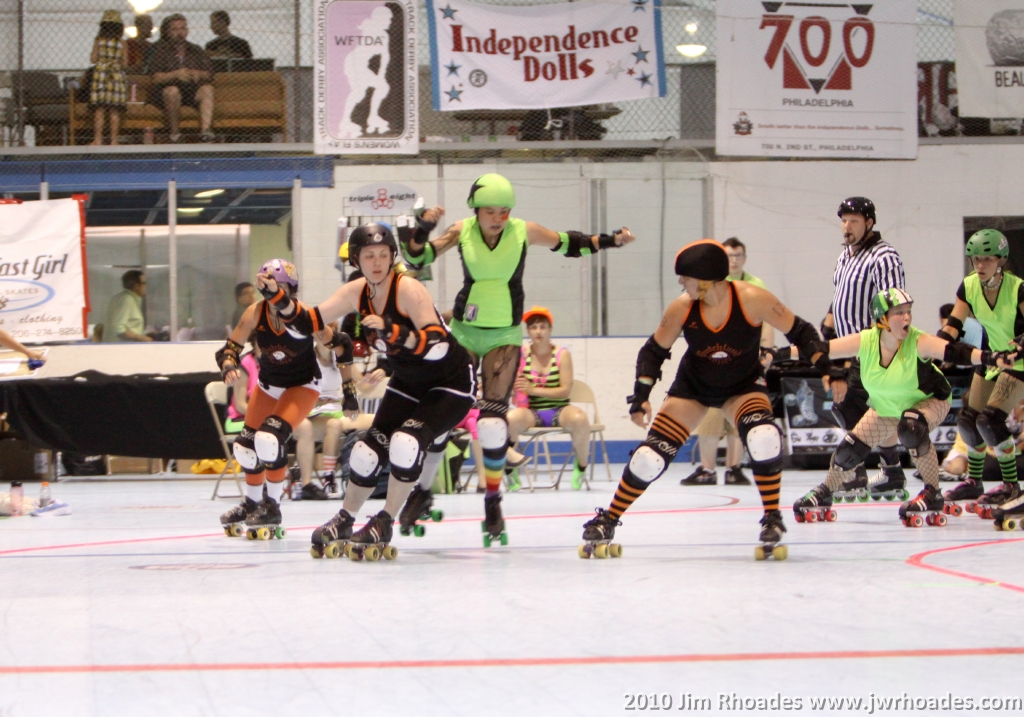
In your pairs, start with a ‘jammer’ who will be moving around the blocker. Do this first at a standstill so skaters understand the physics behind it. The jammer will be tight to the blocker, the jammers’ shoulder against the blocker’s shoulder. The blocker needs to offer resistance, and the jammer is to snap their hips perpendicular to the blocker and push through their outside edges of the back foot to propel around the blocker.
Jammers want to keep contact through the push. This is a way to use the leverage of another skater to get them through on an edge of the track OR if a blocker has caught the jammer, and the jammer is trying to move around them. After both players have practiced this in slow mo, have them do it moving.
Blockers will use their shoulders to put a player down, or knock them to the side or out of bounds. Jammers can use them to break walls. Please note that if the blockers you’re coming up against are bent over (that is to say, there is no back to nail), than this is not a useful technique.
To practice using your shoulders independently of your arms, start by grouping into three skaters. Have two skaters sit on the floor back to back, tight. Then, the third skater should sit down, their spine in the gap between the other skater’s arms. Their legs out, it should look like a T. The third person should then practice her can opener hit by throwing her shoulder backwards (one side at a time) into her partners. After some time, have them rotate. This will help skaters learn how to JUST use their shoulders and if they can do it backwards, they can do it forwards.
To practice breaking through a wall, have two skaters form a wall and the third is playing the role of jammer.
NOTE: When doing drills like this, the walls should be tight, but not ridiculous; especially when a skater is just learning the skill. We want everyone to get reps in and know what a successful rep is like. As they improve, the wall can get tighter and more challenging. This falls under Rule #1 kids.
Jammers will hit the LEGAL piece of the wall with their shoulders to break open a gap and stop through. Blockers need to be engaging their core, tucking their tailbone and giving their jammer a strong back to hit!
See Through the Hole
Have a wall of two blockers, and one jammer, for this. The goal is for the jammer to make as LITTLE contact with the wall as possible. Start this drill at a standstill, with the jammer tight to the wall to replicate a jam start. Jammers should focus THROUGH the wall, not looking at either of the blockers. They should then work making their bodies perpendicular to the blockers, and side step through the wall. It’s most effective (I have found) by focusing on edges, but utilizing toe stops to push out and away from the wall.
Once you do this for a bit and become successful at it, have the wall roll, and let the jammer get a little bit of speed to try this. Again, at first, the wall should be tight but not impossible. As people get better at this, the wall can become tighter. Remember, this is NOT A HIT.
CREATING SPACE WITH BLOCKING
That two wall is now going to get hit by the jammer. Just like with the last drill, you will do this first at a standstill, then moving. Up the intensity as you see fit for your own team. For all of these, you want to start close to the walls. When you do them rolling, the jammer can get a little space.
Hit in the Ribs
Have the jammer aim for the “notch” that exists in every body. It’s approxiametly where the natural waistline is/the bottom of the rib cage. The jammer should be starting low, and completing this sharp, strong hit by pushing downwards into the floor as hard as they can, in order to launch into the ‘notch’, as they move their feet to get through the small gap created.
Hit in the Hips
This time, jammers will not be starting super high. Sometimes when blockers line up, there is a bottom that is sticking out of the wall a little bit. You want to aim for that with your hips. Jammers should practice stepping forward and into the wall in order to hip check the exposed ass out of the way. You are essentially stepping through the wall and assisting yourself through with one sharp, well placed hit. When the blocker is moved, the jammer should then quickly finish stepping through the hole.
Goosing the Line
Disclaimer: Not for every jam!! Not for most jams, actually. If you do this moving, do it slow at first.
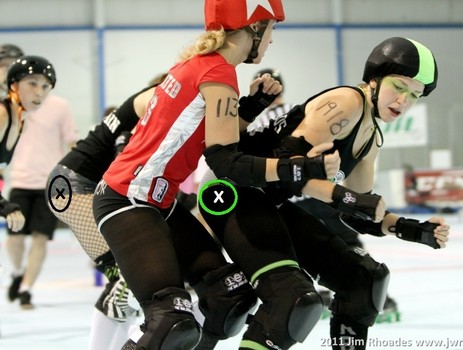
Here is your target zone:
Look at how much ass is available! Photo by Jim Rhoades
If you are having a hard time breaking through a wall, or you know that you are coming up against defenders who have beaten you and you need to play the ace in your sleeve, this is it. You use the boniest part of your shoulder, as you are in a deep squat, and then aim to the fleshy part of the SIDE of the blockers ass. This only works if there is a significant piece exposed. There are a bunch of nerves in the ass, and if you strike it sharply, you’ll get a reaction from the blocker. Yes, it’s legal, as long as you hit where the Xs are (not the tailbone!). Make sure to keep your head out of the way. If you’re using your right shoulder, tilt your head to the left as you strike.
PHEW. I think that’s it!!! If you took this class at RollerCon and you know that I missed something, please comment on the blog so I know and so that others can see it too! I’m sorry that it was so wordy, but I wanted to make sure I explained thoroughly for anyone who didn’t get to come to the class. I hope you enjoyed it, and make sure you tell RollerCon in the feedback form that you want to see more classes with me next year, and make sure you like my athlete page on Facebook. Also, DNA Coaching is booking boot camps all the time! Contact me at DerbyAmerica@yahoo.com if your league would be interested in hosting us.
I hear this all the time as a health coach with Derbalife. It’s what we do. We help people ‘get better’ at roller derby. I spend a lot of time thinking and researching what that really means to each individual person who contacts me. A 200lb female is going to have different challenges than a 135lb male in the sport.
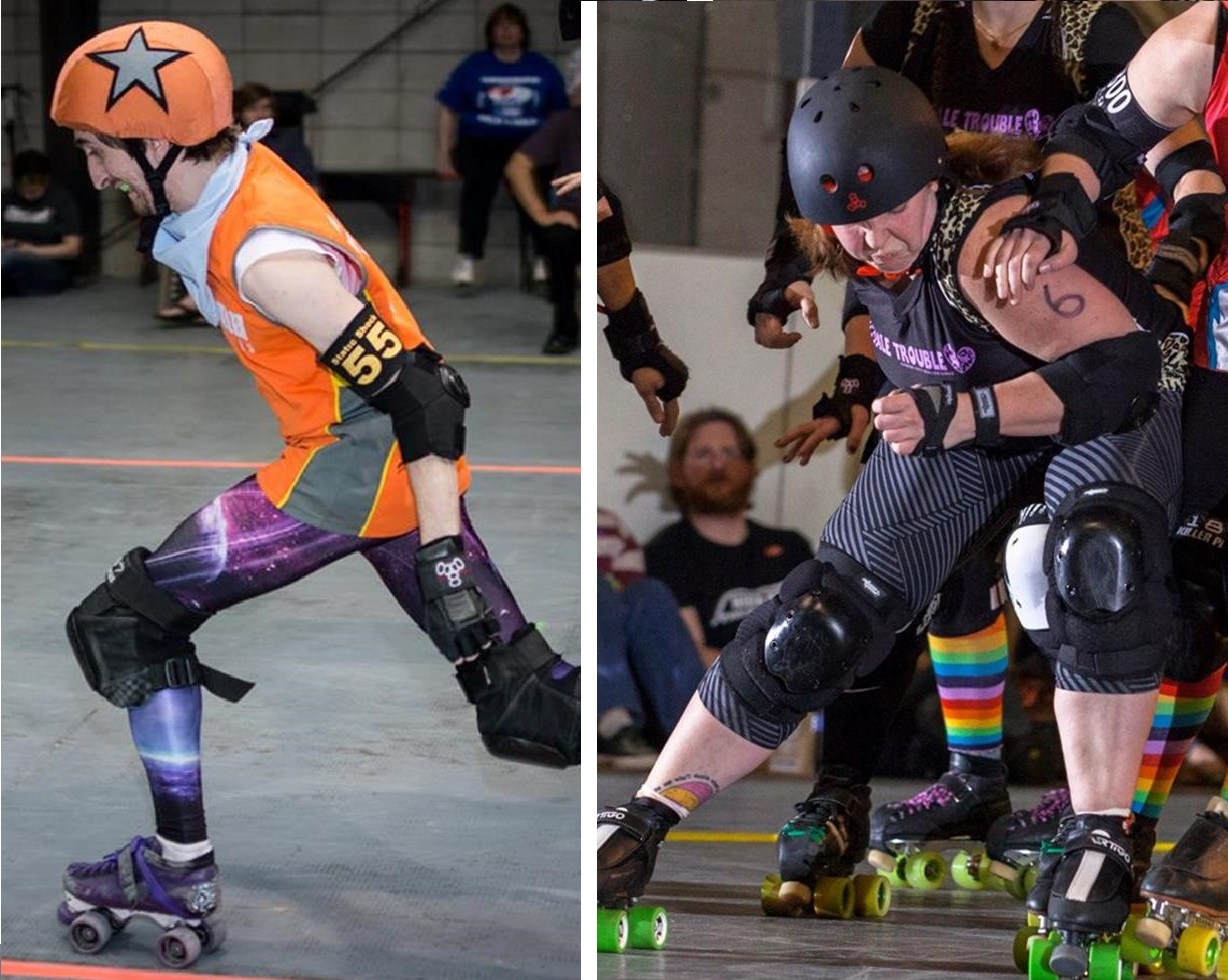
Static Shock of the Carolina Wreckingballs has very different goals than Hittsburg of Charm City Roller Girls; each must train (and eat) appropriately. Photos by ShutHerUp and Tyler Shaw
I’m going to do a series of blogs about how to “get better at roller derby” off the track, and I’m going to do my best to include science (or at least link science articles for you to read up on and try and translate the jargon).
Training for any sport is not simple. If you decide to compete in a marathon, you may think, “Oh, I’ll just run!” but there are different philosophies, different styles of running, different techniques to prepare for the marathon.
Charm City White Star RoadRunner knows that training for distance running takes more than just mileage.
With contact sports, you must train your long endurance, short endurance, capacity for large muscle power, stability and strength in tiny ligaments and minor muscle groups, coordination, sensory reaction, mental power and cognitive understand, and the recovery time from constant impact. “Oh, is that all, Khaos?” No, it is not all. Within each individual piece are an infinite number or focuses you can take. So I like focusing on a few things at a time.
Themes of upcoming blogs:
Can’t Knock Me Down (Balance and Core Strength)
Big Power (Power lifting and large muscle group leg strength)
Feet like Hands (Busting power, acceleration, and agility)
Hands like Feet (Training and using your upper body)
Skittles Don’t Count (Pre- and Post-Workout Nutrition)
The Forrest Gump of Roller Derby (Long endurance training)
So I Had a Bad Practice (Mental recovery and forgiveness)
If Only I Had Better Wheels (Overcoming fear and mental blocks in training)
Wait it’s that Thing! (Mental understanding of the game and translation to muscle movement)
The Mighty Ducks Approach (How to prep your body for impact)
Again! Again! (How to train multiple times a day safely)
Gallons and Gallons (Hydration and the importance of water to the body)
Micro and Macro and Phyto, Oh My! (Nutrients, Minerals and more)
If you have any other themes that you’d like to see me research and write about, please do comment and let me know! Also, if anyone would like to see these turned into Rollercon classes or seminars – let me know if I should submit. I’m always looking for cool things to teach that are inspired by blogs. I figured I’d list them out here so that I know what I’m writing about in the upcoming weeks! I need to plan out and put it out there, otherwise I lose focus sometimes.
Remember, every person has different thoughts, opinions, and techniques for training and improving. I hope to offer up some information from within the community of roller derby. The information will be useful for many sport disciplines, but hopefully these blogs will help us all get a little more awesome in upcoming months.
Stopping power, bursting power, agility, quick thinking and pure strength all exist in this ONE SHOT of two power house all star teams. Photo by Tyler Shaw
I have changed a lot about my habits in the last 15 years. There is a lot that has resurfaced from the years of being a young, naïve tomboy in middle school (competition and weight lifting in particular). And there is a lot I have had to release over the years. Here are seven things about me that have significantly altered my physical energy, my spiritual strength and my overall positive outlook on life. As I was writing this, I realized I could have made a list of 20 things! I’m sure you’ll hear more in the future.
Befores and afters. ^_^ (and still going)
1) I eat protein for breakfast
“But Kristie! Oatmeal is so good for me!”
O rly? What I have found is that when I start my day with a high protein breakfast, one balanced with complex carbs and some fat, I have considerable energy throughout the day. When I eat oatmeal, cereal or breakfast potatoes I find that I am sluggish, hungry quicker and have a hard time firing on all cylinders at work. It is because even your “steel cut oats” are still oats. They spike your blood sugar and they do not keep you full.
What does this breakfast look like? Ideally it is an Herbalife breakfast shake – recently it’s been 2 scoops of Formula 1 Sport, ½ cup of pasteurized egg whites and maybe some PB2 for fun. If I know I’m running around a lot during the day, I’ll save the shake for later and I’ll start out with 2 eggs, a 1/3 cup of pasteurized egg whites, sautéed spinach, onion, broccoli and tomato.
2) I get dressed as soon as I wake up
Yes, for as much as I try and live in the comfiest clothes possible, I have found that if I wake up and toddle around in my PJs for too long, I become lethargic and my to do list stays as long as it was the night before. By staying in the mode of sleep wear, I have given my body permission to remain in sleep mode. No more permission granted!
Get up, get dressed, have breakfast, wash your face, do stuff.
If I don’t get up and get moving, this happens. Then I really feel stuck.
3) I reserve bananas pre-workout only (if at all)
More and more people are catching on that bananas are not the super fruit we once thought. High in sugar and low in protein, these little bombs of energy are fantastic for before a workout, but are a culprit in keeping you hungry and padded when eaten before a long day at the office. And while good for potassium and fiber, there are 6 electrolytes total that effect cramping. If you are chowing down on bananas Charlie horses go away, you very much need to take a look at the rest of your diet. My dehydration migraines have stopped now that I incorporate all the electrolytes into my diet, along with drinking at least half my body weight in ounces of water each day. The 24 Hydrate by Herbalife has been a lifesaver.
4) I eat until bed time.
Yup. Your body doesn’t actually care what time it is. By saying “I’m not going to eat after 7p” and then staying up until 11p, all you have done is slowed your metabolism and hurt your recovery – especially the athletes in the crowd. If you do a workout that finishes at 11p, then you need to eat afterwards. It’s one of the strongest changes I’ve made. That being said, keep away from the simple carbs within four hours of bed time since your body won’t be able to burn them off before bed.
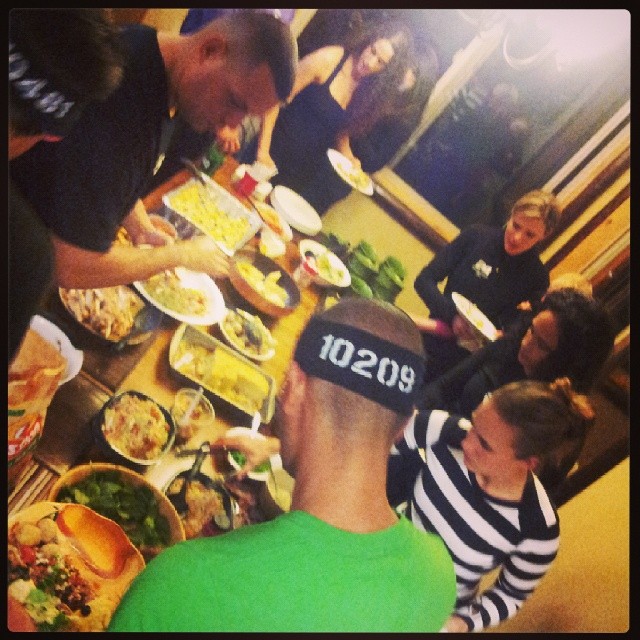
These athletes at Big Bear know that we need to eat until sleep!
5) I rarely step on a scale, and I only do measurements every 60 days.
It’s ok to not know where your body is moment to moment. I know that I am much happier feeling healthy and strong and not being concerned if I weigh 138 or 144. Do my pants fit? Do I feel strong during practice? Am I faster than other people? Did my squat max go up? These are the questions I hit myself with. It is good to track your metrics so that you know what your progress looks like and you can re-evaluate every 90 days, but our body fluctuates too much day to day to use a daily weigh in as a gauge. I have seen friends drive themselves crazy over this. It causes stress, which then feeds right into keeping the weight on. It’s a cycle. Don’t feed into it.
There was a time where this high-waist pencil skirt was too tight on me.
6) I realized that I eat mostly the same things every day, so I may as well make them healthy.
Before my journey began, I used phrases like “Variety is the spice of life”, “Diets are boring” and “I live to eat, not eat to live.” And then one day I realized that all I was doing was making excuses for myself and my habits. And then the next day I realized that I was repeating my meals every week anyway. I always had something egg-based for breakfast, I always had a sandwich or salad for lunch, I always had a protein with some carbs and veggies for dinner. (Back then I also always had 2 cherry sodas a day, a few soft pretzels and candy bars as snacks.)
If you can recognize that you’re really not as chefy as you like to think you are, you can tighten down easier on a schedule of healthy eating that is nourishing, promotes your goals and saves you money (now that I know what I want at the grocery store, there is no need to randomly pick up ingredients “Just in case”).
Also, shakes for meals are not nearly as scary as I thought when I first heard about them. Mostly because my shakes don’t come out of a metal can, I’m full afterwards and they taste RIDICULOUS. Also, when you’re eating 5 – 9 times a day (like athletes should), it’s a whole lot easier to scoops, shake, drink than it is to make 8 individual meals.
One of my favorite shakes right now!
7) I include workouts that are mental exercises.
Yoga and running are most specifically what I have worked on, though rock climbing and speed skating are another set of mental challenges.
I hated running. Hated it. Railed against it and refused to believe that it could help me (secretly, I knew it would, I just hated the way it felt because I was so out of shape). I will never forget running my first mile alongside of Eric Winters on the track of Mechanicsburg High School; technically I was his pole-vault coach, but he gave me the single greatest lesson of my life as the ex-boyfriend turned best friend:
Your body will do amazing things, if you just ask it to.
Conquering workouts that we hate means that we must overcome our self-doubt, our mind’s will to sabotage and we must release all of the excuses we have made in the past. Yoga, running, climbing, speed skating, cross-country skiing… there is quiet control and a zen-like state that must be achieved for success. You must connect to your breathe, to your soul, to the Universe’s will around you.
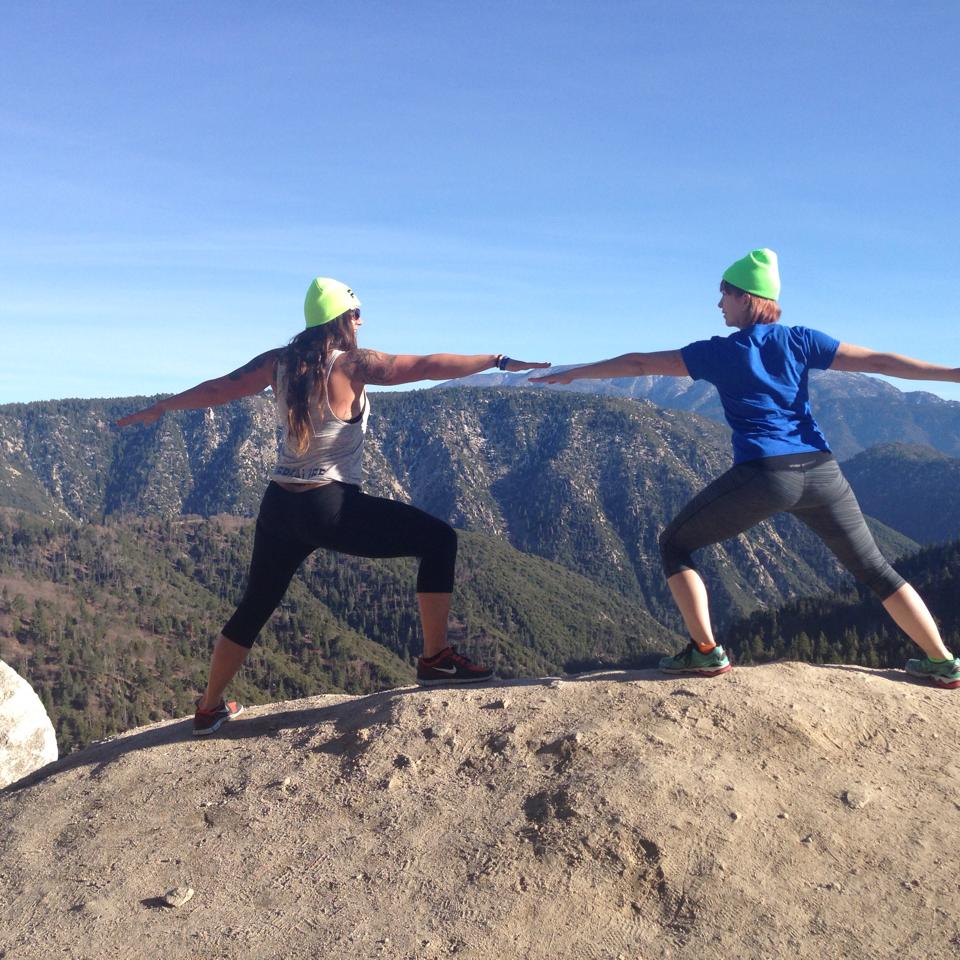
Bouldering is so much fun, and a true mental challenge – you know.. when you’re not posing for a cameraWarrior 2 on the edge of a cliff on the way to Big Bear.
Pro Tips: Set an intention at the beginning of the session. “Focus”, “Awareness”, “Precision”, “Fearlessness” are all excellent intentions. When it begins to get hard (and it will), repeat this to yourself. Also, I like to visualize something that I connect with that calms me. The giant manta ray that I would watch float towards me in the vastness of Atlantis’s aquarium in the Bahamas comes to mind when I am running and my breath gets ragged. I picture the calm beating wings to gather myself and then keep going.
The tranquility of the manta ray
To start on your journey with me as your coach, drop me an e-mail at KGreyActiveNutrition@gmail.com and follow me on Instagram and Twitter @Khaos24Fit
Here is another class that I revisited at BEAT ME HALFWAY 2014! I’m just going to revamp this blog to incorporate some of the new, fun stuff we did at BMH. We didn’t have the space we did during RollerCon, so we couldn’t do as many of the fun routes.
This was my most popular class .. probably because it was offered the most out of all of them! Here is a run down of what we did (mostly), and explanation of the trickier named things on the list, and drawings of the ladders and routes. E-mail me at DerbyAmerica@yahoo.com if you need further explanations!
For everything – focus on derby position, sharpness and PRECISION. It is better to do it slow, low and precise than sloppy, high and fast.
Warm Up “Jump Rope” (basic, feet back/forth, feet in/out) – each for a minute Squat Jumps
Walk these across a space: Lunge & Stretch – As you lunge, bring the elbow of the side that is forward down to the floor next to that foot (right leg is forward, right elbow comes to match it), look up at the ceiling, hold for a second and come up. Side Lunge – You will move to your right, bringing your left leg behind your right and touching your knee to the floor in a ‘lunge’. Stand back up, and now bring your left leg in front of your right to complete the lunge. You should do this both directions. Monster Walk – Keep your body tight. Flex your feet and bring your right leg to a 90 degree angle with your body. This should be slow, controlled and precise. This is NOT a high kick. This is not fast. Bring your foot back down slow and controlled. You should have only traveled one length of your own foot.
Quick feet = lowering yourself into derby position, and jack hammering your feet into the floor. When in the short stance, you should be on your toes. When in the wide stance, you should be on your heels.
Ladders The goal is to hit both feet on each step to increase the difficulty. It’s better to add an extra step in rather than trip up your brain. Also, if you lead with one foot the first time through, try to lead with the other foot on the second.
Yes, the orange is in the push-up position. Scoot up the ladder by moving your hand and foot at the same time to gain momentum. Keep that butt down!!
Routes Use routes to develop quick twitch and explosion. Incorporate side-stepping, loops, spins, back pedal, quick cuts and full stops. Use cones to develop routes. You can even incorporate football more by making the skaters catch something at certain points in the routes. This will not only force them to keep their eyes up, but will increase their awareness for the world around them.
Use cones to denote places of action, they are quick and ease to move around into new patterns. Also, linking patterns makes for a harder workout. Set up three patterns in a row and have your people move through them by jogging from the end of one to the beginning of the next.
Once you get a feeling for how patterns work and how to incorporate motion into them, it’s just a matter of making things up for you to do. You want to do routes a minimum of twice. Up to 5 times for maximum burst work. Stay low. Do everything sharp and precise. When you say stop, STOP DEAD and QUICK. Burst back out of it. Work on making some patterns very tight, and some longer to get a variety of speed adjustments.
Don’t be afraid to add some hand-eye coordination. You can have one person in the middle throwing a ball at people at different points of the routes, or even the next person in line will throw the ball to the person doing the run currently.
Box Drills
Set up your cones in a square. Now pick some different routes to run! Some ideas…
– Shuffle left, sprint up, shuffle right, back pedal
– Spin at each cone, hit each cone twice
– Sprint to each cone, use your feet to ‘circle the top’ of the cone, like you would if you were playing soccer and faking out the opposition
Some things to think about again is keeping low, keeping tight, and being PRECISE! Don’t let your hips swing, keep them square as you move through any box or route drill. Stay low, loading your legs with power, and keep your eyes up, and be quick and tight with every motion. Going onto YouTube and watching football (and futbal) players doing box and footwork drills will really help you understand how to stay in the “box” of yoru own shoulders and keeping your weight centered and strong.
Don’t be shy about checking out my other blogs too. Some that might be of interest to you:
And message me at DerbyAmerica@gmail.com if there’s a topic you would like me to cover in the future. I’m available for roller derby coaching and clinics! Drop me a line to get rates and to set up something with your league.
Ok I hate the cold weather. That’s not much of a secret. I also hate that for the last week straight there has been ZERO sunshine. It’s just grey outside all the time. It is downright draining. On top of that, I have had a really hard time focusing because my laptop’s charger went kaputsky and our oldest boy, Abbey, has been really sick and we had to take him to the vet for hydration and meds.
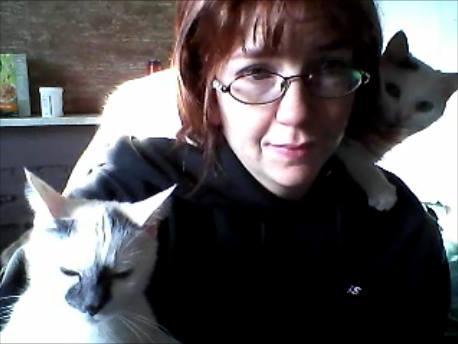
Yes, Abbey is one of our cats. Don’t judge. He is fur children.
Well things have been looking up! Though my time at the bridal show hasn’t been 100% successful yet (but I know it will be), I know that I have laid groundwork with brides and some other vendors to be able to start working in the bridal industry again (and I’m so excited for that). In fact, you can check out my OTHER blog – Fit2TietheKnot.com … you should follow that too and tell your friends. I got to connect with old friends Linda Kelly and Mary Ann Naglieri at the Unveiled13 Bridal Show by Metalaye. Who are they? They were my Mary Kay sponsors!! (Ever wonder why my derby name is Merry Khaos?) I also got to see Nuria (who is now the event planner at AACA) and Melissa (who is the event planner at Metalaye). Together, the five of us would brave the weekends of Alfred Angelos together in Harrisburg.
What other job would I have been able to reconnect with them in such an awesome way! I’m so excited to work with all of them in the future! Mary Kay/Herbalife parties… consultations with brides… snacks and health for all!
So, because my charger has not been working, I’ve been looking for another way of reaching out to people and today I followed through on an idea I had a while ago. Why not reach out to my neighborhood? Let them know I’m here? So today I spent a half hour running and dropping door hangers onto my neighbors doors!
Not only was I able to let people know that I’m here, but … I was able to get an extra workout in!! I’ve been having a really hard time getting myself OUTSIDE to run. I’ve been feeling it at practice though. When I jam, my short burst endurance and long endurance are NOT what they were in October. So I really have to push myself to go further and harder on my non-practice days. The big problem getting outside? I have to dress like Nanook of the North because it’s below freezing outside and I was not built for those temperatures.
Branded ninja. You don’t see that often.
So running. And lifting. And doing the 24 week DVD series 24Fit by Herbalife. And lots of protein. And lots of water. And lots of shakes and vitamins and goodness!
This is why I love my job. I get to be healthy! I have to be healthy as part of my job! I get to set goals and accomplish goals and feel awesome about myself because I am the healthiest and strongest I’ve ever been. I get to talk to people about how they can do it too. I get to help my friends live better and maybe make a couple bucks on their own. I’m still finding my way, but I love that my friends are finding their way with me!
Post-workout mug of awesome.
And now, I sit with a penguin mug with lemon tea concentrate and herbal aloe. I will be delivering goodies to my friends as soon as I can. I will be helping other athletes in my area be hydrated, stronger and faster. I will help other people be healthy. WOO!
PS Bank track tournament April 19-21 in Harrisburg, Pennsylvania: Derby Ink Invitational. We’ll have a ‘Derbalife’ table there. You should make sure you check it out.
It’s Nopacolypse so I figure, when better than now to write a free form, fairly disjointed post!
Update #1 is about the knee. This weekend I went to Jingle Brawl, hosted by the Morgantown Roller Vixens in West Virginia. I was going to attempt to compete, but first I had to test the joint. I have not hit since Kick Ash popped my LCL in October, so let’s give it a shot. Well, I swung in on my expected team mate, JK LOL and the moment I made contact … I heard another pop. My entire joint felt shocked and started trembling. I immediately left the track.
I probably could have pushed through it, honestly. But not for a group of mixed games. Not happening. Aside from that, my knee had begun the disturbing trend in the last week of popping and clicking a lot. Sometimes it feels like when my knee cap cracks, and sometimes it buckles me.
So back to the Penn State doctor I went. His diagnosis? Still was an LCL sprain. only that’s healed. “Skate. If you can’t stand the pain, do your hitting too.” Oh, and get an MRI because you might have some cartilage getting caught in the joint. Or a ‘ligament snap’ … think about plucking a guitar string. Yea.
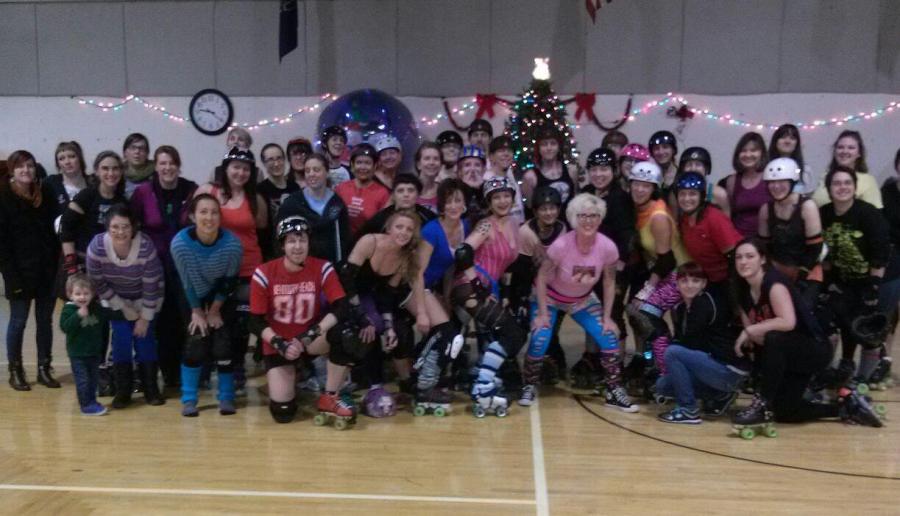
80s Holiday Party with the Dutchland Rollers!
So last night I went to Dutchland’s holiday party (skating and goofing off) and it kind of felt ok. I didn’t skate on it for a while, on and off. Lightly. It tweaked once while I was trying a transition, but that’s it. Tonight I went to open skate. Members of my old league were there and I used it as my cardio. I spent a solid 45 minutes skating at one point. (30 minutes before that). One: My endurance is GONE when it comes to all my skating muscles. Two: Other than a couple motions, my knee felt awesome. I even went to the gym afterwards to do some strength training.
That being said, here are some of the weights that I’m up to:
Leg press (right leg): 55 pounds
Leg press (left leg): 55 pounds
Leg extension (right leg): 40 pounds
Leg extension (left leg): 55 pounds
Bench Press: 40 pounds
Straight leg squat: 60 pounds
Overhead seated press: 15 pounds/hand
One Leg Squat: 25 pounds
Peck flys: 55 pounds
Delt flys: 40 pounds
Push-ups: Ok… I’m only up to 3o but I’m always so sore from all the other chest workouts!!
I have been doing resistance of 5 on the elliptical, and 7 on the bike. I have been doing as much interval training as I can. My weight has stayed about the same, but I have definitely trimmed up more and my guns are looking AWESOME. Thank you Rebuild Strength for my muscles. Thank you Joint Support and Herbalifeline for getting my knee strong quicker.
Thank you tea concentrate for getting me through finals. I’m still waiting on two grades, but so far I have an A and a B+ in the books. I’m nervous about the 15 page thesis paper I wrote for my theatre class…. mostly because I feel like it should have been 20 pages, but I didn’t want to speak in psychological jargon for five pages (which I would have).
It doesn’t appear as if we’re going to be experiencing any kind death and destruction, so now I turn my focus onto 2013:
I am building my Herbalife team. I have so many ideas of great things to do, and great people to talk to. I can’t wait to help more people reach their goals and to build a successful team that helps to improve the quality of life for people they care about. I can’t wait to #KickAlloftheAsses in 2013. Let’s loose weight, feel awesome and build successful careers!! I’m going to be doing Derbalife clinics and boot camps and Krissy Krash and I were talking today about how to expand the boot camps into something that we can teach other skaters to do!
Active World Team – I am coming. (Maybe someone reading this blog entry will decide to come with me.) January Spectacular is going to be awesome! I’m so excited for all the trainings that are coming up so I can share them with my team.
I also will be back on my skates full force in 2013. You can bet on that. I’m getting so close to healthy. Something I noticed today? My knee didn’t pop once. While I had become accustom to multiple crippling pops a day, it has not happened at ALL today. Very encouraging.
I also will be graduating from college (FINALLY) in the spring. I cannot wait. Finally. 4th time is a charm.
Ok, time for bed. I should have been writing articles about all star teams instead of writing a blog entry, but I to do a little writing for myself. Even though I’m so tired that I’m dizzy at this point. I know there is more going on. I will do some goals and post them here soon.
PS… Want to know what I’ve been using and loving? I don’t rely just on the 24 line, but it is an integral part of my training and recovery.
Knowing how your body feels before you go into activities, and then through the activity and then afterwards .. It is something that people do not actually think about taking note of. Anyone who is working out or considers themselves an athlete needs to understand their body to a more heightened level.
What I am finding through this recovery process, is that I am so scared of the new pains and sensations that I feel in my leg and knee. I am so in-tuned to my joints that whenever I feel something different, I recoil. I become tentative. I do not have a physical therapist to walk me through the process of recovery, so I am in a trial and error phase. I must make notes of what happens when, and hope that I can find resources online that tell me that those pains are normal.
Physical therapy is supposed to be hard. It’s supposed to hurt and from everyone I’ve ever talked to, it is just not comfortable. However, what is TOO much pain? What is the wrong pain and what is the right or wrong amount of rest time in-between strength training or cardio training?
This is what I’m trying to get back to. Photo by JPaden Photography
While at the gym three days ago, I was finished with my leg day (leg press, leg extension, leg curls, abduction, adduction & straight leg ‘squat’) .. I was stretching my hamstrings and using the ballet bar. When I proceed from stretching my right leg (the bad one) to the left, I had a bad moment.
My right foot planted, parallel to the ballet bar, I lifted my left leg to place on the bar. When my right knee twisted it felt like .. well .. kind of like a white hot poker was shoved into my knee from the outside, in. I have to mention that it was probably a bad idea to have worn heels to a derby banquet the night before, so it was already sore.
Did I just overdo it? How do I know? I rested for the next two days except for some calisthenics. I feel a constant pressure on the outside of my leg. I am still icing. I am eating lots of protein, keeping up with vitamins, eating low sodium and drinking lots of water.
Today, I hop on the elliptical. The INSIDE of my leg was hurting, and a tingling feeling extended up my femur for about 10 minutes. I did 25 minutes and then moved to the bike for 35 minutes. I’ve iced. I take pain killers. I’ve taken anti-inflammatories. But the outside of my leg is still very tender.
Can you tel which is the bad one?
So the moral of the story? If I weren’t self aware, I wouldn’t know when things do not feel right. If I weren’t self aware maybe I would have plunged through the workouts and not noticed the leg tingling on the elliptical and I would have done a higher resistance for a longer amount of time than I did.
Know your body. Love your body. Trust your body. But… asking for outside help is necessary sometimes too.
(Anyone know a good physical therapist?)
As a final thought … Despite feel squishy the last couple days, and having those two rest days… My legs and arms are getting RIPPED.
Although this blog is a smattering of topics right now, I do want to make sure I have a log of my journey and progress in here from now on. I do have to make one WordPress complaint however (especially since I know my PR teacher will read this at some point) – there is a text delay. When I type, every four characters, the program stutters and then I’m reminded to just type it in Word, copy and paste.
Much better.
The last two weeks have been a blur for me. A huge, hazy, unproductive blur of “what the hell is going on”? It started before that, but what made the final piece of my life spiral out of control was the bout against Philly Roller Girls.
I had trained for two and a half months for this bout. I felt awesome. I was concerned about being able to warm up properly, since we were playing the second game (which meant that I had pre-game duties and would not be able to jog right before gearing up). Something felt off about the atmosphere, but I couldn’t place my finger on it. I just knew that I would be on the line against women who had played at Championship levels before.
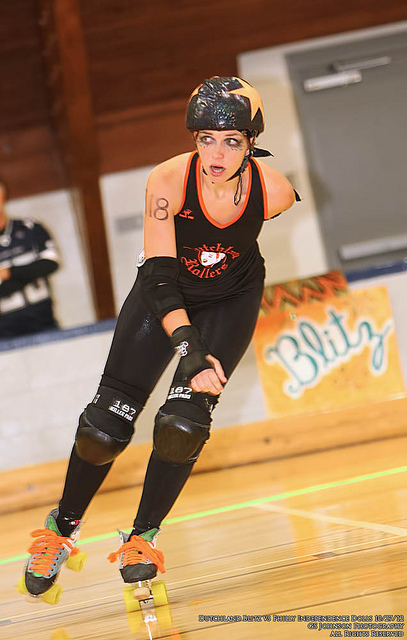
Scott Johnson Photography at Dutchland Rollers 2012
I’ll tell you what – I held them too. Mo Pain could not get around my passive blocking. Mo Pain did NOT get lead jammer against me. However, I landed in the box on jam 3. On jam 4, I came out, tried to take the outside line (which I have been trying NOT to do) and Kick Ash clocked me hard enough to send me into the penalty box. My knee was sure to pop before I went barrel-rolling the 20 feet however.
That was it. I feared forever.
At the ER, I was given a stabilizer, some meds and told “follow up with it in 2 weeks, and if it feels better you won’t need an MRI.”
“Right,” I thought. “It popped. I’m going to need an MRI. I’m going to need surgery. I can’t believe this.”
I told my team and my friends that everything was uncertain, but my goal was January 1 to be back on skates. After the first day I could put weight on it, if I was pointing my toes. Day 2 I could put weight on it. Day 3 I could walk stairs without my stabilizer and could do one-legged planks, push-ups and anything where I was sitting on the floor.
The next weekend I hobbled around Championships.
Philly made sure to come up and talk to me and tell me that I looked awesome right before it happened and they were so sad to see me injured. People I had only known on Facebook found me to see how I was doing. The derby was so inspiring. The people and community were so supportive.
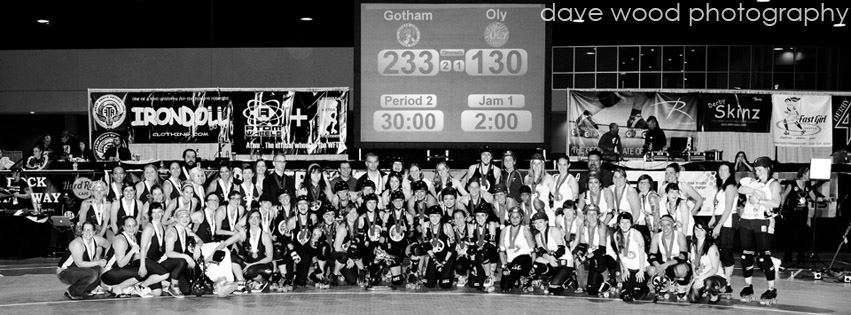
Medal Winners Grits & Glory 2012 Dave Wood Photography
Plus, seeing how the biggest weekend of the year is organized was a great experience and awesome insight for my internship next semester.
The next week I weaned myself off the stabilizer. I went to the gym. I did 16 miles on the stationary bike on day 12 and 14 miles on the bike on day 15. Today, day 16, I had an appointment with the Penn State Wellness Center doctor. After 20 minutes of questions, stability tests and poking the diagnoses:
I suffered a minor strain of the LCL, and the popping I heard was probably a few fibers tearing. My knee is too strong, too stable and does not have the swelling or pain indicative of a possible tear.
The doctor’s reason for my slight injury and quick recovery: My intense training routine and my strict nutrition. Because I am constantly feeding my body, constantly giving it vitamins and protein and because I am so relentless about my water intake, my body has every tool it needs for recovery. I have been diligent about my icing, compression and elevation as well which has had an impact.
My strength was good when it happened, which prevented a serious injury. The muscles absorbed much of the blow, and the ligaments/tendons surrounding the LCL were as strong as they could be.
If I hadn’t been in such amazing shape – I would have blown my knee for sure.
So I have a definite 4 more weeks off skates. He gave me strength routines and specific benchmarks to reach before returning to the instability of roller skates. I will follow everything. My off season is going to be fantastic and I will come back even stronger than before.
Both a blessing and a curse is creating a brand within a brand. For myself, I have two brands that I fit my Health Coaching within: Herbalife and Derbalife.
Huh?
Yes. Herbalife is the large face of Nutrition that I work under. I am a Health Coach and I utilize the Herbalife nutrition and resources. Herbalife has been promoting health and wellness since 1980 and are the top nutrition company in the world. I have a strong brand to stand with.
Derbalife is a brand within the brand. Kristen Adolfi created the brand “Derbalife” three years ago when she began focusing on the health and fitness of the roller derby community. It started as a joke within the LA Derby Dolls and now has expanded to a worldwide recognizable name within the derby community.
So, in the everyday community I must create an image of Kristie Grey, Herbalife Health Coach. Then, in the derby community I must create the brand of Merry Khaos, Derbalife Health Coach. It sounds redundant, but it is necessary. The regular person at the gym is not going to recognize Derbalife (or may feel alienated by it). Something similar will happen with derby folks – they recognize Derbalife. They may think Herbalife is something different so I may have to work twice as hard to get their attention.
It is an interesting balance to work within two brands of the same company. Creating my own image as a Health Coach is reliant on the brands I work within, but then I must create my own path. Sports nutrition? Wedding parties? Weight loss? How do you tell people that you do it all without seeming to spread yourself too thin?
Primary audience and secondary audience are in the works. For now, I will work on getting every client I can and helping them get the results they deserve. The branding will have to be balanced as I go. So far, people who who have contacted me about getting results are not as concerned with the logo on my business card. I hope that continues!
















 Khaos Theory Derby