The Reappearance of Khaos

So… my blog has been super quiet for a while. Sorry about that. It hasn’t been for a lack of wanting to write, or for a lack of material. I have about three blogs either outlined, or in the works including “balancing the zebra and the lion”, “creating the plan” (how to schedule your training and why), one about how to overcome the difficulties of transferring, and one about what it means to really be a part of a team.

It’s Why has my blog been quiet? I’ve been back to the life of the “real world”. I’ve lived in three places since I’ve been here in Florida and FINALLY have settled into a little town called Gulfport, and landed me a job at a place called Taco Bus. And quite honestly, when I get home from running around slinging tacos for 6 hours, I have a hard time mustering creativity.

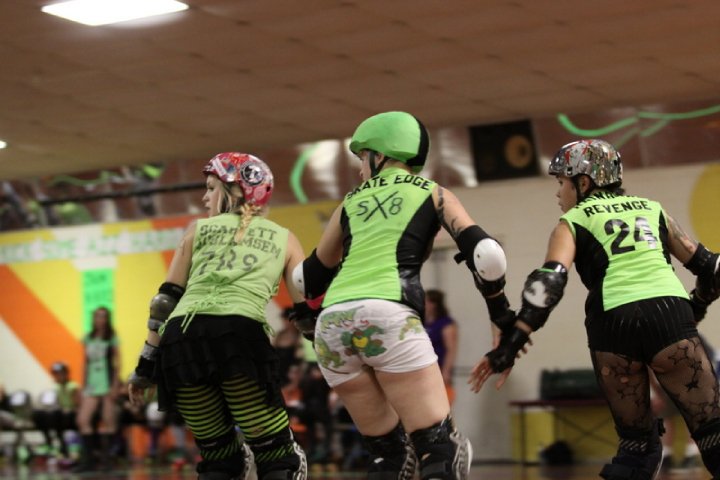
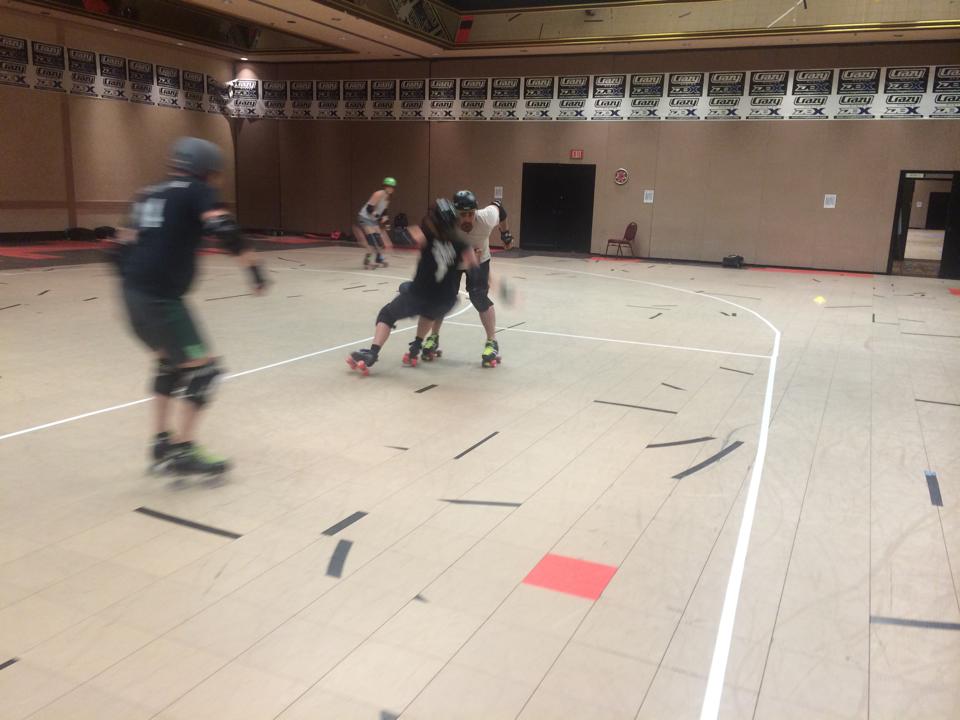
Also, I have been skating 4-6x a week. Monday, Wednesday, Saturday, Sunday I train with Tampa Roller Derby. Currently I’m a blocker on the Bruise Crew and the Black Widows, and I hope that one day my team mates will see enough potential in me to make me a Tampa Tantrum, and I’ll get to wear a shiny WFTDA patch on my jersey again.

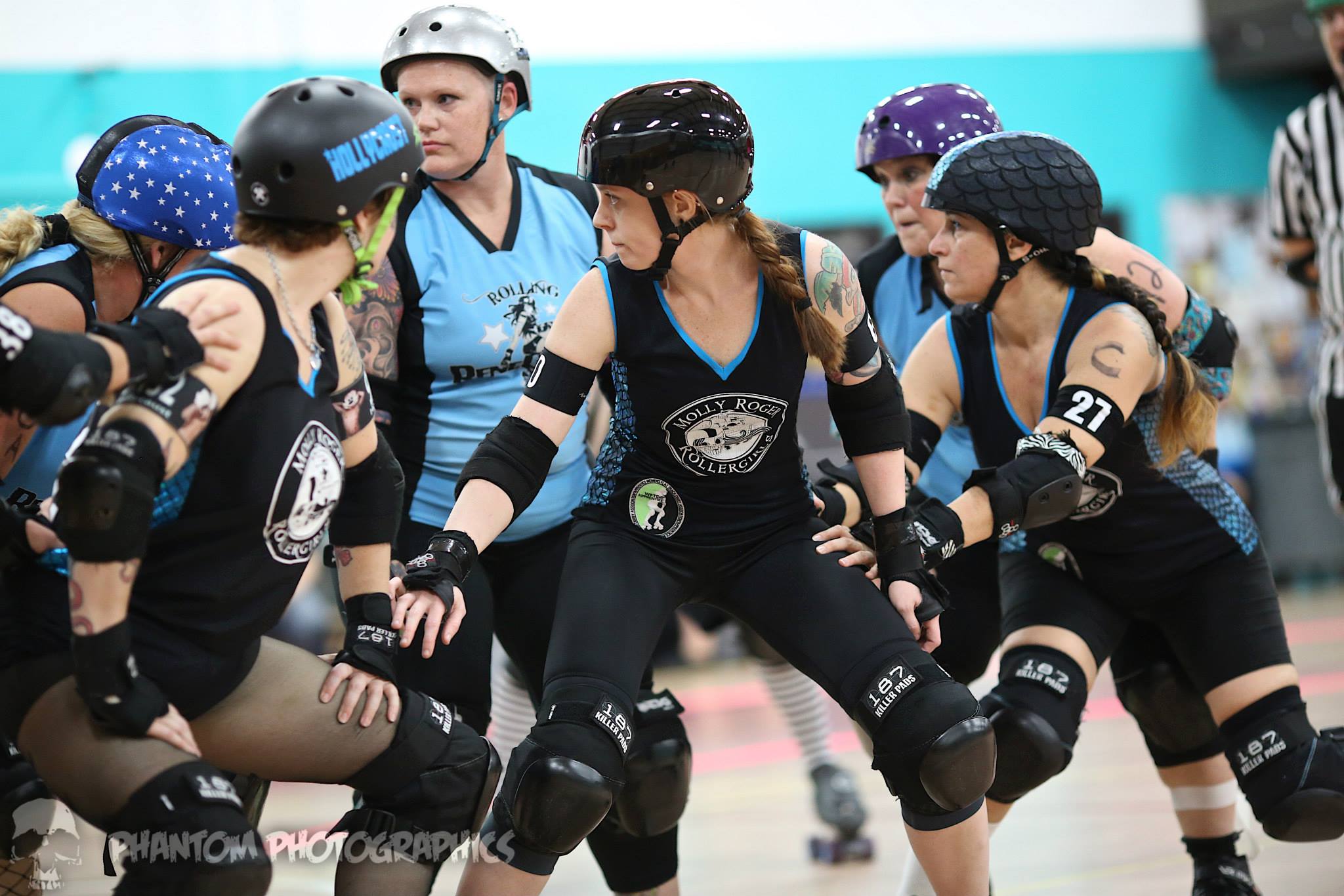
roller derby tampa
Bruise Crew 2015; Photo by Phantom Photographics

Tuesdays you can find me with the Tampa Bay Men’s Roller Derby. I’m officially recognized by the MRDA as a ref (woot!), and technically am TBMRD’s head ref. This rainbows into the other things I do on the weekend. Most Saturdays you’ll find me either making calls and wearing stripes, or you’ll find me playing on Team Zebra.

You can see me in the background there, all disguised in stripes; Photo by Phantom Photographics

When I’m not skating for Tampa, I’m usually at a fundraiser for the Bruise Crew, or a league appearance, or I’m straight up at the gym. I train 3-6x a week; 3 days of weight training, 3 days of conditioning (assuming my work schedule and traffic allows).

What else have I been up to? Well there have a few times that I started to write blogs, and then remembered that I have deadlines to attend to. I’m now writing a column for JAMMERLINE MAGAZINE out of Canada called “Below the 45th, which is focused on US derby. I also have been asked by BLOOD AND THUNDER MAGAZINE to do articles and blogs concerning off skates training. I’m also piecing my book together. I had to rewrite a BUNCH of it since my perspective on training has shifted a lot in the last year and a half.

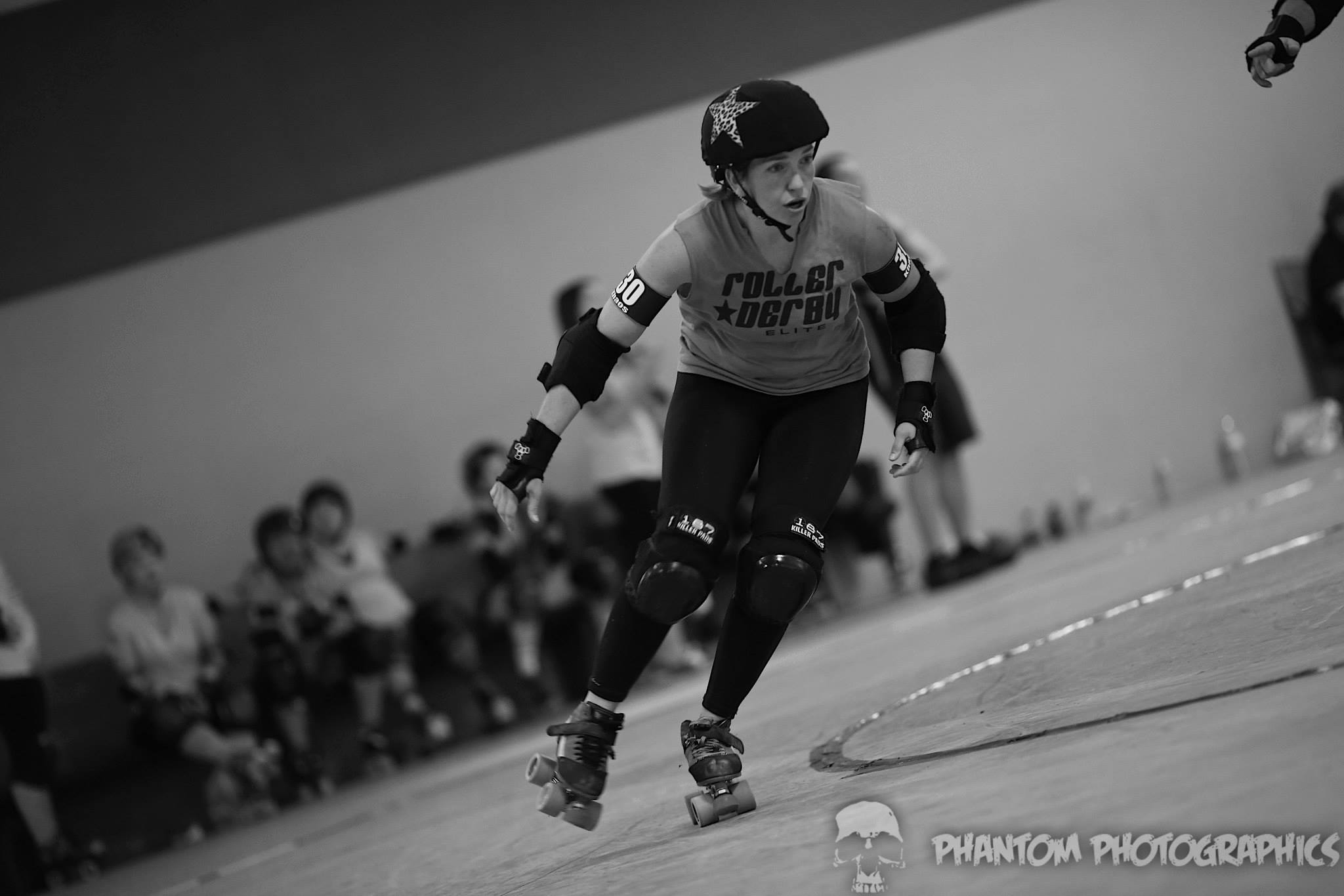
Mashing it up, and jamming through; Photo by Phantom Photographics

The last piece is Derbalife. I’ve gotten settled in enough that I have started my business of health coaching back up and I’m getting back to my roots of helping people with their NUTRITION. A bunch of us coaches had gone astray and gotten distracted the last few months, but now we’re locking arms and changing the world!

There is another reason I haven’t written much. And that’s because I had gotten a bit discouraged. Over the years, it has gotten more difficult to find photographs to use in my blog. I am not a photographer. I will not pretend to be one with my iPhone. I have too much respect for the craft. But I am also super wordy. ^^^ As you may have noticed. To have blogs without photos to break up the scheme, it’s really hard to read.

I, by no means, want any photographer to feel undervalued or that their work isn’t worth purchasing. That being said, I have been hand washing my clothing for the last 4 weeks instead of going to the laundromat just to have extra money for food, gas, and bills. This blog makes zero dollars. I write because I love to write, and because sometimes people like to read it.

The whole thing had gotten really depressed and defeated honestly. I didn’t want to write because I knew I wouldn’t feel confident publishing without photos. But … now that defeat has gone away. I’m super stoked that Florida has Phantom Photographics down here documenting all of the awesome that is happening.

Junior roller derby
Photo by Phantom Photographics

Florida derby is expanding SUPER quick, and the competition is getting very high amongst the teams. Phantom is one of the photographers that travels around the state and takes PHENOMENAL photos! MRDA, JRDA, WFTDA; he does it all. He does a lot of portrait work too, which I’ve always been a fan of.

State Wars Roller Derby
At State Wars Roller Derby; Photo by Phantom Photographics

For those of you from the Northeast, he’s like having a Sean Hale, Prints Charming, Sir Clicks-a-Lot, Rick Odell, or Shutterfly. And he’s super nice. So… Go visit his page because he’s awesome. I’m so happy that he’s letting me use his photos in my blogs, and I feel confident in writing again. 😀 You should buy a shirt from him too. (PS if you’re a photog and you want me to feature any of your photos, don’t be shy in letting me know!!)

Phantom Photograhics

If there’s a topic you want to see me cover in an upcoming blog – drop me a line at DerbyAmerica@gmail.com ! Have you gotten your ticket to RC? I’m submitting to teach classes again. I hope to see you there at the WESTGATE!! If you don’t already, follow me on Instagram at KHAOS24FIT

Alcohol and its Effect on Athletes (Blog Reboot)

Alcohol is the enemy of the athlete.

This is not a self-righteous rant against imbibing. If you are over 21, you are more than capable of making decisions. For competitive athletes, it is good to know everything about what you put into your body. How many of us labor over the protein content of our bread, or spend hours deciding between the benefits of certain pre-workout drinks, yet do not know the full range of side effects of drinking. There is a plethora of studies that show that alcohol is altogether bad for an athlete’s progress, so while the news should not be shocking, I feel that it’s important to explain WHY you should avoid that  weekend binge.

Side note: I’m not a biochemist. I am translating here the research I have read over the course of my studies and have sited sources at the bottom.

Drinking casually is often seen as a way of relaxing; it’s a social experience. Drinking after an athletic competition, like a derby bout or scrimmage, is often associated in the brain as a reward for a job well done. Many of us in the community have trained our brains to crave the alcohol as a way to bring the body down. We arrive at our after party spot and our sense memory is activated. Suddenly, all we can think is, “And now we order a Water Gap Wheat!” Drinking is also, sadly, part of the derby ‘tradition’. What is a bout or tournament without a raucous after party? How many teams brag as much about their after party ‘wins’ as they do about their ACTUAL wins?

Most athletes are uneducated (or flat out ignore) the biology of alcohol. If more knew what was happening, more might turn down that pint the day before a competition.

Your nutrition can be the reason why your training plan is (or isn’t) working out for you. That’s great that you lift and do plyo 4x a week. However, if you are living on fast food and tequila and expect to escalate quickly to the ranks of the Gods, you need to re-evaluate. The likelihood of you raising to elite athlete levels is much lower on this nutrition plan than someone who is training as hard, but pays attention to the daily macros.

So what’s the big deal about booze?

Did you know that alcohol can effect the body even 48 hours after consumption? While it may be gone from the digestive tract, the aftermath lingers in cells and systems. It can effect rationale, balance, and dexterity.

Alcohol is metabolized differently than other foods. Unlike sugar, fat, or protein, the body has nowhere to store alcohol. It’s only option is to metabolism immediately. So let’s say you are eating food after your competition and have a few shots. The body will place priority on digesting the alcohol to move it along, instead of the food, thereby preventing the body from properly converting food into energy. When calories are not metabolized into energy, they are stored as fat for the body to ‘deal with later’.

Are you not eating anything with your drink (also is not wise, but let’s just pretend for a moment)? Unless you’re taking straight shots, your drink will have additional sugars and carbohydrates that will also not be processed into energy; this is Beer Gut City. Though to be fair, if you’re taking straight shots at the after party with no food in your system after you have competed… there may be a secondary discussion that you need to have with your coach.

Beer spring
Spring Roll 2014 after party

Along with inhibiting metabolism, alcohol saps away Vitamin A (which is the driver of the immune system bus) and Vitamin C from the body. These vitamins are critical in many cell making processes, not the least of which is protein synthesis and new muscle cell creation. Calcium is processed from the body at twice its normal rate during intoxication. Remember, vitamins do not just live in our system. Like food and water, our body absorbs vitamins, uses them, and then needs more. Basically your body burns through calcium way quicker than normal when you are drinking. Women already have trouble absorbing this nutrient, so putting yourself at a further disadvantage is not a wise choice.

Calcium does not just “make for healthy, strong bones” [though it does, and roller derby is a contact sport so let’s not weaken our skeletal structure more]. Calcium helps blood to clot, wounds to recover, and helps to regulate in muscle contracts, like the heart beat. Wound recovery happens after every hard training session. Your muscles are not just sore from a magic chemical in your body, you are sore because you have damaged muscle tissue. You build muscle when your body repairs that damage.

The moral of this story: muscle and tissue recovery is directly effected by alcohol consumption. If your body is lacking the ability to repair itself because of a lack of calcium, you will not get stronger. Also, for as sore as you were going to be anyway? You’ll be sorer, and possibly for a longer period of time.

Dehydration! Every athlete’s least favorite word.

The kidneys and liver are key in the metabolism of alcohol. In order to assist the kidneys, the body diverts water from other parts of the body to flood these our kidneys. All athletes should understand the importance of water to their health and recovery processes: water keeps cells healthy and replicating properly. We are 70% water and even without the alcohol, most of us do not drink enough water.

The liver is what produces glycogen. When it is busy metabolizing alcohol, it cannot be producing the regular rates of glycogen. It is glycogen that the body relies on for most bodily functions.

It is the glycogen that brings energy to our muscles, but our source has been disrupted. This is the metabolism-inhibition process. To make it more fun, without the hydration and glycogen, the byproducts of lactic acid will build up in the muscles. It is that acid that causes the “burn”, and the byproducts that cause the DOMS. If you drink days before your competition, fatigue will occur far quicker. If you drink after your competition, your water intake will be diverted from your muscles to your kidneys, glycogen will not help you to continue to have energy in your muscles to make new cells, and the vitamins will not be there for the wound recovery anyway.

See how it’s all tying together?

In the realm of cognizance, most know that alcohol impairs the brain. In what way, and how quickly though? Since alcohol is so quickly absorbed into our systems (about 20% while in the stomach, the rest while in the intestines), the effects happen within five minutes of ingestion. So that “one for the road” that people do is a really bad idea, regardless of training status.

What basically happens in the neurological system is this: Neuron receptors in the brain are numbed by the metabolized alcohol, which reaches your brain as acetate (yes, acetate, the same stuff we old timers used to develop film). The alcohol slowly shuts down the cerebral cortex, the center of the brain that is in charge of functions like rational thought. In its place, the limbic system calls the shots to keep things running. This is the most primitive part of the brain. It is purely emotional. It is the reason your friends take your cell phone away from you after you begin drinking Mojitos.

Aside from placing beer goggles on you, the shut down of the cerebral cortex means that you have lost some control over your balance, reflexes, and dexterity. Do you really want to be lacking these three pieces of the puzzle the day before you play a bout?

Oh and just for funsies, here’s another great side effect. Alcohol in the blood stream causes blood pressure to go up, causing abnormal heart rates and changes. Also, the synthesis of cholesterol increases when you have alcohol in your system; so more cholesterol is finding its way to the heart than normal. Yes, more of that blood pressure stuff.

Ever drink a couple days before a practice and your cardio conditioning is shot? You feel like your head is pounding and your heart is racing the whole time? That would be from that elevated blood pressure. Plus the dehydration. Plus everything else we’ve talked about.

But wait! You say ABC News told you beer is great after a workout? It’s “more hydrating” than water? That’s what you’re going to write in the comments, right? Yes, beer has grains that would, in theory, help the carbohydrate replenishment your body needs. Yes, booze does spike your blood sugar the way sugar does (and the way your body needs to begin the processes of repair).

beer

However, the ALCOHOL in beer will dehydrate your body, and it will inhibit testosterone secretion.

Ladies, you may think you don’t need test in your system, but you do! We all make testosterone naturally and lifting weights will increase the testosterone production. So guys that suffer from Low T? Try a few months of 5×5 stronglifts before reaching immediately for medication. Ladies that are low on sex drive? Let’s get you deadlifting!

What else does testosterone do? It not only increases the size of muscular cells, but also encourages the production of new muscle cells (Greenfield). Larger cells means an increase in power capacity. More cells means greater power and quick-twitch strength (Greenfield).

So …. what?

So consuming alcohol even semi-regularly, will have an adverse effect on training and progression. It slows muscle recovery, makes cardiovascular endurance harder to build, decreases the rate of muscle cell production from normal rates, and keeps the body from performing normal functions.

Drinking a few days before a game could change your performance the day of competition. Drinking after a workout could negate some of your progress for the day.

Will having a drink destroy everything you have worked for? Absolutely not. However, exercising true moderation and limiting your consumption will have visible results whenever you lift, run, or compete.

To help combat the effects of your favorite beverage, make sure are properly hydrated throughout the day. When in doubt, drink a gallon. That’s my motto! To keep it up with booze, drink an extra 12 oz of water to every 8 oz of liquor (or equivalent). Take vitamins throughout the day, and eat plenty of leafy green veggies.

The best combatant is to not make drinking a habit, or drink alcohol at all.

Want the atmosphere, but not the alcohol? There are a lot of great books with non-alcoholic drink recipes out there! Pick up Zero Proof Cocktails: Alcohol-Free Beverages for Every Occasion and The Ultimate Party Drink Book: Over 750 Recipes for Cocktails, Smoothies, Blender Drinks, Non-Alcoholic Drinks, and More for delicious recipes that won’t kill your gainz.
10703505_10154577957895494_16893029534571617_n

Resources:

Greenfield – http://www.quickanddirtytips.com/health-fitness/exercise/should-you-take-testosterone-to-get-fit
http://www.rippednaturally.com/bodybuilding_effects_of_alcohol.htm
http://www.medicinenet.com/alcohol_and_nutrition/page2.htm
http://m.active.com/get_enough_protein_after_your_next_workout.htm
http://www.thehockeywriter.com/training-day-what-nhl-players-do-in-the-off-season

Eat Big, Play Big – Merry Khaos Notes

If you were in my “EAT BIG/PLAY BIG” class at Beat Me Halfway, you know we jumped around a little bit. This is not going to be a thorough explanation of the notes nearly as much as a bullet point list of what we covered. For more information, explanation, or to work with me on your nutrition plan, message me at DerbyAmerica@gmail.com

I will remind you that I’m not going into all the biochemistry of this. You don’t care about it anyway, you just want to know the what and the basic why. So this is like 1st grade chemistry when we are told “This is how it is!” and then in high school they say “Yea, ok BASICALLY that’s how it is, but it’s actually more like THIS.” So keep that in mind.

The 5 ‘Pillars’ of Athlete nutrition
– Calorie Count
– Metabolism
– Protein
– Water
– Vitamins

You must eat for YOUR goals. Roller derby is a contact sport, and a high energy one.  You should not be designing your food plan in order to meet society’s view of beauty. If your personal situation demands weight loss, then eat for weight loss. If you already are low body fat percentage, then don’t obsess over six pack abs, worry about your strength and progress instead.

I am going to focus on strength and athletic performance, not ‘weight loss’. Note – if you eat for sports performance and pair it with a proper training program, chances are you will lean out anyway. So it’s a win win.

METABOLISM

Basic idea: your metabolism is your energy mechanism and how your body gets vitamins distributed around the body. So if the metabolism slows, then your body can’t burn as effectively or get the vitamins you eat around to the places it needs to get to.

We keep the metabolism running by eating. Your body is like a bonfire. If you stop feeding the fire, it dies. If you stop feeding your body, the metabolism slows to a crawl. Think of simple carbs (like bread, sugar, rice) as newspaper, leafy greens as large branches, and proteins as giant logs of oak.

If you are doing heavy lifting (which we all should be doing) you can and should eat more simple carbs than someone who is primarily doing cardio.

CALORIE COUNT

You’re not eating enough. I’m making this judgment call based on the fact that you were interested enough in this topic to read. But chances are: you’re not eating enough.

How much should you be eating? Step one is to find out your “RMR” (Resting Metabolic Rate). There is a big long equation that you can google or go to my favorite cheat sheet right here!

To make it easier for you, I went and did some EXTRA research to see if I could find something a little more uniform. What I found they most for athletes that participate in an intense training routine:

MEN: 23 – 30 calories per pound of body weight
WOMEN: 19 – 25 calories per pound of body weight

If you are weight lifting at least twice a week with heavy weights, you should be at the higher end of the spectrum. On your rest days, go on the lower end of the spectrum.

If you’re eating 3000 calories a day, you should be breaking down your calories into many meals and snacks, not trying to eat three 1000 calories meals each day. If you plan out six meals, that means 500 calories per meal! These can be protein shakes, full ‘classic’ meals, bars, snacks, etc.

How do you know what to eat to hit that intake? Here’s a quick cheat:

1g of Protein = 4 calories
1g of Carbs = 4 calories
1g of Fat = 9 calories

I like to give myself a range, so I’m 150# right now. That means I should be eating between 3000 and 3400 calories. (Which means even I haven’t been eating enough!) Giving yourself just a ceiling can cause you to not hit a minimum. I’d rather you say “I’m going to eat at LEAST __________” as opposed to “I can’t eat more than ________”.

THE DIRTY BULK

Here’s where it comes in. We talked about “The Dirty Bulk” – the time where you just eat whatever you want (primarily brownies and fast food) and then you get ‘huge and strong’. Guess what? It kind of works in the temporary, but not for long term results, and not for what we are focused on. If you are a strict powerlifter, a dirty bulk is appealing. You don’t have to be strict on what you’re eating, you can stuff your face, you get big, you pull big numbers.

Powerlifters don’t have to try and catch The Smacktivist on wheels occasionally. Powerlifters don’t have to be as quick as Gnat King Kill. Powerlifters don’t have to out skate Mercy.

For roller derby skaters (and any athlete that treasures their cardio health), the dirty bulk packs on fat, cholesterol, and poundage that weighs you down instead of pushing you forward. There are times you could dirty bulk (a true offseason), but you would have to counter it with a very specific, strict period of eating afterwards.

Should-I-Dirty-Bulk

PROTEIN

We are made of protein. If you do not give your body protein, you cannot build muscle. You cannot repair or create new cells with optimal performance. If you don’t give your body protein to burn during competition and training, your body will burn the protein it can find – your muscles.

Is your hair thin, skin flakey, nails weak? Part of your problem could be a lack of protein.

Here’s your easy equation: Athletes need to eat 1g of protein per 1 pound of body weight.

Eating more will certainly not hurt you!

Because protein is the biggest piece of your caloric puzzle, you want to calculate that first! I’m 150# … I want to eat between 150 and 175g of protein per day. So that means 600-700 calories of my day come from protein. BAM. Now I know that about 2300-2700 calories have to come from carbohydrates and good fats.

Side Note: Good Fats = mono- and poly- non-saturated fats. Nuts, avocados, beans, etc.

BULKING MYTH

Ok, so something I hear all the time is “But Khaos, I don’t want to get big”. Guess what? You have to be super super dedicated for many many years to get big and bulky (especially women). You know what actually happens when you increase your calories and you start weight lifting and doing a hefty training routine? You lean the hell out. Your body takes the fat on your body and makes it into muscle.

Srsly. Your body needs fat to make muscle. It’s part of the process. So don’t worry about the “I’m going to get big”. You may gain some weight at first, but keep with it! A year from now you will look like a different person.

Not eating protein, not lifting weights because “I’m going to become a bodybuilder” is like not driving a car because “I’m going to become a Nascar driver” … it just doesn’t happen that way.

muscle_thumb

SOY MYTHS

Yes, there are some studies out there that say that soy is bad. However, there are just as many studies that say that you would have to eat SO MUCH SOY to get those effects that … well… I hope you have stock investments in Silk. I can show you photos of men and women who have been consuming soy protein as part of their meal replacements and snacks (edamame!) on a daily basis for a long time and they do not have extra fat. They do not have breast cancers. Coincidence SHOULD NOT imply correlation. If you’re allergic to soy, don’t eat soy. If your doctor tells you not to eat soy because ‘it’s bad’ then … well…

DOCTORS AREN’T NUTRITIONISTS SO HE PROBABLY GOT HIS INFO FROM THE TV.

WATER

We are 70% water. If we do not give ourselves enough water, our body will not have anything to use for…

Cell creation processes, our joints, our brains, our endocrine system, our blood, to flush out extra stuff in our digestive tracks, etc etc

Have you ever gone to practice and you tell your feet to do things and there is some kind of disconnect? You can usually do the things, but you just feel like there’s a lag? Could be dehydration.

Here’s your equation for athletes:

75% x body weight = Ounces of water to drink daily

A gallon of water is 128oz of water.

If you are more than 170# this means you must drink more than a gallon of water per day. If you have never drank that much before, and are super nervous about doing so, go to the grocery store. Buy 7 gallon jugs. Label with a day of the week. That’s your water for that day.

You will hate me for the first few days. Your body won’t know what to do with the extra water you’re taking in. KEEP AT IT! The water you drink today hydrates you a few days from now. You have to keep going.

urine_color_chart

WATER DROWNING MYTH

Ok, here’s the time of the day where people send me nasty messages about ‘not needing that much water’. When it comes down to it, I don’t know the exact, precise number of ounces my body needs from day to day. It could be 87.7oz. Do I get water from the veg I eat? Sure. But guess what? It’s easier to just drink my gallon a day and be done with it than to overanalyze and hope that I got enough in that day.

To think that every person can drink eight 8oz glasses of water and be good is silly. My body needs less water than Spectral Abyrration. He’s a dude. He’s bigger than me. For us to use ANY of the same measures for nutrition is odd.

ALCOHOL

Sorry guys. Alcohol is bad for you. No matter how you try and frame it. Is there carbs in a beer that are great for recovery post bout? Yes. But there’s also ALCOHOL. And that saps your body of water and vitamins. The negative outweigh the positive. Subscribe to my blog, I’m going to be rebooting my article about this pretty soon.

VITAMINS

Vitamins are what your body uses to create new cells. They are molecules that your body needs to initiate certain processes. Most vitamins and nutrients cannot be made by your body, your body cannot hold onto vitamins, and your body needs them throughout the day.

So moral of the story? You need vitamins all the time.

Why take a multivitamin? Mostly because we have such high vitamin needs as athletes (think of all those chemical processes going on in your body ANYWAY – then add all that training in? Your body is a madhouse of cell creation), that eating your vitamins through food sources only is damn near impossible. Considering that our food supply is much less nutrient dense than it used to be due to over-farming, picking before ripeness, and shipping long distance.

You can argue with me if you want, but seriously, it’s true. You can tell me that you “eat frozen, and buy local, and do all the things that make me wrong”, but guess what? Still not as nutrient dense. Sorry. And again, if you can take a multi and cover the gaps in your vitamins that you may not know you had: Why wouldn’t you?

I don’t know about you, but I don’t analyze myself for vitamin and nutrient intake through bloodwork daily. I’d rather just take my multi 3x a day, eat veggies, drink properly balanced meal replacement shakes, and not have to worry about it.

Yes. 3x a day. If your multi is one a day, you need to change multis.

WHAT YOU’RE EATING

So supplements are exactly that – supplements. You should build your whole foods, healthy diet and then fill in the gaps of what you’re missing with your supps. Some basics that I make sure I have?

Multivitamin, Meal Replacement shake (it’s an easy snack), my Cell Activator keeps my digestive track healthy and happy, pre-workout, post-workout, 24 Hydrate is my electrolyte supplement, and my fish oil/heart health for injury recovery (mine is flavored with vanilla so I don’t get fish burps).

Otherwise, my food involves a lot of rice, eggs, pasteurized egg whites (for protein shakes), PB2 (also for shakes), black bean pasta, all the veggies, chicken, ground turkey, wheat pasta….

I eat the same things all the time. MAKE A PLAN. Make a plan and know what you’re eating every day.

If you don’t make a plan, then you won’t know what you’re eating at 3p, which means when that time rolls around and you’re hungry – you’ll grab whatever you can. If you know on Sunday that at 3p Wednesday you are eating a protein bar, you better believe you’ll have that protein bar in your desk at work.

Also, this allows you to meal prep! Take a couple hours at the beginning of the week to pre-make and pre-portion all of your meals… or at least everything that you need to take with you.

3c482de5550c12bda796a8c02de6cdbe

You know what else this does? It gives you a very specific grocery list. Now you will be saving money because you’re not grabbing everything that sounds kind of appealing. You will buy what it is on your list.

Get with me to talk about pre- and post-workout shakes, but in the meantime… what I like to do is eat a meal about 2 hours before training, and then something small right before I train. After, I get 24g of protein RIGHT AWAY (you have a 45 minute “window of opportunity”) and then eat a meal within 2 hours.

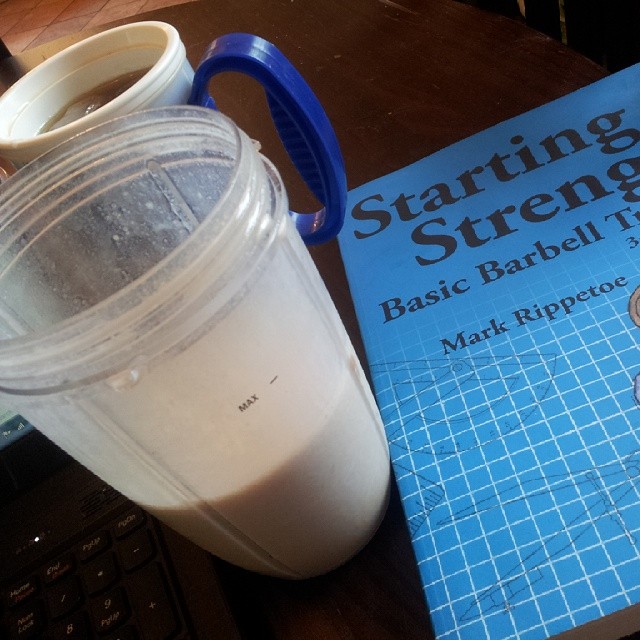
One of my favorite shakes right now!
One of my favorite shakes right now! Great after a workout.

GMO TALK

Here’s the point where I start making friends. We talked about GMOs during the clinic. First of all, only about 3 people knew what the O in GMO stands for: “Genetically Modified Organism”.

Here’s what’s up people: We are not pulling a Jurassic Park on our food sources. We have been selectively choosing strains of fruits and veg to replant since the start of farming. Are there some foods that have been tweaked in a lab? Yes. But guess what… natural selection and our own farming practices have made EVERY FOOD SOURCE genetically modified.

I have two apples. One apple is SUPER JUICY but is kind of small and not perfectly red. The other apple has that perfect apple shape, and is much larger, but doesn’t taste as good. Guess what? The larger, perfect apple sells better! WOOT! MONEY! We’re going to replant the apple that people BUY.

The small apple does not get another growing season. The large apple does. BOOM. GMO.

ORGANIC SOAPBOX

This is the other place I make friends.

Organic is just a label that farms buy. There are a lot of things about “organic” that you may not think about … like the fact that arsenic is on the approved list (it’s natural!), or that runoff from the farm next door is common. So just because your big farm doesn’t spray that specific pesticide on your green pepper, doesn’t mean that the neighbors don’t use that pesticide on their apples… which wash off in rain. And get on your peppers through water transfer.

Also, just because it says organic, it doesn’t make it healthy. A lot of big farms have hopped on the “organic” bandwagon because they charge a lot more for [essentially] the same veg.

Want to know what you’re buying? BUY LOCAL! Go to farmers markets, become a part of a CSA. Research other labels, like “Food Alliance Certified”. Talk to the people growing your food. Or [gasp] start growing some of your own. Not all of us have the space for it, but there’s something rad about never-ending kale and tomatoes from your backyard.

FINAL THOUGHTS

Ok! So that’s the gist of things. I can help you create a specific plan based on ALL the things. I personally use Derbalife products, but that’s me. If you wanted to hop on Skype and talk about YOUR training plan, and YOUR nutrition, than let’s do it!! Drop me a line at DerbyAmerica@gmail.com or send me a message on Skype at KMGrey.

There is a little bit of trial and error involved in nutrition. Even the days when you’re “bad” you’re probably not doing THAT bad. I also incorporate nutrition in my in person coaching, so if your derby/football/soccer/softball/any other sport team is looking for classes, training, nutrition – let’s get it set up!! Let’s do it!!

You can also visit my website to check out Herbalife at http://www.GoHerbalife.com/K.grey and do some research at http://www.Herbalife24.com for our sport line (we have so many Elite Athletes on our list that it’s insane).

Eating well makes you strong! Just ask my buddy, Pixie Panzer of Harrisburg Area Roller Derby! <3
Eating well makes you strong! Just ask my buddy, Pixie Panzer of Harrisburg Area Roller Derby! ❤

When Derby was DERBY (Blog Reboot)

Support this blog by shopping on Amazon here!

On January 29, 2012 I published this article. It’s funny that the argument is still going. Not only the old school versus new school skaters but the idea that the rules of new school are broken. The argument that if it “ain’t fast it ain’t derby”. Yes the Puget Sound v Your Mom game was an awesome one at MRDA Champs last weekend. However, the more staccato, stronger-yet-sometimes-slow Southern Discomfort against Bridgetown Menace was no less exciting. Anything italicized, ps, is different from the original article, I didn’t want to re-write this. It was popular for a reason the first time around. The photos have also been updated.

So with that I bring you my next reboot:

Old School vs. New School. Strategy vs. Smash ‘n’ Grab. Jammer Line vs. Pivot Line. Booty Block vs. Big Hits. Rules vs. Free Form. Beer & Camaraderie vs. Cross Training & Team Commitment. Sharp, Strong, Stops vs. Fast, Fluid, Sweeping. 

These are the dichotomies that have bubbled to the surface of the sub-culture of derby. A generation gap has arisen between the vets of “the good ol’ days” and the skaters of the modern culture.

Since the new revolution of roller derby started (back in 2001), the landscape of the sport has shifted considerably. When it was first gaining momentum, skaters and leagues were looking to the tradition of 1970’s over-the-top antics for inspiration. They had to learn how to play the sport from the only people that had played the sport.

The result was a show of big hits, cages as penalty boxes, personas and spectacle. Game play was spotty during the early years. Leagues were figuring out through trial and error what worked, what did not; what was dangerous and what was just fun. The game was unrefined. Those who were drawn to roller derby wanted to together with friends, to hit things and drink beer. It was not about refining strategy and being at your healthiest. The ultimate goal of roller derby was to have fun, skate really fast and hard, and maybe, be a little bit of show.

WFTDA Derby looked a little different in 2010.

When leagues started (the boom of flat track roller derby really started at the end of 2005), girls who are now legendary did not know how to skate. Everyone was new. Other than the speed, jam or artistic skaters that joined the ranks, few girls were adept at the art and skill of roller skating. Forget putting a sport on top of that! This is what made the game unrefined for a while. Everyone was still learning their balance and stability on eight wheels, so being agile and clean on a grand scale was near impossible.

Times, they are a-changing.

It is common now for leagues to have skaters with six years of experience on wheels. From just that one element, the game has changed. Girls who are now coming into the game must train more seriously in order to compete with the vets who have simply been wheels for years. At a boot camp by the Gotham Girls, Suzy Hotrod stated to skaters: “Yea I can do a lot [on skates]. I’ve been doing it for seven years. If you put up with this sport for that long, you’ll be just as good.”

Suzy Hotrod is a modern legend of derby because of the hard work and dedication she has given to the sport on and off skates. Photo by David Dyte.
Suzy Hotrod is a modern legend of derby because of the hard work and dedication she has given to the sport on and off skates. Photo by David Dyte

Most skaters do not want to wait seven years, and they realize that if they cross-train, improve their diet and treat their body like a professional athlete, they will accelerate exponentially. There has been a health revolution! More leagues are partnering with gyms and personal trainers. More skaters are paying attention to their nutrition and workout routine off the track, because they realize it will have a direct impact on their performance during game play.

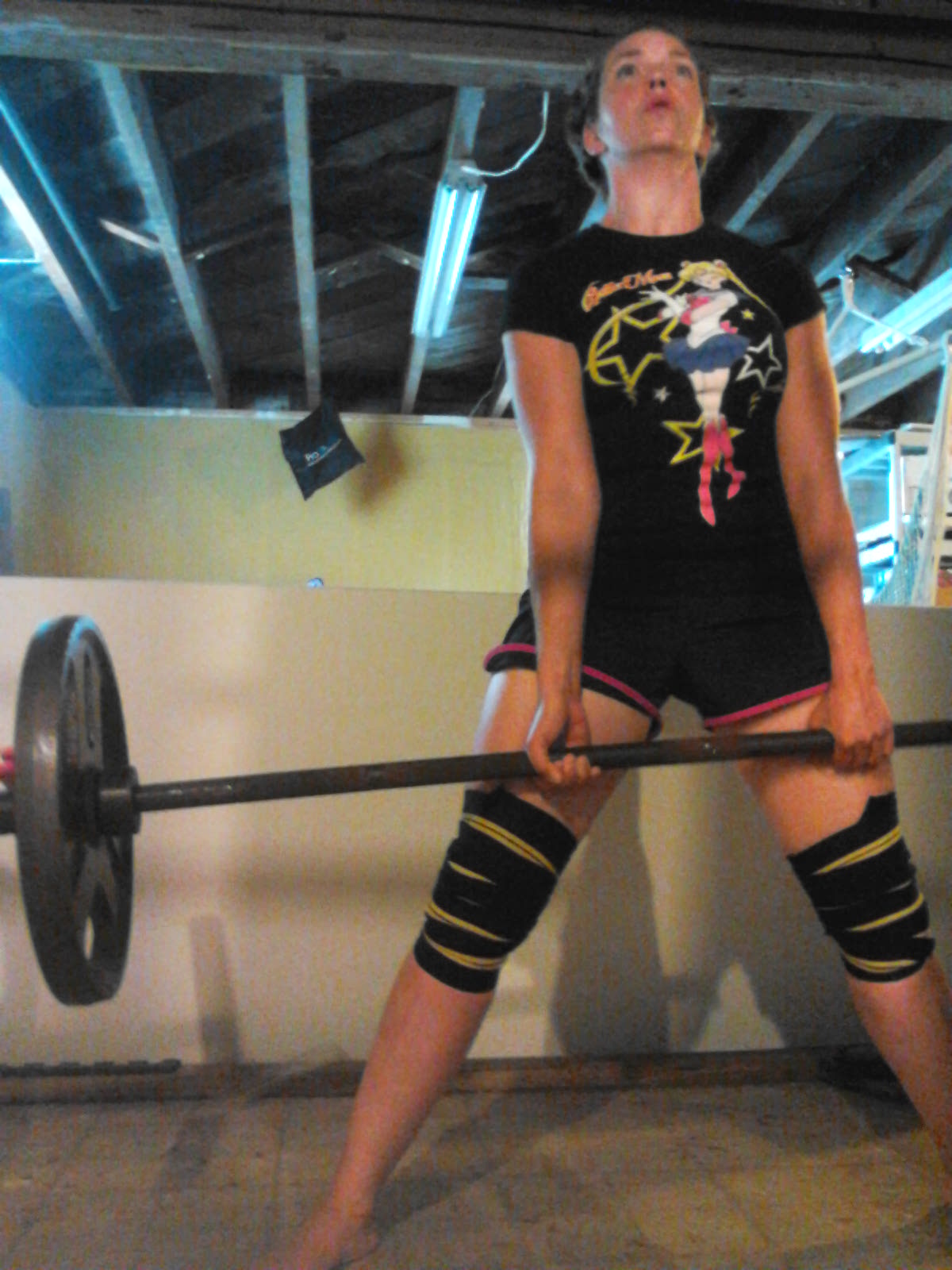
Lifting. Yes. It's a thing I do to get better at derby. Deadlifts are awesome for all the things.
Lifting. Yes. It’s a thing I do to get better at derby. Deadlifts are awesome for all the things.

Support groups and workout routines focused on derby have emerged. The Roller Derby Workout Challenge ran for three years. The Derbalife Big 5 Challenge has operated several times; both are challenges designed to teach and motivate. Derbalife is skater-centered nutrition that includes skater-to-skater coaching. Learn about Derbalife.

Winning is fun, and the way to win in 2012 (and even more now in 2014!!) is to be strong of body and of mind.

Speaking of ‘mind’, game play and strategy have changed dramatically in the last three years (five years!). Since the inception of W.F.T.D.A., skaters and refs have taken note about what works on the track and what are health hazards. While the rule set that has evolved over the years can be confusing to the untrained reader, it is so because it has developed organically. If an established rule continually gets challenged, interpreted differently at different bouts, or has shown itself to not protect the skaters, it has been changed. One of the best features of the W.F.T.D.A. set up: voting member leagues have been able to shape the sport itself over the years. Modern Note: And for the M.R.D.A. the ability to look through the rules and make any further clarifications or adjustments as their organization feels is needed.

Now, we get to the crux of it. Because skaters have shaped the sport over the years, skaters have been able to control how they want the game to be played. The best leagues are able to look at the rules and understand the implicit meaning behind the rules. Most leagues look at a rule set and understand what it says. The winning leagues are the ones that understand what the rules DO NOT say. From what the rules do not say, a league can exploit the loopholes and skate circles around leagues that do not understand the implicit meanings.

Definition of stop blocks and direction of game play and all rules are determined by the member leagues. Rolling Stone R may appear to be breaking a rule while blocking Captain Obvious, but not according to rule definition. Photo by Danny Ngan Photography 2014
Definition of stop blocks and direction of game play and all rules are determined by the member leagues. It has shaped the game to be what we see now (Rolling Stone R backwards blocking Captain Obvious during the MRDA Championships, a move we did not see [often if at all] pre-2012). Photo by Danny Ngan Photography 2014
So, this causes a bigger need to pay attention to detail. In order to compete, every league must understand the new loopholes and strategies being used by the leagues around them. It means watching bout reels. It means watching other bouts. It means extra strategy sessions. It means extra hard training at practice. Those skaters who do more outside of practice to understand the game and new skills and tactics will be the ones most successful in scrimmage, and therefore in bouts.

Five years ago, girls could walk into a league and party. They could practice twice a week, play dirty and laugh about it later because they would still make the all star team. They would still win games. They would still be super stars. No more is it the case. Drinking teams with a derby problem do not exist in the modern world of roller derby: it is an ‘adapt or die’ sport.

What does dedication look like? There's a reason these 3 teams have gotten medals at champs in 2013 AND 2014. Photo by Danny Ngan Photography
What does dedication look like? There’s a reason these 3 teams have gotten medals at champs in 2013 AND 2014. Photo by Danny Ngan Photography

Skaters who do not care about their craft simply do not skate on high level all star teams, and even the smallest leagues are becoming highly competitive. Leagues that do not care about their strategy do not win. When you do not win, you do not have fans. You lose skaters to more serious leagues, your sponsors drop off. You perish.

So are “the good ol’ days” of derby gone? Maybe, but the motto of “Skate hard, turn left” endures. There are still bruises to show off, rink rash to brag about and beers to buy after a hard fought bout. Rivalries still happen, and what happens on the track still stays on the track.

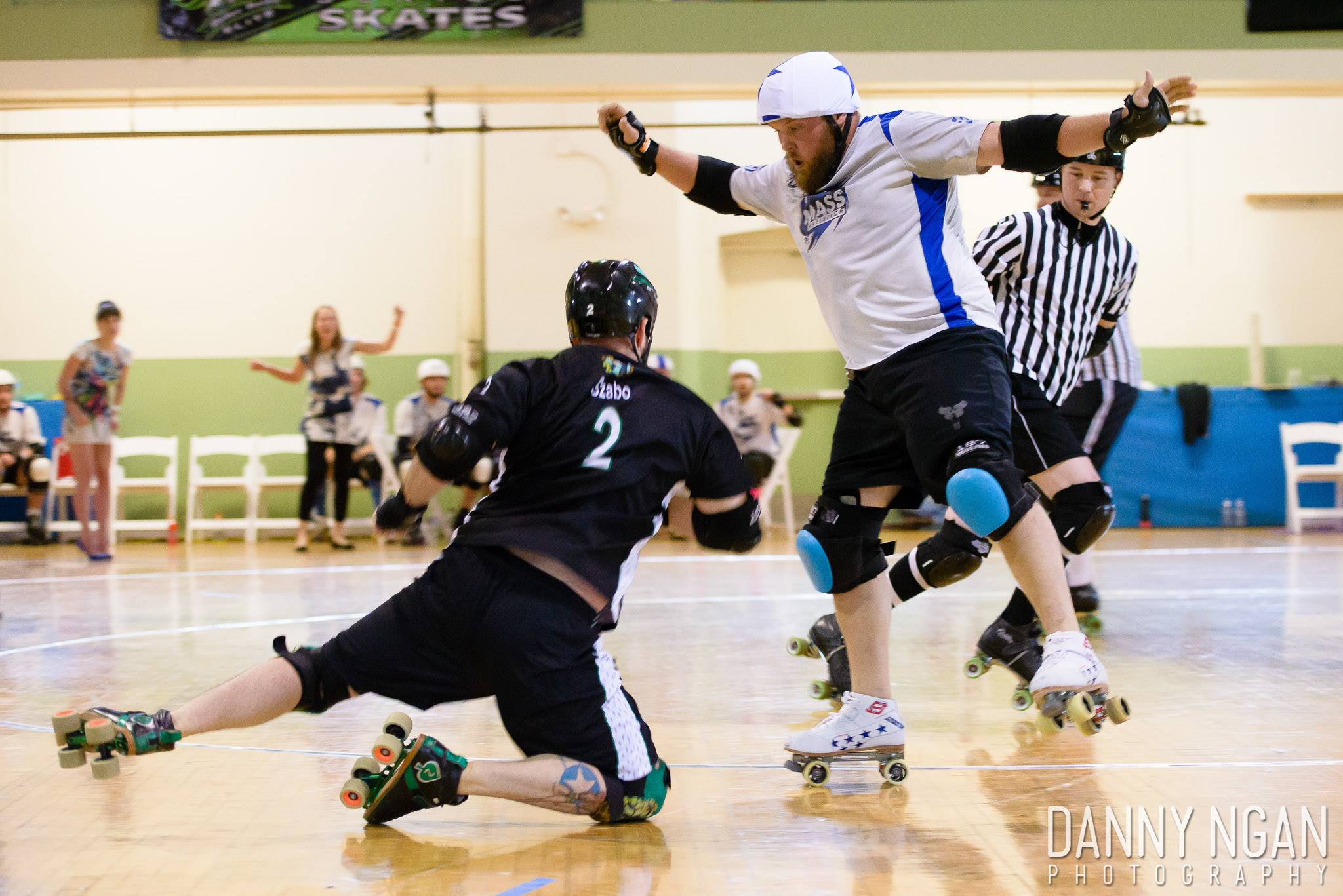
Mass Maelstrom and New York Shock Exchange are known for their rivalry on the east coast. As two of the oldest men's teams they have seen the changes of derby - and they still play just as hard and fast as ever. (Bill Coulter dances around Chris Szabo in the first round of the MRDA Championships 2014). Photo by Danny Ngan Photography
Mass Maelstrom and New York Shock Exchange are known for their rivalry on the east coast. As two of the oldest men’s teams they have seen the changes of derby – and they still play just as hard and fast as ever. (Bill Coulter dances around Chris Szabo in the first round of the MRDA Championships 2014). Photo by Danny Ngan Photography

The game may feel different than it did in 2006, and the training may be far more intense, but it does not make any of it less awesome. Whether beers and brawlin’ or hydration and smarts, roller derby is a uniquely intense sport. The vets should be proud of the foundation and history they created. The current generation should be just as proud of how they have cultivated their craft and shaped modern roller derby.

Now … who wants to hit open skate?

Thank you Harrisburg Area Roller Derby, David Dyte and Danny Ngan Photography for use of the photos in this blog!

Building You as a Better Skater (Blog Reboot)

REBOOT: I’m slowly moving some of my more popular articles from my Examiner.com site over here to WordPress! Some of the photos are from a couple years ago, some of the info may be referencing events from a few years ago, but the info is still awesome and useful! (at least I think so). Every now and again I make a more modern note, but I’ll let you know where I’ve added in. 😉

BUILDING YOU AS A BETTER SKATER

At the Northeast Derby Convention this past weekend, common questions among attendees included: “How did she get so good?” “Has she been skating forever or is she just naturally talented?” “Will I ever be that good at derby?” “How can I improve quickly to an elite level of gameplay?”

As you progress through the lists, thoughts and derbys please remember that the background for all of this should be enjoyment. Drop the ego and HAVE FUN! It’s just f***ing roller derby, and I think we all forget that sometime.

Everyone has a tip to offer, and some of these probably sound familiar. Being in my fourth season, I have been through a lot of ups, downs and across many plateaus. So here is my humble insight.

Be a goofball on your skates
Photo: ParaNorma of the Susquehanna Valley Derby Vixens has fun during an open skate event hosted by As the Bearing Turns. Photo by Toxic Shock.

Be a goofball on your skates

Step one to getting better is spending time on your skates. Any vet will tell you that. What they may forget to tell you is that it’s not just a matter of skating circles. Getting better on your skates means that you are challenging your balance and your confidence; it means you are pushing yourself to improve.

The easiest way to challenge yourself is simply to goof around when you roller skate! Throw yourself forward and backwards. Hop. Go to open skate or an outdoor rink with your friends and skate backwards, turn, play games. The more comfortable you can get on your skates in odd positions or pulling a balancing act, the better you will be able to control yourself during drills and gameplay.

Play and watch ALL the derby
Photo: The flat track mash-up, Team Rogue, took on MADE skaters in the Derby Ink Tournament in April 2013. We all learned a few things about physics. Photo by JPaden Photography

Play and watch ALL the derby

When I say “ALL the derby” I mean beyond your own scope of derby. Yes, if you’re a WFTDA skater, you should absolutely be eating up WFTDA game play to understand how the mechanics and flow of game and strategy work (also to see how skills are being newly applied to the game). That being said, I cannot express how much I have learned in the last three months because of:

Playing MADE rules on a bank track, watching junior derby, watching men’s flat track, scrimmaging men with MADE rules on the bank track, going to open flat track scrimmages, watching the All Star bout at NEDC.

Being a woman, playing derby with boys really helped me to challenge my own perception of strength and balance. It can be intimidating to go up against a man who is a head higher than you and significantly bigger (and has a bit of a temper, but I still love you Yosemite Slam) AND you’re on a bank track against him… But then you play anyway. Then when you’re on the flat track against another team – they don’t look nearly as scary or intimidating. (Note from today – I feel like I can take on anyone now that I’ve gotten past Sutton Impact and Tink as a jammer at RollerCon.)

You never learn when you’re in your comfort zone. Just like with going to open scrimmages with new people and throwing off your balance at open skate, playing and watching unfamiliar types of derby will teach you techniques and strategy more than you think is possible. Seriously. I love that damn tri-block.

RollerCon has some awesome classes for skaters of all levels.

No. Really. Go to the events and trainings.

The world of roller derby is so much more expansive than it was when I joined in 2009. Back then, we felt lucky to get a guest coach for the night and we all dreamed of having the money to make it out to the only collection of trainings available – Rollercon. The times, they are a-changin’!

Not only are there a ton of boot camps and trainers available (DNA CoachingDerbalife,Getsome Athletics, Left Turn Coaching among others), but there are more conventions and events than ever! This past weekend the Northeast Derby Convention had a successful second year. Beat Me Halfway promises to be an awesome time, as does the addition of classes at Virginia is for Shovers. And this is just a small piece of the training pie.

Leagues are now able to bring in guest coaches or boot camps whenever they want. Elite leagues also hold camps throughout the year to train and coach skaters. And just because you’re a vet doesn’t mean you can’t benefit. I did a Team USA boot camp last summer next to Holly Go Hardly (most would say she ‘doesn’t need’ training , but there is no perfection in roller derby and some of us always strive for more). At NEDC this weekend, when coaches weren’t coaching – they were in other classes!

Do you know how many friends were geeking out about being in a class with Demanda? Or Punchy? Always strive to be better and take the training when it is available – if it’s not available, seek it out or bring it in!

Read and absorb
Photo: DNN may be gone, but DerbyLife and other publications (like mine!) still are around. Photo by Ryan Starr.

Read and absorb

Bout recaps, new skill explanations, boot break-downs. Read it all. Absorb it. Seek it out. Funny memes. Blogs. Discussion groups. The more knowledge you have about derby off the track, the more you can apply to your footage viewing, your live consumption of derby and your own on-the-track game.

Derby News Network, DerbyLife, FiveonFive Magazine, Rollout Magazine, Blood & Thunder, Inside Line, Elektra Q Tion, RollerDerp Tumblr, Khaos Theory and more… they are are all great places to hear about thoughts on derby, derby related life and how derby works itself into other aspects of the world. Go and read some stuff.

Do that thing you hate
Photo: The Dutchland Rollers take on a new physical challenge with theCrossfit Collective

Do that thing you hate

When I joined roller derby I decided that suddenly, I didn’t have to do cardio outside of practice. I thought I could use the occasional weight machine at Planet Fitness – and that would be enough. I avoided anything outside of derby, made faces at it, and was absolutely convinced that I could just skate more and that would be enough.

In 2012 I decided, finally, to become a runner and cross-trainer. And in 2012 I became the derby player I should have been previously.

Cross-training gives your body a chance to develop the muscles and stabilizers that derby doesn’t work on. It doesn’t work on them, but can utilize them. Incorporating strength, interval training, plyo metrics and other sports (I’m a fan of rock climbing and kick boxing myself) will give your body extra balance, strength and endurance that you can use on the track. Show me one elite skater that hasn’t cross-trained.

That’s what I thought. Want to learn more about real crosstraining for derby means? Check out my Shifting Perspective article.

Southern Discomfort gets together to watch footage. I've heard that they watch other teams as well as themselves (may have something to do with their quick rise in rankings)
Southern Discomfort gets together to watch footage. I’ve heard that they watch other teams as well as themselves (may have something to do with their quick rise in rankings) Photo by Matthew Sutton

Watch yourself play through footage

Watching yourself can be brutal.

Don’t get me wrong, I know it. Nothing like having a game that you feel awesome about only to watch the footage and think to yourself “Why didn’t I go there? What was that? How come I didn’t do ______” and so on. It’s also very easy to get caught in the trap of “Why didn’t the ref call that?” or “Did you see that terrible call?”

Watching video should not be an exercise in negativity. It should be an exercise in study and analysis. You need to be able to watch what you and your team mates did and deduce what worked and what didn’t. To be able to think about how you could move or position differently in the future. To think about where you are and what you need to work on next.

Visualization after you watch video can really help you incorporate your findings. Take 10 minutes after you watch bout footage (and you can do this with any team’s footage, not just your own!) and play out the scenarios in your head. Imagine your reaction, the quickening of your breath, the sliding of your wheels against the floor. Create the images of what you see and how you feel and what you do next in different situations that you saw in the footage. Imagine yourself conquering the situation and bursting past the blocker, spinning through a wall or blocking a jammer out of bounds. Visualization is an amazing tool to give to your unconscious.

Remember that watching bout footage with your team mates of OTHER bouts is super important too! Not only will it help you talk through the strategy of other teams, but it’s a bonding experience for you to all know derby a little bit better. You can talk about what teams did that work, didn’t work, or what you think you could incorporate into your own blocking or jamming styles. Team derby-time is awesome.

SCRIMMAGE NIGHT!!
Jerzey Derby Brigade have great scrimmages available once a month. Photo by JPaden Photography

SCRIMMAGE NIGHT!!

We all love scrimmage night. All of us. It’s why we put on our skates and deal with freshmeat training and months of knee fall and hip checking drills. We may say that there are other reasons that we do the roller derby thing – but let’s call a duck a duck. We do it for the PLAY TIME. Taking advantage of your scrimmage team with your team I very important: here you learn how to interact with each other. You build bonds of trust and you learn how to react and rely on each other.

Another important piece of this puzzle is taking advantage of OPEN scrimmage nights that other teams have. Why? At open scrimmages you can learn how to react quickly in new situations. You can learn how to adjust to new floors, new opponents and new obstacles. Also, it’s a great way to make friends in derby and learn how opposing skaters play (could be useful in future games, don’t you think).

Plus, remember why we are part of derby? PLAY TIME!

Embrace your inner zebra
A zebra pow wow at Spring Roll IV. Photo by Mr. McWheely

Embrace your inner zebra

Wait, what?

Yes. I said it. Go visit another league to get practice at it. Volunteer to help your league if you’re team doesn’t have a bout coming up. Reverse the roles now and again so that you can see the game from a new perspective. Remember, you aren’t learning anything inside your comfort zone.

Not only will you get a new perspective on gameplay, but you’ll have a new found respect for refs. Part of being a ‘better derby skater’ is keeping your cool on the bench during a bout. Not getting riled over penalties will help you keep an even demeanor and a clear head in each jam.

Best way to understand the refs is to put yourself in that spot. I bet you’ll be surprised at how hard it actually is. Aside from that all, you get to give back to the sport that has given you so much. When you’re not skating, help others to skate! Don’t have the attention span for a zebra huddle? The NSOs could use a hand, too.

Goals are your friend

Goals are your friend

I have found that setting goals is best to do with a buddy. Captains and coaches are preferable, but if you have someone in your league that you trust that you want to go on this journey with, that’s awesome too. Remember that goals should be SMART (specific, measurable, attainable, realistic, time-specific).

To set a goal such as “Block better in the next bout” is a goal that you cannot hope to measure and it’s certainly not specific. Say instead: “Practice blocking techniques 3 times a week for a half hour for the next 4 weeks.” Through the practice of it, you will become sharper and thus, “Block better in your next bout”. It’s a matter of phrasing and giving yourself something to focus on.

For example, the photo is from May of 2012. I had decided that I wanted to be the top scorer for Harrisburg Area Roller Derby against Providence Roller Derby. (In 2010, I had the star taken from me because I couldn’t break their walls. This was redemption year.) Instead of making the above statement my goal, I worked on the strength in my legs, running and plyometrics. The photo is me and Craisy Dukes getting our MVP awards for that bout. And yes, I was top scorer.

Vision boards are awesome too. I’m a big fan of writing down your goals and putting them in places you can see them so that you’re reminded of them daily. Mixing that with positive images and mantras, your goals will crumble under your powerful skates!

Nutrition nutrition nutrition

Nutrition nutrition nutrition

Just like with cross-training, I thought I had my pulse on “good eating”.

Truth be told, 90% of us in derby have no idea what we’re putting in our bodies or why it’s not good for us. Yes you have some folks that are uber informed (I am now) and then others who like making a joke out of their lack of nutrition (go ahead and have that burger and Red Bull, I want to see how many times I can lap you).

I thought my diet of farm food and whole grain was awesome. I couldn’t figure out why, after 2 years of skating, NOTHING happened with my skill level or my body.

Turns out I didn’t know everything.

There are lots of diets, regiments and philosophies that have been coming into the world of roller derby. It was only a matter of time. The health and wellness industry in America alone is a multi-billion dollar one. Some programs are based in science and research, some really are not. I, personally, confine myself to dietary restrictions for performance reasons that I have imposed on MYSELF. We all have different goals, and your program should reflect those goals and desires.

Here’s what I will say about nutrition (and yes this is coming from a Derbalife coach – this is our philosophy):

  1. Protein. 35-40% of your calories should come from protein. If you’re really looking for a quick adjustment to your diet and want to go at things hard? Think of consuming 1g of protein for every pound that you weigh.
  2. Hydration. Half your body weight in ounces. Minimum. Daily. When in doubt, drink a gallon. We’re made of water. How can we function as humans if our cells don’t have water? How can our body flush toxins (like the by-products of lactic acid) if we’re not hydrated? This is just good sense, people. No, you will not be at risk for water overdose. Unless you drink that gallon in a very short period of time.
  3. Vitamins. Guess what? You’d have to eat about 3500 calories of fruit and vegetable to get your recommended daily amount of the 65 vitamins and minerals the body needs for function. Now couple that with the fact that your body needs it throughout the day (it flushes vitamins it can’t absorb at the time), so that one-a-day you’ve been taking is mostly ending up in the sewer line. Oh yea, if you’ve been eating poorly for the last X number of years, it means your body isn’t even able to capture all the vitamins you put into it because, chances are, the good bacteria in your body isn’t healthy. Vitamins need to happen 3x a day MINIMUM in a dose of about 30% of your RDA.
  4. Metabolism. Keep the furnace going throughout the day. You should be eating small meals 4 to 8 times a day (depending on your size and activity level). When you go 5 hours without eating it means the metabolism shuts off. Vitamins aren’t being distributed. Protein isn’t being used. Calories aren’t being burned. No good at all.
  5. Quick burning carb are bad if you’re trying to lose fat. Complex carbs are good – like in vegetables, sweet potatoes and quinoa. Quick burning carbs like bread (yes, even stone ground, whole grain), pasta and corn spike your blood sugar and turn to fat in your body more often than are burned off. That being said, in sports like roller derby, it doesn’t hurt to have a little extra padding. If you’re weight lifting or doing lots of activity, don’t be afraid of adding in carbs.

Look, if you want to talk nutrition more (Derbalife or not) send me an e-mail at DerbyAmerica@yahoo.com. It’s kind of what I do when I’m not writing things like this.

Have an amazing mindset!
Cutandjacked.com

Have an amazing mindset!

The biggest piece of the derby puzzle is confidence.

If you do not believe in yourself, then you are never going to be successful. I’m sorry if that is harsh, but I have seen too many people self-sabotage because of their own self-doubt or because of toxic influences coming from their personal life.

You are good enough to play this sport. Every single woman, man and child can be as successful and strong as they want to be. It just is a matter of time, effort and having the mindset to go along with it. You are not going to be Suzy Hotrod overnight. It takes a combination of all the things listed here (and more) to get you to that level. It takes years of dedication and focus. If you want it to come quicker, you have to work harder.

If you quit the moment you get tired, or your feet hurt or you sweat … guess what? Your league has plenty of Non-Skating Official positions that are ready for you to help with. Everyone has a different gauge on accomplishment and everyone has a different bar they want to conquer. What commitment is really necessary for you to hit yours? Take a hard, honest look at what you are doing now.

Take a good, honest look with how you handle situations. Do you invite negativity into your life? Do you spend more time complaining about the stuff that happened or looking forward to the way you’re going to overcome it? Do you have the attitude of “This will make a great story one day!” or “Why do bad things always happen to me?”

In life and in derby, the cancer of negativity will kill your hope, drive and spirit. You must be diligent to be a happier person with a positive outlook. Maybe you can’t do a 180 toe stop. Do you say “I try really hard but I can’t do it.” Or do you say, “I’m going to work on it UNTIL I can do it.” That’s the difference. That’s the key.

Need a help with this part of the puzzle? Personal development readings, audios and videos are amazing for your mind. May I suggest some Les Brown, Jim Rohn or Eric Thompson? May I suggest TED Talks? Reading books likeThe Slight Edge and The Big Leap.

Believe in yourself the same amount your coaches do and you will do amazing things.

Stuck in the Middle with You – Merry Khaos Class Notes

I got to revisit this class at BEAT ME HALFWAY in 2014, so I’ve gone through the original notes and added in some stuff we did at BMH, but kept in the stuff we did at RC 2014. 😀 Anything BOLD is new content. There’s not too much. 

I used to be a big fish in a small pond. I thought I was advanced because of how many points I would rack up during games, because of my jammer differential, because of my lead jam percentage, because I could own opposing players with my team. Then I transferred to a Top 20 team and, though I knew I was in for a humbling, I didn’t realize how humbling it would be.

It was awesome.

I have improved so much in the last year through changing my training program up and skating with Charm City Roller Girls (and now Tampa Roller Derby and Tampa Bay Men’s Roller Derby!). I designed this class to pass along the things I’ve done in the last year to take me from true Intermediate to a low-to-mid Advanced roller derby player.

Here is the video that compliments this blog!

TOE STOP SIDE RUN

Each skater approaches the lane on their wheels and must quickly transition to the toe stops, side step (preferably with the grapevine step) through the cones, and then burst out of the cones back onto wheels. When sidestepping, skaters should be facing the interior of the track.

If you have many skaters, make lines before each set of cones and have skaters rotate between inside and outside line as they go through. Skaters should challenge themselves to be as close to the line as possible. Think about where you are looking (not at the ground!), how straight are your legs (knees need to be bent a bit), and how easily you can drop your toe stops (they may need to be lowered).

AMENDMENT: If running on your toe stops is super easy, try different ways of running the line – forward, side shuffle, side-step crossover, and also BACKWARDS through the cones! Try all the new things!

How to set up the toe stop run cones

BACKWARDS LATERALS

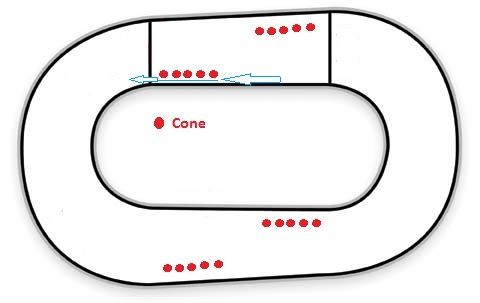
Using the cone pattern shown below, skaters have to move backwards to each cone. THEY SHOULD NOT SHUFFLE STEP, they should use backwards crossovers to get from cone to cone.

At each cone, skaters should use a one foot plow stop to stop COMPLETELY before moving on to the next cone.

Focuses: Stopping as CLOSE to the cone as possible, getting from cone to cone as QUICKLY as possible, and spotting the cone then looking forwards again. We want to work using periphery and not relying on having to stare at an object to get there.

If skaters have trouble with backwards crossovers, have them create small Cs with their feet to get them going. If skaters have trouble starting the lateral, wiggling the butt is a great way to get started. You can also do a pivot on the front wheels to start the motion.

Pattern of movement for backwards laterals

EDGING AT THE LINE

Every skater will need a straight line of clearance on the track. For 30 second intervals (at first, you can bump it up for more advanced skaters), skaters will push off from one side of the track. The goal is to get from one line to the other in one push, and use their edges to stop as close to the line as possible. A video will explain this better, but here’s the procedure:

  • Standing at the outside line
  • Inside foot points towards your destination. Outside foot pushes off of the outside edge of your skates to get momentum. All weight on the inside foot.
  • Put the back foot down on the floor, pointed at the spot you pushed off from, and transition your weight onto that back foot.
  • At the inside line, ‘stomp’ your foot (push into your edges) in order to stop your momentum

Remember to keep your center of gravity low, but you probably won’t be able to do this in SUPER low derby stance.

Do intervals of these. I like to do at least 3 30 seconds worth of practice. This will lead into the next drill.

STEPPING IN FRONT AS A WALL

We’re deviating from the flow of the class at this point, but I don’t care, it makes the most sense to explain this after the edge to edge work.

In groups of four, have everyone number off. This is their number for the whole drill. The groups will skate around the track in a four wall (hopefully winging out in the corners, and practicing all other good fundamentals of wall work as they do so).

The person controlling the drill will stand in the middle and call out numbers at random intervals. When the number is called, that person “has the jammer”. Their job is to tell their team mates. Their team mates job is to step in front of that person as quickly as possible while maintaining their wall. The person who was called IS NOT DROPPING BACKWARDS – EVERYONE IS COMNG FORWARD. The person who’s number was called should do some lateral motion for a three count, and then re-enter the wall quickly and efficiently. The person calling the numbers should do so every 7 or 8 seconds at the beginning and then you can get faster as the drill progresses.

A NOTE: I have not done this drill yet where there is at least one person/group that does not understand the “Count to three and then get back in the wall” concept. There is always a person who will hang out behind the wall and look at you confused (and sometimes angry) when another number is called and they’re not in the wall. If you figure out a way to eradicate this, please send me an e-mail.

HIPS IN FRONT

Back to solo stuff! This is something I go over in the video. You want to pair up and have partners (first at a standstill, then rolling) work on moving their hips in front of an opponent. The skaters should be hip to hip, and then one person at a time will work on stepping just in front of the other person and moving their hips to establish position. There’s a big of a hip swaggle that happens. You have to get a little sexy with your partner.

CREATING SPACE TO KNOCK A JAMMER OUT

Jammers are really good at leaning on our backs and making it impossible for a goon defensive skater to come out of the wall, and knock that jammer out of bounds. Often times, there’s just no room for us to get our shoulder or hip in front of the jammer to walk her out of bounds. So, we need to know how to create space between ourselves (the wall) and the jammer who is leaning on a seam to get through.

These are not supposed to make HUGE impacts. When you’re practicing these, if it feels like the opponent isn’t going very far, it is ok! You’re just trying to create a breadth of air. These may not be used all the time, but you want to be able to know how to use them.

CAN OPENER (Johnny Crash, any number of other names)

In pairs, have one skater leaning on the back (legally, no back blocks!) of the other skater. The skater in front will practice throwing her shoulder backwards to pop the opponent off of her shoulder.

BOOTY POP (Twerk, and any other silly name you want to give it)

Same set up to practice as the can opener, this time, instead of using the shoulder, you are going to pop your hips backwards into your opponent to create space.

A NOTE: For both of these, you must have proper derby form. That is to say, strong back, tailbone tucked. If your ass is exceptionally extended behind you, you will have no booty to pop. You will have no contact with the jammer before you throw the can opener.

TAKE IT UP A NOTCH: Next time you practice walking a jammer out of bounds with a wall in front, have your skaters practice these techniques to create space. When I am blocking, if I can’t get my shoulder in front of a jammer, I will yell to my wall, “Pop her!” and they know to throw a shoulder or hip to make room for me.

BREAKING WALLS

JACK HAMMER SHOULDERS

Just like you can use your shoulders to attack people while blocking backwards, you can attack a wall with ‘jack hammer shoulders’. In groups of 3, have one blocker press up against the seam created by the two wall.  (S)he should use her shoulders [independently] to hit the legal pieces of the opponents to create some space and hop thru the hole. Bonnie Thunders does this ALL THE TIME.

ASS IN THE GAP

This is something that not everyone will do well, or should do at all. This is another tool for the tool belt. You will have your two wall (like above), and the jammer will get a little bit of speed (the two wall should be rolling), and right before she gets to the wall, she should transition backwards and thrust her ass into the seam.

In order to do this successfully, you must fold yourself in half and propel yourself into the seam, you cannot turn around and attack the seam at a full stand up. It doesn’t work. Snot Rocket Science (Steel City), Holly Go Hardly (Charm City), and Skinny Guinea (Brandywine) are some skaters I’ve seen do this in bouts. I am trying to find gif footage!!

YOU’RE FACING THE WRONG WAY!

Ok, so we love backwards blocking these days. However, many many many skaters use it too much, and incorrectly. If you are backwards, and catch someone, you have two options: 1) Hold that skater until your friends come to your rescue or 2) pop them a bit as you turn around to face normal derby direction [which is where you have more power and control and are less likely to incur a pentalty].

To make the opponent hurt, and give you a second to turn around, you will pair up. The jammer will press into the blocker. The blocker will practice the quick succession of throwing a shoulder into the jammer (as practiced before), turning 90 degrees, and popping the jammer in the sternum area, completing the turn to establish contact with the booty of the blocker. There is no 3rd hit necessary. Shoulder facing the jammer, shoulder at a 90 degrees (at full speed it’ll look like a hockey stop with your feet), finish the turn and establish position. It is quick, it is sharp, and you have to bob with your legs on the second hit a little bit.

TO THE LINE! (PARTNER ASSIST)

In pairs, you will practice a cannonball to the line. I like having one person practice for a length of time and then switching. The pair will start in an ‘unsuspecting’ two wall. The person throwing will push their partner to the line, catch their arm, and keep them in bounds. They will then reset into a two wall. The person being thrown will be loose enough to be thrown, extend the ass over the line as FAR as possible (fold yourself over like when you put your ass through a seam as described above), and keep your skates in legal ground. Immediately reset into a two wall ON THE LINE. Then move back towards the center of the track to do it again.

See video for more explanation of this move!

NOTE: Do not anticipate being thrown on this!! Try and simulate how it would actually happen in a bout. You’re not going to be set up for a cannonball with the jammer approaching, so don’t practice it here.

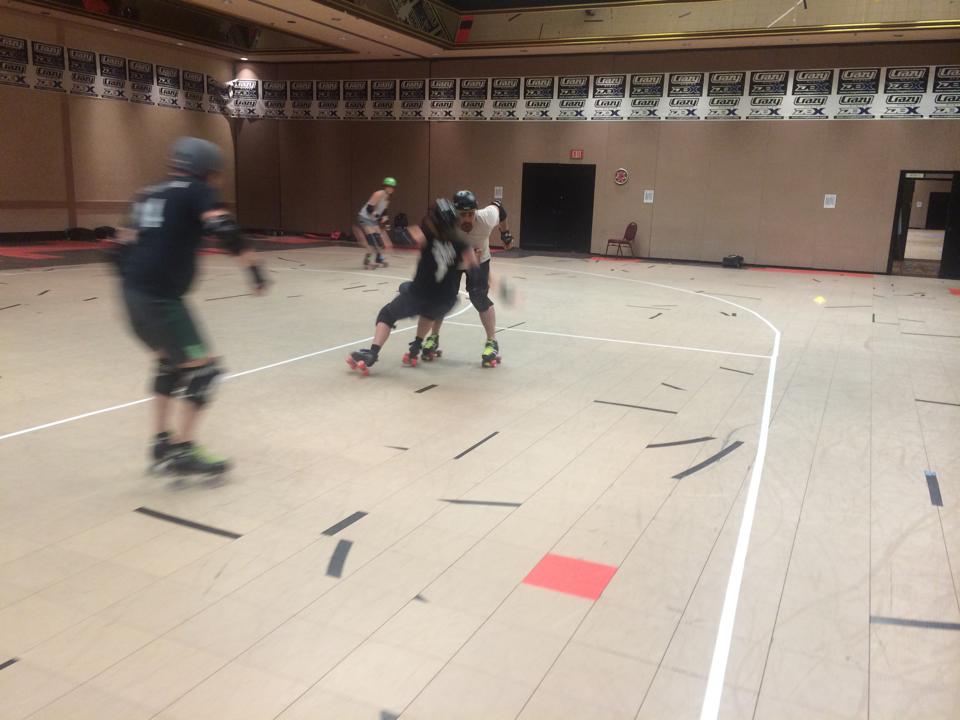
Crazy Legs Drill

Two lines of cones should be placed about every ten feet in a line, and just wider than the track. Skaters are to ‘lead with their knees’ and move their feet in small, edging motions to get across the track. Toe stops are not to be used (in fact, I would recommend doing this drill during a practice where no toe stops are allowed). This is not a shuffle step, or a crossover. They are small, sometimes gliding, steps and stops where you control your speed and balance with your edges.

Your hips are always facing forward. Once a skater has reached the cone by going across the track, they should move up to the next cone at a diagonal, and use a one foot plow stop at that cone. Try and get as close to the cone as possible. Then, move across the track again. The first time through, the crazy legs should be moving to the right, and they’ll be gliding to the left. Reverse it for the second time through.

ADVANCED VERSION:

Do it again, but this time, keep your head over your shoulder. Pick ONE shoulder to look over the whole time. Move across trying to keep your eyes on that spot behind you for as much of the crazy legs as possible. You can also reach your hands behind you, pretending that there is someone on your back, and you are just making a one second contact in order to know where they are.

The very last gif on this page has an example of the “3 second check”. This is Tony Muse (Peter Pan) of Your Mom executing in perfectly. Look for the gif with the description: The “less-than-3-second-hand-check” rule can effectively widen your wall by up to a few feet on each side. Just be careful it doesn’t turn into a forearm block.

http://rdjunkies.tumblr.com/tagged/defense/page/25

FINAL THOUGHTS

Don’t be a drill dick. There’s a lot of skills in here that involve some practice. Don’t make your two walls ridiculous – make them realistic. No two wall is glued at the hips and body from the moment the jammer approaches, because if they were – the jammer would just go to the outside, and that two wall would be rendered ineffective. Keep some space. These drills are just as much practice for the blockers as it is for the jammers.

Blockers should practice keep their brakes on as jammers challenge them, and keep it challenging (but not asshole level).

Outside of derby: Start lifting weights. If you want to know why, read my blog about PERSPECTIVE SHIFT!

This was a class about getting to the next level, so I gave a similar speech in the class and I will type something similar here:

Roller derby is not always fun.

I know that we like to think it is. We like to tell ourselves that derby is a blast and amazing and fun all the time. Guess what? If you really want to improve, you are going to have to train. If you train, it’s not going to be fun all the time. Getting better is not fun. Knocking a bitch over in a game is fun. Winning is fun. Knowing that you just deadlifted twice your body weight is fun. Pause squats are not fun. Falling is not fun. Persistent sweat, pain, and failure is not fun. However, it is necessary for improvement. I did not get awesome at footwork magically. I simply did things over and over and over. I fell. I pushed. I lifted. I flipped tires. I cried. I bled. I sweat. I bruised.

It is not always fun, and that is ok. If you’re not ready for it not to be fun, than you may not be ready yet to advance to the next level. Everyone has to decide their level of commitment and level of training they are willing to accept. (And sometimes, team mates, you have to be accepting that your team mates may not be at the same level of commitment that you are.)

Go forth and be awesome!! Thank you again for anyone who came to my class at RollerCon 2014, make sure you tell them that you love me and you want me to teach more! If you want me to come to you, or if you want me and DNA Coaching to come to you – drop me a line at DerbyAmerica@yahoo.com … I also am a health coach with DERBALIFE and it has changed the effectiveness of my training. Get with me for more info!

VIDEO LINK ONCE MORE

Thank you to Keyesboard for the featured image on this blog!!

Put the FUN in Fundamentals – Merry Khaos Notes

I love this class. I love this class so much, and I will submit it again next year! I hope that it gets on the schedule more than once, because everyone has a blast. The point of this class is to do something OTHER than derby in order to work on fundamental skills.

Many of us get White Jacket Syndrome when we practice plows, hockey stops, edging, etc at training sessions. We have our coaches watching. We want to impress them. We want to get on that next roster. We’re worried about the skills of the people around us compared to our own. These games take that out of the equation. This is great to mix skill levels into, because you’re taking derby out of the equation – so EVERYONE is learning at the same pace. Though advanced skating skills can definitely be an advantage, there is more than pure experience on skates involved for most of these games.

Ultimate Roller Derby
Props needed: 2 balls larger than a baseball
Focus skills: Teamwork, communication, awareness, multitasking, periphery vision

This is the game closest to roller derby. Only with an Ultimate Frisbee twist.

Each jam is 2 minutes. Teams field the same players as usual, and we play on the derby track. Each team on the track has a ball. Players on that team must pass the ball THREE TIMES, successfully, between themselves in order to let their jammer try to leave the pack.

The ball must always be PASSED, not handed off and opposing players are allowed to block passes. If the ball hits the floor, or is caught by an opposing team member, the 3 count is reset. After 3 passes are successful, the jammer (and to make it more advanced, the jammer OR pivot) may attempt to break the pack. Your points are counted by how many times the jammer has left the pack.

So yes, when one team completes their passes, the other team should be trying to stop that jammer from leaving the pack!

Duck Duck GOOSE
No props needed
Focus skills: Speed, agility, endurance, speed control

While you can play this game in the classic “everyone sit on the floor” way, I like it better when it’s moving.

Get your team into a pace line. I recommend doing this at a moderate speed for YOUR team (obviously London Roller Girls’ All Stars would be able to do this faster than a start-up league). The person at the back of the line goes first to make it easiest. As the advance up the pace line, they call out “duck” for those who are not chosen. When they decide that someone is the “goose” they complete a legal hit on that individual. That begins the race around the track back to the goose’s position in the line.

Beginner version: It does not matter who makes it back to the goose’s place first. The GOOSE is now IT, regardless. They drop to the back of the line and begin playing.

Advanced version: Whoever reaches the goose’s place in line successfully first (as in, they’re in the line and matching the line’s pace), are safe. The other person is now IT and drops to the back of the line to start playing.

I will run this until everyone has been chosen at least once.

DODGEBALL
Props needed: As many balls as you desire. I like to do 4-6 of varying sizes.
Skills: Footwork, avoidance, awareness

Level 1 –
Split your players into two teams. Place the balls in a line directly between the two groups. Blow a whistle to release them and let the dodgeball commence!

Note: I had an interesting thing happen this year during this game. One team hung at the very back of the ‘engagement zone’ because they realized the balls wouldn’t fly that far. If you have players not participating in this way, don’t be afraid to shorten the boundaries they must stay within.

Level 2 –
No one is on a team. Every person is on their own team. Have all the skaters line up at one end (or you can split them into two ends). Those on the sideline each take a ball. The players are told that when the first ball hits the ground, they are released!

You can either play this to the end, or do it until there are 3-5 players left. These players step to the side and then you play another round. Eventually you do a “championship” round!

SOCCER
Props needed: A net, or other boundary marker for the two goals. An empty water gallon jug (you may want to have multiples for back-ups).
Skills: Footwork, edging, stops, avoidance, awareness, teamwork, short endurance

This is exactly what it sounds like: you play soccer on roller skates, but you use a gallon jug instead of a soccer ball (the jug does not roll the same way, so it makes the game actually playable).

Level 1 – NON CONTACT!
Level 2 – Legal contact

Feel free to have refs around to regulate things like low blocks, back blocks, illegal contact, and hand balls (it is soccer after all).

I play 5 v 5 and let the rounds go for 4 minutes OR until a team has scored 2 goals in that period. Then you switch out.

Blood & Thunder: Spin Edition
No props needed
Skills: Timing, strength, agility, transitions, backwards blocking, balance

Blood and Thunder. King of the Mountain. Queen of the Rink. Last Man Standing. There are a ton of names for it, but in derby most of us have played the game where we all get on the track and hit the snot out of each other until one person remains. This is a version of that.

Everyone starts skating, and when told to go, the carnage begins. When a skater is knocked down or goes out of bounds – they are out. In this version, do NOT have them stay on the track unless you have advanced skaters. You can also have refs calling penalties, and if anyone commits a penalty, they are also out.

With this version, when two skaters connect, if NEITHER skater goes out or down, than BOTH of them must flip to begin skating the opposite direction. Every skater will always skate DERBY direction, it’s just a matter of whether they are forward or backward. You should have people on the outside reminding skaters to spin around when contacted. There’s always one that just doesn’t understand/remember that they have to flip around whenever someone touches them.

This is another game that I like stopping each round when there are 3 people left, so that you can do several rounds, ending in a Championship.

MUSICAL CONES
Props Needed: As many cones (minus one) as you have people playing.
Skills: Stops, speed, awareness

Every person playing gets a cone, except for one person. Each person should place the cone on the inside or outside edge of the track. The person in charge decides what stop the round will focus on. You can do an entire game of ONE stop, if you want.

Everyone starts skating at pack speed. When the person in charge decides, they blow the whistle and everyone must get to a cone and use the stop APPROPRIATELY and without falling or advancing past the cone. If they are unsuccessful, a ref or wrangler should call them out and they must go to the NEXT cone and try it again.
Follow me on Facebook: Facebook.com/MerryKhaos1918
Twitter: @DerbyAmerica
Instagram: @Khaos24Fit

And if your league is looking for coaches and trainers, drop me a message at DerbyAmerica@gmail.com – DNA Coaching is currently booking boot camps and sessions and we’d love to talk to your league!

During Blood and Thunder
1972386_10152612655029770_3880944585047767912_n
Sliding out during Musical Cones
During Blood and Thunder