Fit Shaming

Social media.

It has given us the power to stay behind a keyboard and throw hurtful words and opinions without the repercussion of seeing the emotion of the receiving end. Then we have our mainstream media, who like to shove images down our throats of ‘perfection’.

Ok, so let’s think this through. Mainstream media wants us all to be thin and encourages a culture of FAT SHAMING – if someone is overweight then they are looked on differently than others and even the media eye captures them differently. Think of the plot points of “The Truth About Cats and Dogs” or “Drop Dead Diva”. The ‘unattractive’ character was slightly heavier than her counterpoint. (That being said, media seems to equate weight with intelligence – especially based on these two examples so I guess it’s not possible to be thin and smart).

Not really seeing the "ugly" in this character...
Not really seeing the “ugly” in this character…

Right, so Fat Shaming on social media has been huge over the years; especially when it comes to the faceless, uneducated masses taking on celebrities or athletes that are not their vision of ideal. Need examples? Go search #FatShamingWeek to see a hodgepodge of the satire and serious.

Recently I have noticed a shift.

We are so over-reactionary now about someone who might possibly be “fat shaming” someone else, that social media has taken another ugly turn into FIT SHAMING.

What is Fit Shaming?

Ever had a friend make a declaration of positive change on Facebook only to be met with their ‘friends’ telling them they’re doing things wrong, they look fine, or not to worry about what the scale says? This is the surface.

Remember this controversy?

Buff mom

The internet went ablaze at this physically fit woman who was making a point. The blasted her for fat shaming, and, in turn, they were FIT shaming. “How dare you exercise when you have three kids?” But that was her point – anyone can find an excuse to not be fit and healthy. She did not find excuses and, despite having three children, here she is: trim, healthy and able to fully enjoy the lives of her sons.

Since I’m on a roll of past media explosions of fit shaming, let’s go with this one:

Crossfit mom

Watch out. Here is another irresponsible woman who is lifting weights. (Oh and she happens to be pregnant.) “Crossfit Mom” stirred the waters of Fit Shaming when photos of her clean and jerk started circulating the amongst the trolls of the internet. Though she stated that she was cleared by her doctor for exercise, and her weights were low, the fit shamers needed to let her know that she was a horrible person. Let’s also remember that she had been on a Crossfit routine for a long time before her pregnancy. She didn’t take up lifting when she found herself 7months pregnant.

Alright, now let’s move into some personal experiences I’ve had.

Everyone knows that I’m an Herbalife Health Coach. I have a lot of friends that utilize healthy eating programs like I do, in combination with exercise. Do things go astray sometimes? Yes. Do we have to recommit once in a while? Yes.

In the past 2 days I have seen 3 separate instances of good friends of mine (some on Herbalife, some not) being shamed about their decision to become healthier.

I understand that the friends who were commenting thought they were coming from a good place. When looking deeper at some of the comments, I realized there was a lot of projection going on.

“Don’t do that. It’s a diet. It’s a fad. You’re just going to fail.”

“I used to be an athlete and I know you’re doing it wrong.”

“You look fine. Just keep doing what you’re doing.”

“Herbalife is a hoax, you’re going to get fat.”

“You work out a lot. You don’t need to change your eating.”

How dare you portion your meals and have a delicious shake?

Right, so those comments are just abridged versions of what I have gotten from a handful of social media sites from my friends’ pages. I also had a friend from Philly post a status about the negativity she’s been feeling ever since she rebooted her program. Not cool. I have been on my journey for over 10 years now. I have endured a lot of hurt and anger over what people have said to me. Here’s a sampling:

“You workout too much.”

“You’re obviously anorexic.”

“Stop exercising. You’re going to hurt yourself.”

“It’s weird that you take that many vitamins”

“You’re being selfish.”

[on a picture of a healthy meal] “Gross. Can’t you put chocolate on that to make it taste good?”

“Muscles are ugly”

guns


“No one will marry you if you lift weights, they’ll all think you’re scary.” (This is why I have my #StrongIsSexy tag)

“You’re stupid for drinking so much water. You don’t need that much.”

“You’re stupid for eating so much protein.”

“You’re getting dyke-ey.”
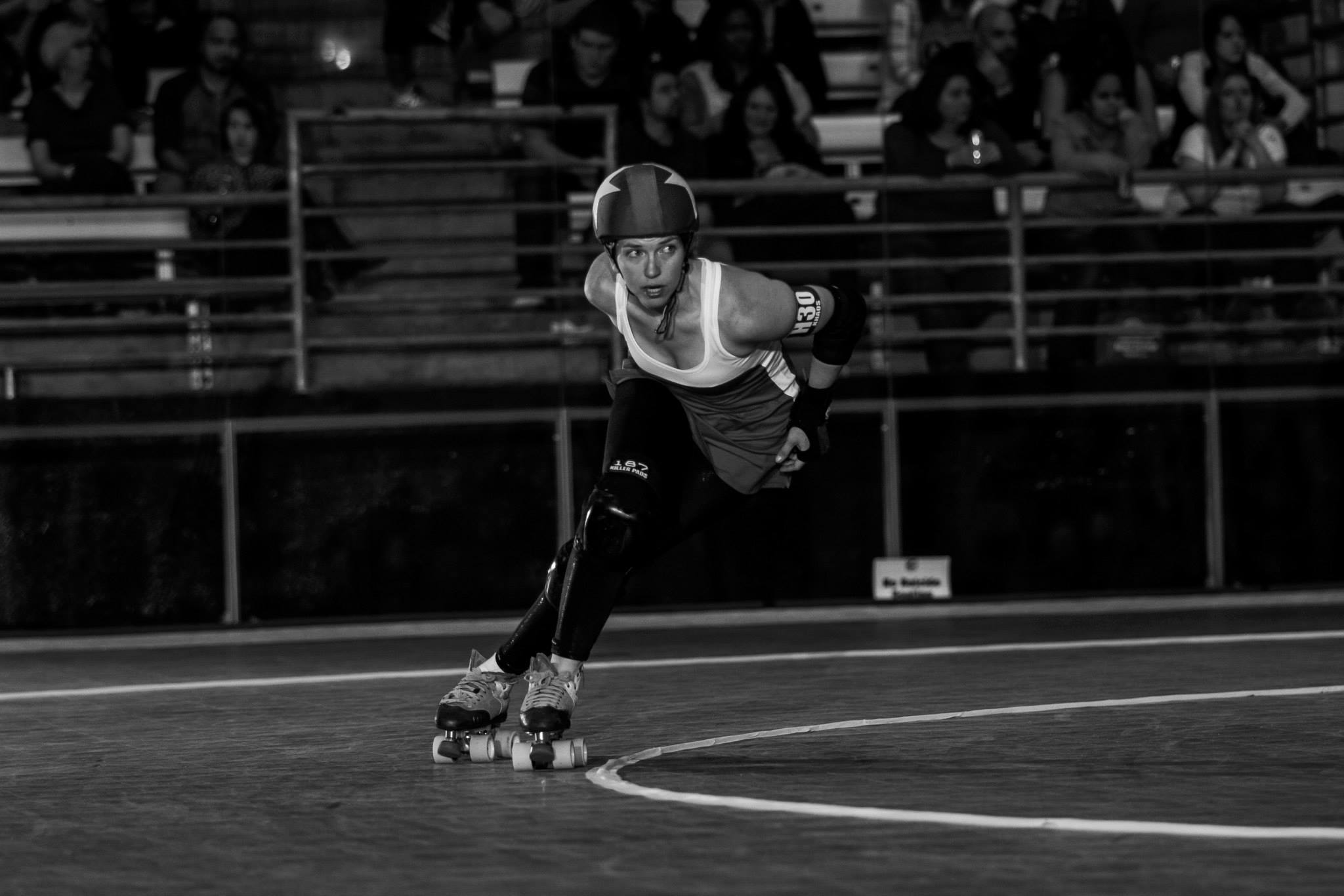
Photo by Down N Out

“You should be working, not working out.”

“You make me feel lazy.”

“You’re obsessed.”

“You’re too intimidating.”

I’ve also been tagged in many photos of unhealthy habits where the other party seems to be BRAGGING about the unhealthy meal. And when I have put up messages about joining my healthy journey, I have gotten remarks about “Can I do it and eat Oreos?” and other comments along those lines.


Should I keep going? It’s hard to go back through the memory banks and pull these out. I end up commenting on threads and conversations that I should probably stay out of because I don’t want any of my friends to hear these words from people they love and respect. No one should be told that their healthy choice is bad. No one should feel like wanting more energy and life is an insult to others.

Again, sometimes it is meant to come from a place of caring and support, but our phrasing is wrong. I know that I have a very bad reaction whenever someone tells me about the great juice diet they’re about to do for 45 days. No one is perfect, but we need to have an awareness of our words and feelings.

These negative comments come from a place of self-doubt, lack of self-confidence, inability to look at oneself to make healthy changes, or even from a simple misunderstanding of what a healthy lifestyle looks like. Those around us will look at what we are doing and see what they are NOT doing, become defensive, and sometimes go on the attack. The projection ends up on our social media and in passive aggressive conversation in day to day life. It happens all the time, and we are ok with it. Fat shaming is not acceptable, but FIT shaming happens just as often, we just haven’t put the spotlight on it yet.

**Disclaimer: If you have a friend that seriously is not eating, has dropped an unhealthy amount of weight in a short period of time, or has a tendency to go from 0 to 120 mph on things, it’s ok to express your concern. Before you approach them with: “You’re doing this wrong”, ask them questions about what they’re doing and why. I guarantee that every human will be less defensive about your feelings if you come to them from a place of understanding, instead of a place of attacking.

So the next time your friend posts that they’re going to CrossFit for the first time, or that they are starting a running routine, or that they have a goal to lose 20 pounds – encourage them. Support them in public. Ask questions about what they’re doing and what made them go for it. If you’re already healthy, help them along the way. If you are not in a super healthy lifestyle, and you feel indignant, incredulous or any other negativity towards the idea of what your friend is doing, that’s fine. You’re allowed to have those feels. That is your choice, but do not spread the negativity and resentment onto the rest of us simply because your choice is not our choice.

For those of us in this world that are combating the negativity of loved ones on an already difficult journey, keep pushing forward. Life will continue to hit you with obstacles. You are stronger. When you are past all of it and can look back on the journey, you’ll be very glad you did not listen to the naysayers.

cant change what you wont face

New Skater Survival 101: Rollercon on skates 2013

This could also be called: “How to look like you know what you’re doing in scrimmage when the vets are watching” but I thought that name would be too long.

Teaching new skaters is one of my true passions. I love seeing the ah ha moments of men and women when they finally understand how someone accomplishes a feat they see on the floor. We often overlook telling our new skaters these skills for several reasons: 1) We flat out forget! It’s been a while since we were learning! 2) We tell ourselves that they’re not ready. This is BS everyone can do these skills and they will help EVERYONE be a stronger skater. 3) We don’t do them ourselves.

Training is much different now than it was in 2009, and new skaters have the advantage of not having to go through the learning curves of training that the rest of us did. So, enjoy. I’m sorry that there aren’t more photos. I did my best!! If you have any questions, or want to increase your level of awesome on the floor by upping your nutrition, drop me a line at DerbyAmerica@yahoo.com.


Skill 1: Back Foot Push. Start by doing a regular “eggshell” push (keep all 8 on the floor and bring your feet in and out in an egg shape). To practice the back foot push, your right foot goes in front of your body, and (keeping all 8 wheels on the floor) you push with the left foot, which is behind your right foot. It is easier the lower you get, and I bob up and down when I do it to gain momentum. The back foot should be making figure 8s behind your front foot. Your front foot is just guiding, the back foot is doing all the work. Imagine a line running directly under your body, like a tightrope: your front foot should be centered on that line, your back foot should be curving back and forth over it. This will strengthen all the small muscles and stabilizers in your legs and hips so that you can develop a strong push. Remember: when you’re doing your crossovers you must STEP with your right foot and push with your left. YOU MUST BEND YOUR KNEES MORE TO ACCOMPLISH THIS.


Step with the right, push with the left. Copyright 2013 by Bob Dunnell. Please do not remove watermarks from this photo. To purchase prints of this photo, please visit the following link: http://store.mrmcwheely.com/p41986587/e60cd2f99
Step with the right, push with the left.
Copyright 2013 by Bob Dunnell. Please do not remove watermarks from this photo.
To purchase prints of this photo, please visit the following link:
http://store.mrmcwheely.com/p41986587/e60cd2f99

Skill 2: Derby Position the better way – B in V. When squatting and practicing derby position, over arch your back to keep your head upward: the desired effect will make you look like a chair, and your behind will be approximately the height of your opponent’s no-no area. Practice hip motion & laterals from this position, particularly when ‘sitting’ on someone. Feel their motion under you. Now control THEIR motion.

The first step to being able to do this position successfully is not cheating your squats. When you bend your knees, don’t lean over, push your butt back. If you lift weights, or do CrossFit, it is that active hip positioning that you want for your behind – like you’re about to deadlift. If you don’t lift weights, time to start and get some instruction on it! Not only will it teach you the proper body form, but it will strengthen what you need to consistently and strongly execute your skates and positional blocking.


Skill 3: One Spot Blocking. Get in your good B in V position. Look over one shoulder at a spot on the floor where you can see hips and legs of your approaching, opposing jammer. I do my best not to focus on the spot so much as look at it and use my periphery while I have my head turned. Practice watching that spot and moving laterally. When an opponent is behind you, move laterally to keep her behind you. If she bursts, burst over and up a little. “But if my head is one way, how will I see where she goes?” If the opponent disappears from your sight over your right shoulder, she can only be one place: to your left. I have a tendency to look over my right shoulder when guarding the inside line, and over my left when in the middle or outside line. The lines are a barrier so you don’t need to worry about that extra space, so focus on the larger area of the track.


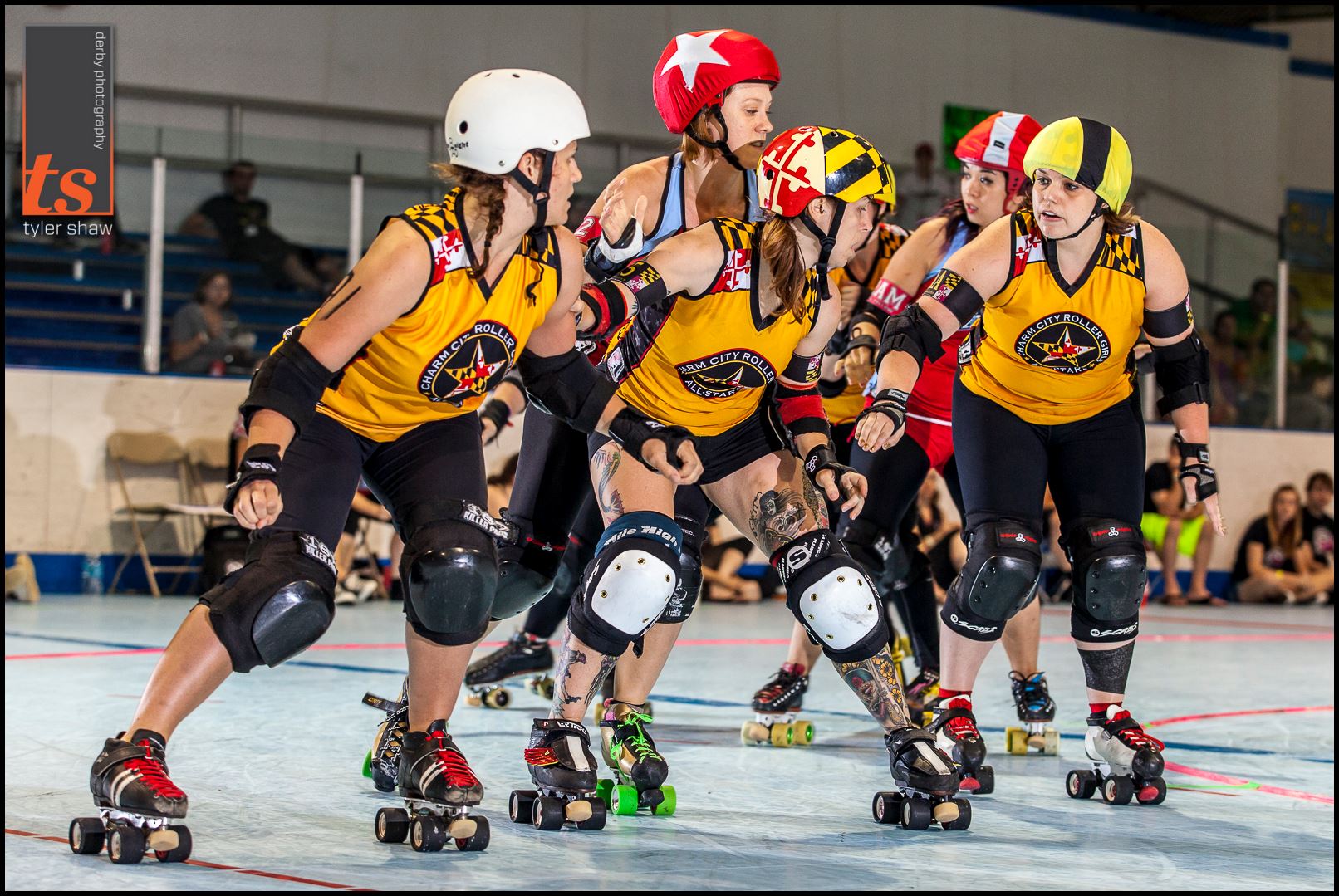
Holly Go Hardly doesn't need to snap her head back & forth to know where her opponent is. She keeps her head steady, and sits on her opponent to feel her movement. Notice how the inside & outside line blockers are looking? Wonderful! Photo by Tyler Shaw - Prints Charming Derby Photography
Holly Go Hardly doesn’t need to snap her head back & forth to know where her opponent is. She keeps her head steady, and sits on her opponent to feel her movement.
Notice how the inside & outside line blockers are looking? Wonderful!
Photo by Tyler Shaw – Prints Charming Derby Photography

Skill 4: Football Tackle. To break a wall, think about starting low and driving up, as if attacking a tackling dummy in football. Turn your shoulder to break any tension between the wall (and to avoid back block calls). It is ok if you don’t hit the opponent, but I will often aim for any weak spots in the wall (if an opponent has a butt sticking out a little bit or if someone’s ribs are a little exposed). Hitting that weak spot will temporarily open a spot in the wall that you can then burst through. KEEP YOUR FEET MOVING.


Skill 5: Shoulder in Glut. Still can’t break the wall? Use the pointy part of your shoulder and thrust upward into the flat part of your opponent’s glut. Even if it doesn’t move them completely, it may surprise them and open a hole. Again, your shoulder should be turned, and you should be moving your feet while you do this so that when the whole opens, you are there to take advantage.


Skill 6: Looking at the Hole. You go where you aim, right? Don’t look at the blockers as you approach, look at the space between them. Use your periphery vision to keep check on those coming to clean your clock. Keep your feet moving, your breathing steady and just go for the spot between the blockers (turning your shoulders). Having good, strong footwork and balance is really important for this, because you need to trust that your body is going to do the right thing at the right moment if you get hit. It’s about speed, burst and trust. Turn your brain off and just do it.


FOR SKILLS 4,5,6:  You can practice these in groups of three, have 2 people set up a wall and have the third person work on the appropriate wall breaking skill. You can also set up your team in pairs around the track and have one person at a time go through each pair to get practice in successively accomplishing each wall break. You can do it stationary or moving.


Skill 7: The 180 Hip Snap. Why use extra time to spin on wheels, when you can leave the ground? Snap your hips and leave the ground for a MILLIMETER… this should not be a hop or jump. It’s about confidence. You should land with a wide base. Start practicing this by getting on your toe stops (with one foot forward and one backwards at least ‘shoulder length’ apart) and bounce so that your hips change from forwards to backwards. You should be able to do this all day. From there, get on your wheels, and keep your base wide, practice the same motion of just snapping your hips to come off the ground.

If you’re not brave enough to commit, you may feel your front wheels staying on the ground. OR you’ll land before your skates have turned the other direction. Breathe, get your eyes off the floor, bend your knees and just snap. If it helps, try it off skates first!!


Skill 8: Running through a Pack. Ok, this is scary, I know. Most of us don’t believe that we can actually pick up our skates while in close proximity to other people. To practice running, first do it solo. Push on your skates as normal to get up to 50% speed, then – run! Actually pick your feet up like you are running a sprint on sneakers. I will say that having your feet turned out (in a duck run) is going to help you with stability and speed, but don’t be afraid to experiment with balance and foot position!

To practice this in a group, have skaters create a very tight double pace line. The lines should be able to touch each other easily forward and to the side. It should be a tight fit. One at a time, skaters should take turns running and picking up their feet to get through the middle of the double pace line. Hands down, eyes up, feet moving, shoulder turned.

Here are some videos that can help demonstrate a couple of these ideas at least… The quality is not the most amazing, but it gets the point across…

Skating Solo & intro to 180s

Lateral Spins and Hit/Reset

Tricks for the Toolbox

Mental limits and real joy

Photo by Fiona Eloisa Photography

I’m not going to lie: ECDX was a challenge for me.

I have this habit of putting really high standards on myself, and putting too much pressure on myself to perform. Then, when the team needs me in a different capacity than expected or something happens to change the way the game goes (compared to what I envisioned), I become stressed. I beat myself up. I make it harder to compete at that high level I hold for myself.

The whole cycle can get utterly ridiculous.

We all play a mental game when we step onto our track. How we perform depends on a myriad of outside forces not limited to how much sleep we got the night before, if our trucks feel tighter than normal, if we’re unsure what wheels to use and even who may or may not be watching us in the crowd.

The ability to shut off the receptors to the outside world is the first step to mental game dominance. Figuring out a bout day routine that you can take anywhere will help you prepare for the challenges ahead. So many of us create routines that rely on the comfort of a home bout; you need to be able to perform your warm-up (mental and physical) in any arena, at any time of day.

You are not preparing for an opponent. You are preparing to overcome your own physical limitations and to play the best game of your life. Preparing mentally takes just as much practice as preparing physically. Many of us ask the question, “How do we play a better mental game?” But few of us consider the repetition involved with developing it.

Mastering your mind, creating preparation routines to set yourself in the right frame of the game and then stepping into each jam with clarity and confidence – that is what we aim to do. This game is supposed to be fun. The physical nature, the mental challenge and the constant motion of the game is what every derby skater craves. Doing it to your highest limit, and even surpassing what you thought was possible – that is what we strive to achieve. Overcoming our own internal limits to accomplish a physical feat is what we all train daily for.

So now back to the self-destruction.

Stepping on the track tired, dehydrated, irritated, without proper mental prep, worried about an injury, etc etc etc will cause you to spiral out of control. Create triggers in your head right now so that if those things are happening to you as the game approaches, you can stop, reset and re-invent your mindset.

At first, you may need a team mate to snap you out of it. When that moment of realization of game day-crankiness occurs, stop. Acknowledge. Think about how you feel. That way [if there is] the next time, your own internal alarm will trigger and you can get your mindset right before disrupting your own gameplay or (worse) the mood of your team mates.

This is my challenge: understanding that I am better than I believe, that I can do more than I think and that I am quicker than my opponents. My challenge is to not be concerned that a motion is going to hurt me, and that I am going to break the pack. My challenge is to always have a smile on my face, even if I don’t play as much as I want to; even if my team needs me in a different capacity than I want to play. This is why ECDX was tough for me. I did not have my mental game in order. I did not go through my routine and I did not understand that I wasn’t going up against an opponent.

My challenge is to go up against myself, play to my limits and savor the joy of that 25 point jam with the team that loves and supports me as much as I love and support them.

Photo by Click Dastardly

Keeping yourself on the path of positive change

A lot of people say that the hardest part of a body transformation is getting started. I say the hardest part is continuing the path once you’ve been doing it for a while.

In the past 11 months (wow – it’s been almost a year already??), I have worked with a lot of friends and colleagues who are very strong at the start of their journey. They’re dedicated, diligent and feeling amazing. Then … they start to peter off. I wanted to take some time to talk about why the decline happens, and what you can do to keep yourself on track.

Your Words DO Mean Much

As a communications grad, I am all about the verbage. Words can make a huge difference when you’re making changes in your life. While “actions speak louder” is true, if you do not work on resetting your own vocabulary, you are going to constantly trigger negative emotions as you move through a new challenge. Some examples:

Reset your thinking of the word “Diet”. Diet, by definition, is the list of the foods we eat. It has become synonymous with being “on a diet” ie “starving yourself”. Erase the old definition from your mind and understand that your diet is simply the list of the foods you eat every day.

Add the word ‘yet’ onto sentences that involve struggle. For example, instead of saying, “I can’t do a pull up”, phrase it “I can’t do a pull up YET”. It’s amazing how three letters can add power and confidence to your sentence. Another great word is “will”. Instead of saying “I’d like to be able to do 10 pushups in a row” say, “I will do 10 push-ups in a row.”

Removing negativity and negative self-talk is also CRITICAL to your success. And I don’t just me in regards to your workouts and eating. I mean overall in your life. Think about how often you complain, gossip, criticize or blame others for the negative things in your life. These are toxic habits keep your mind in the mode of failure. Training yourself to not complain or criticize is a mighty prospect, but if you can master your negative emotions, than success in all endeavors is sure to follow. Can you challenge yourself to not complain for an entire week? Not one. If you find yourself about to complain about something, stop. Breathe. Let the complaint go and think about how you can turn the situation to a positive note.

Start with personal development. Books like The Big Leap (HIGHLY RECOMMENDED), The Slight Edge, Secrets of the Millionaire Mind, or any recordings by Les Brown, Jim Rohn or Zig Ziegler are great places to start to get your mind set for success.

Positive

It’s a Lifestyle, not a Quick Fix

So we’re back to that “crash diet” thing.

No one is ever looking to “drop 10 pounds and then gain it back a few months later”. Having goals that stretch past a month or two away is crucial for long-term changes in health and wellness. It’s not about doing something that works for a few weeks and then saying “Hey I feel great!” and then quitting what you were doing.

There’s a reason you feel great. There’s a reason your knee doesn’t hurt anymore or why your stomach doesn’t hate you in the morning. There is a reason you suddenly dropped five pounds or have the energy to get through your day. If you think to yourself, “I’m cured!” and then go back to old routines … well … everything you worked for will deteriorate.

When you’re looking to change your life, think about if you really want to CHANGE YOUR LIFE. Do you really want to heal quicker? To run longer? To lose that 40 pounds? To sleep better? Do you want to do it for a couple months, or for always? That is the important piece of the puzzle to come to terms with here.

IT takes

Understand that You Are Human

Even the best of us slip. The difference between those who are successful and those who quit are how we deal with our imperfections.

Ok, so you had a chocolate bar at work because the chocolate craving was too much and you forgot to pack your usual chocolatey protein bar (which keeps the cravings at bay). So now you have a choice. Some people will say: “Screw it. Today is blown. I’m going to the Chinese buffet to sulk. I’ll try again tomorrow.”

The successful people will say: “Oops. Where’s my water?” and we won’t let it affect the rest of our plan. Also, most of us will, a half hour later say “Ugh, my tummy hurts” because we’re not used to putting bad stuff in our bodies anymore. After going low-to-no simple carbs for two weeks, I find that, now, when I eat bread I get extremely tired and feel kind of ucky. The morning after drinking a couple beers? Awful. I don’t have time for that anymore. I like being sharp and energized!

The point is – understand that mistakes happen. Don’t use them as an excuse to blow the rest of your day and don’t scapegoat the continuation of bad habits as mistakes. If you make the ‘mistake’ of picking up fast food every other day after you’ve decided to change your ways – guess what? That’s not a mistake. That is a conscious decision that you need to come to terms with.

Sympathy beer
Even those of us who are very specific about recovery and nutrition have a break now and again.

Reconstruct Comfort

Part of long term success with a body transformation is the ability to reconstruct our internalized sense memories. Many of us get good feelings when we eat a cheesesteak or we curl up on the couch. These feelings are not wrong or bad, but they do set us up to sabotage our healthy habits.

It takes a long time, but committing yourself to changing your concept of comfort foods and stress relief will help your long term body transformation efforts. When you’re sad or feeling low energy, instead of turning to usual ‘comfort’ foods (which are high fat, high simple carbs) make the effort to do something a little bit better for yourself. My new comfort food is thai and Japanese food (as little rice or noodles as possible). When I’m at home, sautéed broccoli or a salad with shrimp and avocado do the trick.

It is not easy to re-train your brain. By repeating the habits again and again, eventually your body will stop craving McDonald’s at the first sign of grey skies, and crave your healthy alternatives instead.

As far as stress relief is concerned, often we crumble under the pressure of it. Even those of us who play a sport like roller derby, football or hockey, will find that we have bad days. Days where we just want to stay under the pillows, and our sports activities cannot relieve the pressure.

This is the time that you get up and move. Do something different. Walk. Run. Climb. Conquer something new. I became a runner because I needed to conquer my mind. I needed to stop being afraid, I needed to stop quitting when life got hard and I needed to prove that I could overcome depression.

So I did something I had told myself for years that I wouldn’t do: I ran. I swallowed my pride and I did something I didn’t want to do. I mastered my mind and I learned more about myself in the process than I ever would have from sitting in my chair watching re-runs of Project Runway.

One of my new favorite comfort foods: lemongrass soup with shrimp nomnom

Find a Buddy Who is Also Making Changes

Accountability partners are awesome. Whether it is for a business, exercising or talking about the things that went good or bad in your day, a good buddy is a great weapon for success. You can keep journals and food logs and keep up with one another. If they haven’t written in 2 weeks – get them rolling again! By keeping them accountable, you’re also reminding yourself that YOU should be doing the same things.

This being said, sometimes your partner will fall off. They will not make the mental commitment that you will. It’s ok to find a new partner and let them know that you’re there to support them when they’re ready. You can also find online communities of people working to change and support each other.

My own community is at Team HarderBetterFasterStronger on Facebook. We’re all remote, so we can’t meet up at the gym, but we post what our struggles are, what we’re eating and how we’re doing. We cheer for accomplishments and support each other in our hardships.

Fit Club

Maybe This is About More than Just Body Transformation

I am not a psychologist, psychiatrist or therapist. That being said, I have noticed something with humans. I’m not concerned that you DID eat the whole pizza, I’m concerned as to WHY you decided to eat the whole pizza, despite goals and commitments and health and all the things we’ve talked about.

Sometimes, the deep-seeded issues need to be addressed and you are not able to handle it on your own. That is ok. Do not be afraid to look inside yourself at the darkness to understand why you are self-sabotaging. Fear will do terrible things to us: it will make us doubt our capacity for change, it will cause us to crave foods we don’t want to eat, it will keep us on the couch when we should be out in the world working.

If you need to seek professional assistance to work through self-doubt, depression, addiction or anything else – it is alright. Do it. You will be able to accomplish anything if you can conquer your mind and your past.


In Conclusion….

All of these suggestions are long-term commitments to changing your mindset and approach to body transformation. Notice how there is not a single nutrition or workout based tip? This is a mental game; a commitment and recommitment game. Healing and shifting internalized thoughts will create a new radiance on the outside.

Think of a tree and the fruit it bears. If the roots are not solid, if the tree cannot get the food and water it needs – the fruit it bears will not be full and abundant. You cannot give the tree food and water for one day and expect the tree to bloom well. It is a constant process, and never ending. Feed your roots now and always, so that everything else may blossom beautifully and deliciously.

And trust me, there is no better feeling than looking in the mirror and seeing the results of consistency and commitment.

24

Need some nutrition help or want to start your own journey? Drop me a message at KGreyActiveNutrition@gmail.com