You’ve joined roller derby. You’ve worked your butt off (or up, in the case of some of us) to pass the 27 in 5. You’re not a complete bambi on skates, and you have fallen in love with a star. That star just happens to be on a helmet cap. You don’t know if it’s the challenge of breaking a wall, the thrill of hearing “tweet tweet”, or the praise you receive from your peers when you get back to the bench, but you have decided:
You want to be a jammer.
I am here to help. Here are 10 things to help you begin a successful career of five point passes and high lead jammer percentages. It will not be easy, it will not be quick, but with diligence, you can prevail.

- Recognize your weaknesses
Chances are you have many of them, especially if you’re coming into this sport as a true Skater Tot. Don’t be afraid to make a list of the things you’re not good at. Watch the other jammers in your league (and in footage) and watch for things you can’t do that make other people successful. Write it down!
Now also make a list of things you’re good at. For those of us who are our own worst critics (guilty), you may want to ask your captains to help you. I’ve asked, “What are you good at?” To many skaters and gotten the snap back with, “NOTHING.” Remember: There is no perfection in derby. And even if you are good at roller skating, doesn’t mean you’ll be good at jamming right away. Don’t allow the frustration to overtake you.
When making your lists, think about these categories: Physical Fitness, On Skates Skills, Strategy, Mental Game. Knowing that you’re good at analyzing situations or have a background at team sports does give you a leg up. They are just as important to derby as toe stop runs.
Now that you have your list, you can start doing some goal setting. I’d go into it here, but I talk about goal setting in another blog post (or two). Check out “Building You as a Better Skater”
- It is in the details
Jammer awareness is full of little details. If you don’t know where the other jammer is or how many points you’ve scored on this pass, how can you make effective decisions when you’re lead jammer (let’s face it, we can’t always refer to our bench coach) as to whether you should call it off? How can you be successful if you constantly get hyper focus in a pack, causing you to lose track of extra blockers who are out to get you?
This is something you can train at practice and in life. When I’m moving through a crowd, I will make a note of a single person (maybe they’ll have a red hat on). As I move, I work on using my periphery to understand where they are, how quickly they’re moving, and what direction they’re going. This works great in grocery stores and busy streets. When someone new walks into a room, try and notice something about them without looking directly at them. You’ll become better at looking using your periphery.
At practice, always be aware of where people are, how they are moving, and what indications they make before coming in to make a hit. Most blockers have a ‘tell’, and the most aware jammers will learn them quickly so they can move out of the way before contact.
To keep yourself calm, practice breathing during your jamming. Make a conscious effort of breathing in and out when you’re in a pack, and steadying your breaths while making your lap. Sometimes I’ll count my strides to keep me calm. Practice this during endurance drills. Find a place of Zen where it’s just you in the track. If you can do it during endurance practice, it’ll translate into your laps and gameplay.
For all the other little details? Well, refer back to your list of what you’re good at and not good at, and fine tune. You’re not good at getting through walls: Is it because of power, body positioning, or foot work? And go on from there!
3. Walk the [imaginary] line
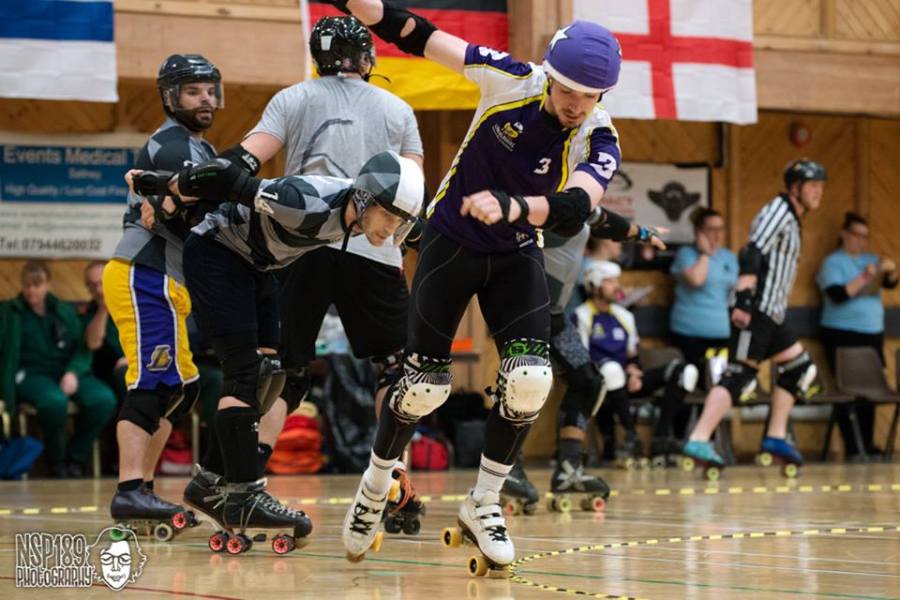
Jammers need to know how to navigate small spaces and squeeze through spaces on the inside and outside line that mere mortals cannot even detect. When you’re practicing your footwork, you should always be imagining a balance beam next to your opponent, you don’t want your feet straying away (and over the boundary line).
To practice narrow spaces, use a partner whenever possible. If you don’t have a buddy to work with, grab some cones, and make two rows of them to create a narrow lane (I like using short cones for this). Ideally, the cones should be no wider than the length of your hand, but when first practicing it’s ok to make the gap wider.
Footwork you should practice include running on your skates, a step through 180 turn (you have to pick up your feet), a foot to foot transition, a shuffle step (on toe stops), a crossover step (on toe stops), and stepping over the leg of an opponent to keep going. These basic pieces can be used in different combinations to get you through and around anything a pack can throw at you. Check out some things to start with: BEGINNER JAMMER FOOTWORK VIDEO

- Colors and space
When you look at jamming from a very rudimentary standpoint, it is a navigation of space through packs of various colors. One color is friendly the other is foe. The brains of jammers must be able to react quickly to changes in space as well as recognize friendly colors near the space. Weaknesses in depth perception or color recognition can be the difference between a four point pass and being nailed out of the air on an apex jump.
When recognizing your color for offense, remember that you want to go where that skater is about to NOT be, not where they’re going to be when playing offense. You want to occupy space that they no longer occupy. So ‘following offense’ really means follow their movements – don’t run into them, go where they JUST were.
A drill that I love for recognizing space and moving through it quickly involves the whole team (this is great for blockers too). Divide your team into three groups. Denote the active part of the track with cones (it shouldn’t be too big of an area, maybe one corner or half the straightaway). Group 1 will ‘jam’ first, starting from the opposite corner. Groups 2 and 3 are told to pick a spot within the boundary. Set a timer for 2 minutes. Group 1, in a line, begins to sprint towards the group standing still. The jammers must navigate the spaces at a sprint. The goal is to get through the pack without slowing momentum, unless it is to redirect their energy, or toe pick past an opponent. This continues for 2 minutes. Then, Group 1 switches with Group 2, and so on.
The next level is to let the obstacles take one step in either direction from their original spot. THERE IS NO INTENTIONAL BLOCKING ALLOWED. The next level is to allow one of the two groups to move laterally across the track. The final stage is to ‘split’ the groups by handing out colored coins to wear, so that each group has both black and white. Now, the obstacles are allowed to make one move to either side of their original spot, AND are allowed to make contact. Obviously, they are only supposed to hit those of the opposing color.
You can also make this more interesting by spreading out the obstacles, and adding in color cones that the jammers are supposed to make contact with throughout the course. You know, just for more fun and challenge.
On your own, you can practice color and vision challenges to sharpen your senses. I’ve found a good memory game and article about improving vision here. Anything you can do at home to improve your periphery is great. Have a friend grab some small colored balls, and sit in a chair looking forward. Have them toss the balls from behind to in front (along the side of your head). Work on catching the balls of specific colors. You must keep your eyes forward! Use your periphery!
- Bursts and balance
I f**king love science, and physics is the reason derby does what it does. The sport is a constant transfer of potential to kinetic energy, of friction coefficients, of balance, and of trajectory. To be a successful jammer there are two things you must master:
BURSTS OF POWER (which will cause both acceleration and deceleration)
BALANCE
While I could not find any articles directly related to roller skating, I did do a fair bit of reading just now about bicycles, and why it’s easier to stay on them when they’re moving rather than standing still. It has to do with torque, center of gravity, angular momentum, and the experience of the rider in controlling all of them. This is why newb skaters look wobbly while balancing on one foot, but vets can coast around ‘shooting the duck’ no problem.
CONFESSION: I can’t shoot ducks. Ever. If there is ever a skill that I will not be able to do – it will be that one.
ANYWAY!!!
To practice balance, not only do you just have to spend time on your roller skates doing goofy things, but you have to train all your stabilizer muscles, strengthen those ligaments and challenge your body to do new and interesting (and sometimes very scary things).
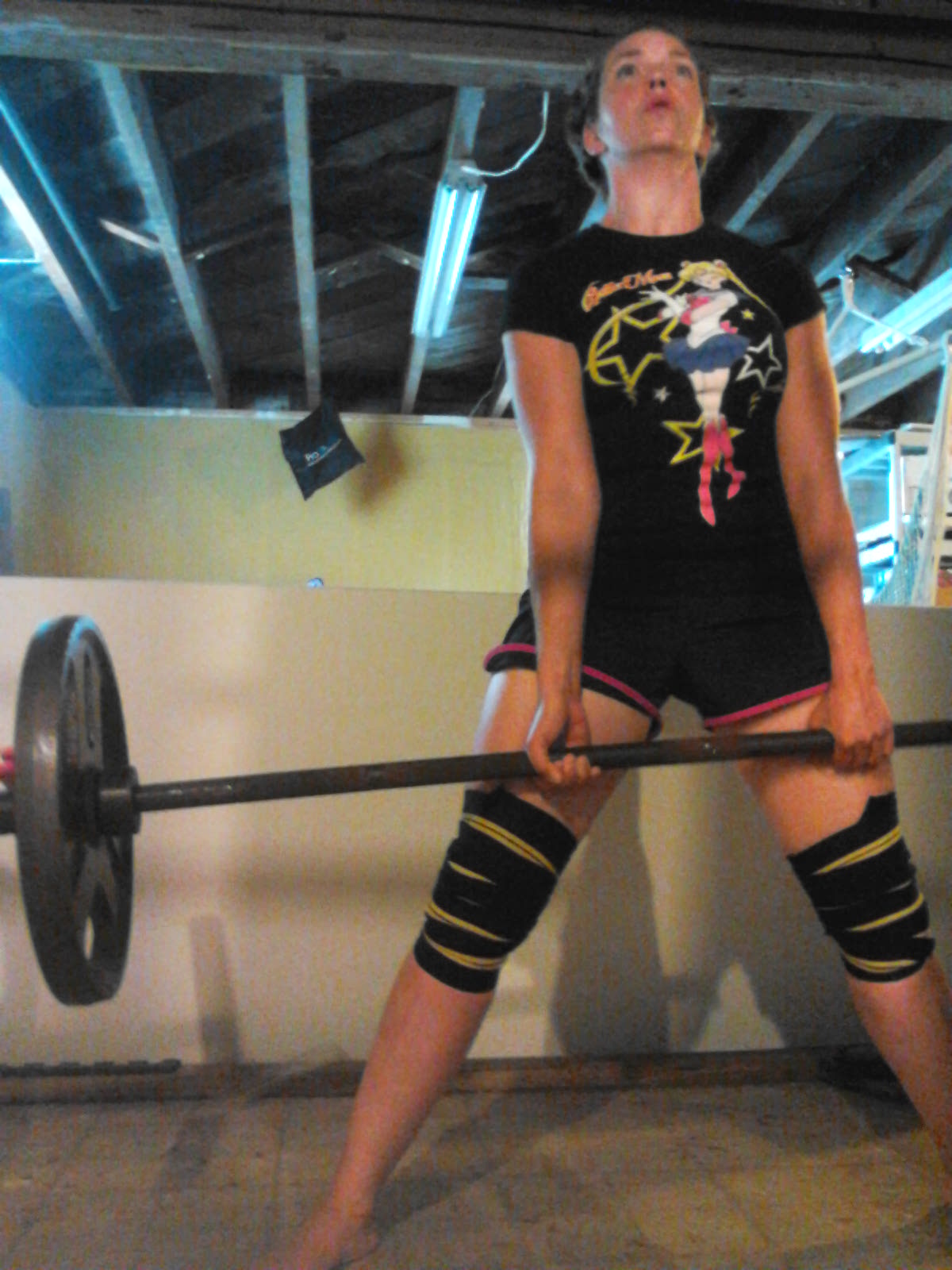
Incorporating heavy lifting, plyometrics, and yoga into your cross training program will help you erase instability and build your bursts of power.

6. Levels and Leverage
Along the lines of speed, balance, and understanding your body is the concept of understanding your levels and leverage. Being able to duck under a block, under stray arms flailing, or past a wall is excellent.
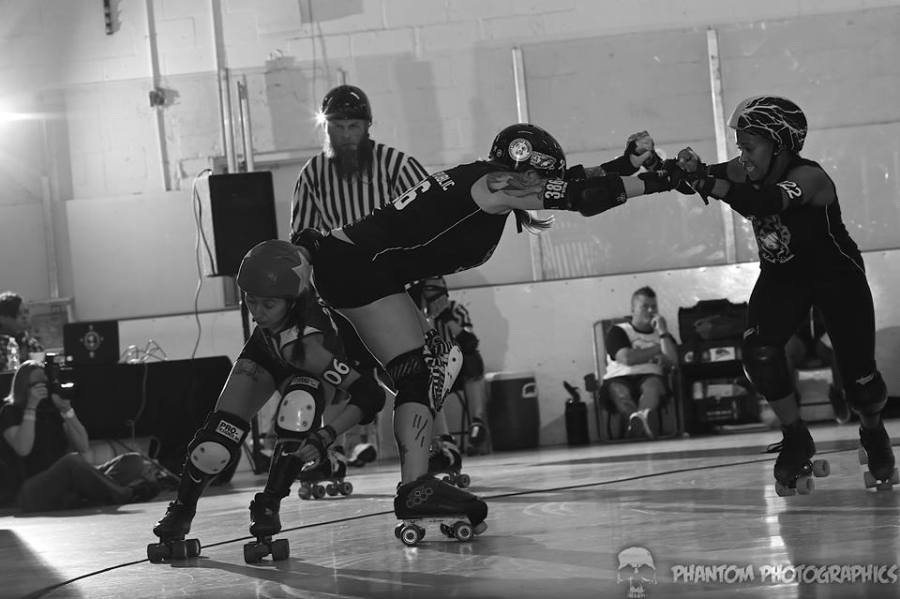
Knowing how to leverage your weight and body against opponents is super handy. Can you press your chest into a blocker and use that energy they put into you to bring your hips and feet around them? Can you bounce into a blocker and use the energy to move you forward? Can you put the levels and leverage together?
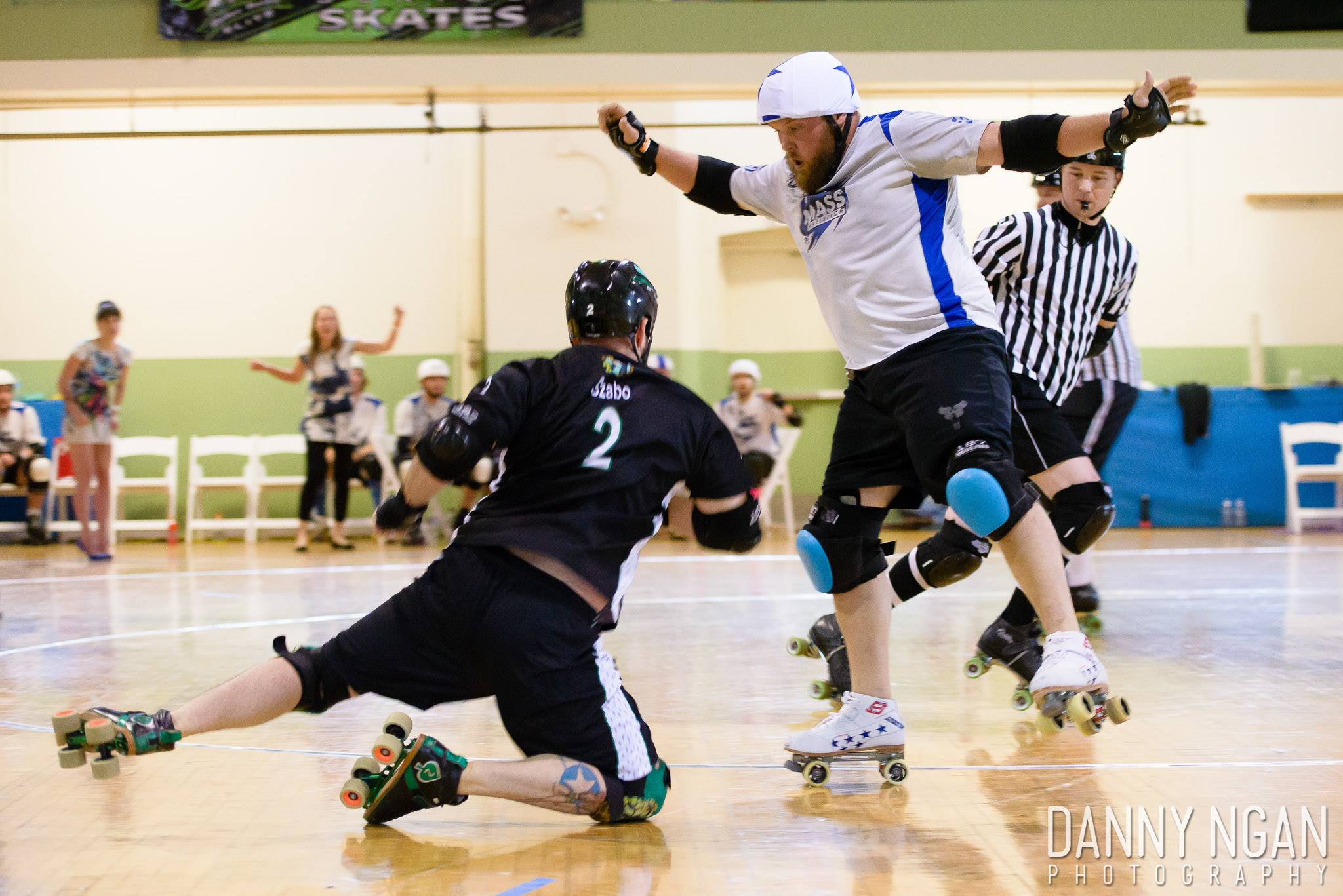
Practice (slowly) leaning onto a buddy who’s blocking you. Now see if you can create movement in your skates to move around them with this energy. Do it again, but this time, when you’re almost around them, press harder into them, duck, and snap your hips to get past them. The pressure and ducking will create momentum. You can use this momentum to steal points, or to get yourself out of a pack. After you get your hips around, practice planting your toe stop to spin out of the contact. If you practice right on the edge of the track, you can work on spinning out of the contact and avoiding the cut track at the same time.
7. It is not all about you
You are one of five players on the track from your team. You cannot play as an individual. One of the biggest mistakes I’ve seen teams make over the years is to give jammers the idea that they’re by themselves on the track.
As a jammer, it is your job to understand what your pack is planning for their defense, offense, and what formations they prefer to run. You are not just offense, but you are defense. For example: If your pack is blocking a jammer who is pushing them into bridging, it’s YOUR job to get your ass back to the pack as part of defense. You will hit the line of blockers, and either break through and they will chase you up OR you will push the wall up, far enough (hopefully) that team’s bridge will be ‘pack is all’.
If you don’t know how your team skates and strategizes, you will not be as effective at reading holes. How many times have you run into your own blockers? Yea. You should probably skate with them more often and learn how to communicate your own plan. Some teams use hand signals or code words to communicate between jammers and blockers, but the best way to use offense is to observe your team mates and know their tendencies.
As Smarty Pants once said, “Blockers make the points, jammers collect them.” So what this comes down to is LEAVE YOUR EGO AT THE DOOR. No one wants it, no one appreciates it, and even Bonnie Thunders practices. You are not Derby Jesus so lace up and leave it at the door.
8. See the game, be the game
All the derby will help you. I know that not everyone can dedicate hours each day to watching the sport, but if you want to get better at the mental side of roller derby – you must watch it. You must understand how those better than you move and succeed and fail. You must be able to think critically about aspects of the game that you have not encountered. Watching footage, even one game a week split up into four 15 minute chunks will help you.
And don’t just watch the kind of derby that you play. There is WFTDA (of ALL levels), MRDA, JRDA, USARS, UKRDA, RDCL, MADE, and Renegade. Go to bouts, watch streaming tournaments, participate in open scrimmages – both flat and tilty. See the games, analyze the games, be the games.
When you’re at your home league, don’t be afraid to step out of the jammer box.
Practicing as a blocker will dramatically improve your jamming game, because you’ll understand the blocker psychology. You will have first-hand experience of how a blocker reads incoming movement, and how a good blocker will deal with different styles of jammer – because you will be doing it yourself! Then when you jam, you can use this insider information to your advantage when it comes to jukes, deceleration, and avoidance measures.
Like I said, ALL THE DERBY.

9. It’s not your gear
No matter how long you’ve been in the game, we’ve all fallen into the trap of “Well if I just had ______”. While, yes, having better/different plates, boots, wheels, etc etc can dramatically change aspects of your game, upgrading gear in the soul hoping of becoming a better skater is silly. Improving your skills will help you pass your 27 in 5, not faster bearings. Working on lateral motion will help you avoid an oncoming block, not different wheels. Strengthening your ankles will help you power through your crossovers, not a more expensive boot.
You must work on your craft and know how to manipulate your tools before gear changes will truly mean anything to you. Personally, I couldn’t tell the difference between a wheel with an overhang and a wheel with a square edge until about a year ago. I didn’t know why I couldn’t control my 45 degree plates until I had switched to my 10 degree plates and understood what my body needed to do to plow and edge appropriately. I didn’t know why I had trouble with my 10 degree plates, until I put on 15 degree plates and could feel the movement and control in the trucks in comparison. It’s more than equipment – it’s about your self-awareness in the equipment.
I know skaters who have certified and bouted in rental skates. Sometimes, it’s not your gear, it is user error. Admitting that to yourself can be one of the harder realizations one can come to in derby.
10. You can’t climb Everest in a day
There is so much to improve at, and it is easy to become impatient in this sport. What goals do you have? All the goals? Well you can’t meet them all at once. That’s just the nature of training and sport. Do not look at the peak of the mountain and think “WHY AREN’T I THERE YET?” Rather, focus on the little steps on the way up the mountain. You can’t reach the summit until you reach 1000ft, right? This is the same with training and learning.
You won’t be a D1 level jammer overnight. Sometimes you won’t over a year, or two years. Do not get frustrated, do not quit. Set goals, work hard, and then drill, drill, drill. Challenge yourself against new opponents, and challenge yourself to think outside your safety zone. We all want to be the greatest, but diligence is the key.
Didn’t do so well at practice today? It’s ok. You have to fail a whole bunch in order to start succeeding. You’re not going to be perfect (or even good) at all the skills you try right off the bat. You’re going to run into things that hang you up. Do not let that frustration eat you alive. Recognize where you’re having trouble, break down the movement into smaller chunks, and then drill, drill, drill.
And enjoy the journey along the way! You’ll meet some of your greatest friends in the sport, and through struggling with a thing together.

Now go do some laps!
Thank you to Phantom Photographics, JPaden Photography, NSP 189, and Mr. McWheely for the photos used in this blog. Please visit and support these photogs and more.
Kristie Grey (Merry Khaos) has been playing roller derby since 2009 and has coached almost as long. She has worked with over 20 leagues in 11 states (and Canada). She has coached on and off skates at Beat Me Halfway 2014 & RollerCon (2012-2015). Active in health and wellness, she is an active Herbalife Health Coach and [when the knees allow] rock climber and power lifter. For questions, booking, requests of topic, or help with a nutrition plan, message Khaos at DerbyAmerica@gmail.com




 Khaos Theory Derby