The House that Derby Built: 4 Corners of Training with Mixed Levels

Support Merry Khaos and getting back on skates at GoFundMe.com/KhaosACL

How the hell do you run practices when your league has practicing membership from Level CobraSnake to Level NewbornFoal? THIS is the biggest question asked across the world by coaching committees in roller derby right now. How can we keep our vet skaters challenged and satisfied with the training process [so they don’t transfer out] while bringing new skaters up [quickly] to a level to be able to play with those vets?

I had such a huge response to the blog I posted two days ago, about League Rebuilding that I wanted to make sure that my blog about training the leagues that are rebuilding went up quick!

There are fundamental corners to The House that Derby Built: Skills, Teamwork, Strategy, and Health. Without one of the corners, the house will not fall, but it will lean a little funny. Without two of the corners, you don’t have much of a house.

TESTING THE FOUNDATION

First you need to understand where your league is at with each of these fundamental pillars. The first step is to take an honest look at where each skater is individually and as a league. For Skills and Health you can actually do measurable tests to help you with your mapping process.

Set up a practice to set benchmarks and test skills, and I would recommend asking coaches from nearby leagues to come in and help with the ranking process, since the will be more impartial in the process. Create a list of skills (crossovers, one foot glides, lateral motion, hip checks while moving, jumping, counter blocking, 180 toe stops, blocking to the line, etc) and have them ratable 1-10. Move your way through drills, as you would when doing a certification, but make sure you have more advanced skills on the list than a strict certification process.

For Health, you simply create a list of ‘events’ like a football combine. You can test squat strength, bench strength, 100 yard dash, 400 yard dash easily. You can create short ‘obstacle courses’ and time each player through it while rating their cuts, bursts of speed, jumping, and footwork. You can do one foot balance, long jumps, pull-ups, or anything else you think would be applicable to strength and endurance needed for derby.

Once you have your 1-10 data points you can put them into a spreadsheet and simply create a point chart! Boom. You now know where people are. This is not to make anyone feel bad. This is simply a way to benchmark individuals so that the training staff can develop upcoming practices and make recommendations about cross-training. This information is also a great starting point for goal setting! Part of setting goals is that they have to be MEASURABLE. With benchmarks in hand, captains can meet with skaters to create a real list of SMART goals for the skater to focus on in upcoming months.

To benchmark Teamwork and Strategy is harder. Teamwork, though very easy to see the presence (or lack of) teamwork, it is not easy to quantify. You may want to ask those coaches to come and observe your team in a scrimmage against another league to rate overall Teamwork and Strategy. When you map, you will not be mapping for your team, but you will be mapping for groups of skaters, or the team as a whole.

Things to rate from 1-10 in Teamwork could be: Proximity of skaters, holding lanes, communication, mobility of walls, awareness, recycling, and protecting edges.

Things to rate in strategy could be: Offense, O to D/D to O switch speed, Bridging, Jam line start, power jam defense, preventing recycling. Watch some bouts and make notes of how to describe strategy and teamwork and create your list to test (use the words and ideas that I listed as your example).

CREATING THE PLAN

After you map the data, you can analyze it with your training staff. You’ll be able to see weaknesses very easily. Data doesn’t lie. Create the charts however your brain can deal with the data. After playing around a bit, I decided that I like the bar graph, since I can see distinct lines across. I just made up a mock chart for an example (I picked derby names at random, I didn’t actually rate people on things).
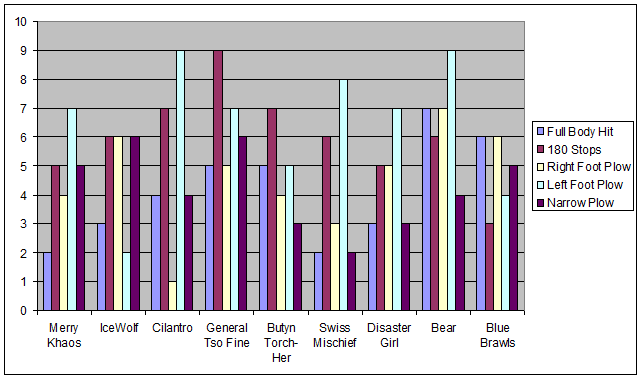
chart

From looking at the chart, you can see that some people have strengths, and some have extreme weaknesses. You do not want to use those as your focus. You want to teach to the median weaknesses. Note: This does not mean ignore the strengths, it just means you now know where to focus more of your training energy. Looking at this chart, I immediately notice that NO ONE has even a 7 on narrow plows. Next thing I see is that while we have a few people strong at left foot plows, the rest are not, and no one is strong at right foot plows.

If you have a team that is primarily new skaters, and you are noticing that in the corners of your house, the median score is 1-5 in most areas, than grade on the curve. So you can’t look at the data and go, “Oh man, there are only a couple 7s. WE MUST FOCUS ON EVERYTHING.” Right, ok, so, bring the top grade to 7 and look at the skills from there. If 7 is the top and you’re noticing some skills have more 4/5s and others have more 2/3s, focus on the 2/3s.

You do this with all four of your pillars. Identify your team’s overall weaknesses.

THE EXCUSES

“But we have too many new skaters to do this!” No. No such thing. If your skaters can’t complete skills they get a 1 on the scale. That’s it. Everyone can run, lift, jump on sneakers.

“But we don’t have any place to do the off skates benchmarks!” Really? You know that? I just suggested it and you’re already coming up with an excuse to not do it? Have you called the gyms in your area and asked about it? Tell them what you want to do. Offer them advertisement in exchange for use of their gym to do benchmarks. They can be the “Official Combine Location of the Blankety Blank Roller Vixens”. Local, privately owned gyms or franchises are the best place to start. You may want to approach CrossFit gyms about it, because they’ll usually have sprinting space too, and some of those coaches have experience in combines.

“But we already spend so much time at derby, we don’t have the time for this! We know how our skaters are, can’t we just use what we know?” Cancel practice for a week and do this. If you want to improve and you’re serious about focusing your training program, you need to know what you’re working with and you need to have an OBJECTIVE view of where you are starting. Without data, provided with the help of people who don’t know you from Adam, all you are doing is continuing old habits. Your current training is based on what you think you know about your skaters. Chances are your advanced skaters are not advanced. Chances are your fresh meat have skills you didn’t realize.

“But we’re not Gotham or Bay Area. We don’t need to train like a D1 WFTDA team.” Well I will respond with a Vince Lombardi quote:

“If it doesn’t matter who wins or loses, then why do they keep score?” You don’t have to be a D1 team to want to be successful or to train to be successful.

What it comes down to is that this is new, and new is scary. What it also comes down to is exposure. Exposure is scary. Skaters (especially self-proclaimed ‘vets’ and those who like to pop into practice when convenient) do not like being told that they need to improve at something, or that the ‘lowly fresh meat’ is actually better than them at a skill. This is not about belittlement. This is about recognition and understanding. Without it, you cannot move forward.

DON’T FEAR TO START AT THE START

If you have to grade on the curve, and you have noticed that you have that moment of “We have to work on everything”, then step one is take it back to the beginning. Begin training the TRUE fundamentals for individuals and teamwork:
The mechanics of roller skating & speed skating
New derby position (tailbone tucked, feet shoulder width)
Toe stop & duck runs
Holding a lane
Skating without using your arms or looking at the floor
Skating in a pack
Pace lines & Speed control
Lateral motion/Laterals using edges & leading with your knees Carves (short and long)
Narrow & One foot Plows
Stopping with edges
Making a wall
Moving as a wall
Anatomy of hitting
Sticky blocking
Transitions both directions
Communication & awareness while in motion

This is the start. These are the building blocks. You cannot do a box drill if skaters don’t know how to control their speed and skate close to other people. You cannot do a weaving pace line if your team doesn’t know how to do a basic pace line. This is your first check list. And honestly? I probably missed things. (I have walked away from this list and come back to it several times.)

Old derby position (l) - Butt out, weight middle of the feet/heels New derby position (r) -  back straight, tailbone tucked, feet hip to shoulder width apart You won't be as low in new derby position, but you have more mobility from this position, and a stronger stance for blocking and walls
Old derby position (l) – Butt out, weight middle of the feet/heels; New derby position (r) – back straight, tailbone tucked, feet hip to shoulder width apart
You won’t be as low in new derby position, but you have more mobility from this position, and a stronger stance for blocking and walls

“But my vets will be bored!” No, they won’t be. In any drill that involves team play, the vets should be focused on helping their team mates cover lanes, maintain position, and work on speed change. The vets need to be the coaches through the drills with the new skaters. For any individual skill, the vets need to be focused on cleaning up their own abilities. Encourage the vets to work on precision, quickness, reaction, depth of skill, and visualizing they’re in a game situation.

Your vets can plow? They should work on plowing narrower, sharper, stopping quicker, keeping their hips more square, their back stronger, and their head up and looking around while doing it. Your vets ‘know how to roller skate’? Encourage them to make their stride deeper, lengthen their pushes, and focus on breathe work and mental tricks as they go around the track that they can access during game play to calm themselves.

***THERE IS NO PERFECTION IN ROLLER DERBY***

Every skater needs to review and practice these fundamentals. These building blocks are not things to check off a list and never visit again. I recommend revisiting these fundamentals often, even after every skater on your crew can rank at an 8+ with them.

NOTE: Every skater is responsible for their own progress and should be empowered by their team and coaching to take responsibility for practicing fundamentals on their own time as well as whatever happens in practice. Just like with the health section at the end of the blog, it is not the coach’s responsibility to mother each skater to make sure they are keeping sharp on their skills on their own time.

DO NOT COACH DOWN

Just because you are working on fundamentals, it does not mean that you need to treat your skaters like 5 year olds, or offer them drills that do not challenge them. Create drills that push your new skaters. Do not assume that because they are fresh, that means they are incapable. Keep your pace lines challenging. Do not skip a drill that works on something that needs to be addressed because someone thinks the fresh meat won’t be able to do it.

When Mystery Violence Theatre came to HARD she couldn't stand on her skates. Through coaching confidence & her own hard work, she now skates for Gotham's Wall Street Traitors & Bronx Gridlock. Photo by David Dyte
When Mystery Violence Theatre came to HARD she couldn’t stand on her skates. Through coaching confidence & her own hard work, she now skates for Gotham’s Wall Street Traitors & Bronx Gridlock.
Photo by David Dyte

You do not get better unless there is a challenge. Making drills JUST above the median level or intensity will push your largest faction of skaters. Dotting in more advanced drills or more basic drills, will keep everyone confident and working hard.

For example:

Let’s say you are working on edgework! You can start with carving long and slow and then short and sharp. Time these for about three minutes, with all skaters moving around the track.

Next, put dummy blockers around the track, facing proper derby direction, near the inside and outside lines. Have them stand NEAR the line, but with some space. Have your skaters carve between the blockers and the line, showing their back to the blocker as they go through (they’ll have to twist their body). After everyone has done it for a few laps, have the dummies take an extra step away from the line, and have skaters get by them by bursting past with a 3 step duck run (which utilizes edges).

For newer skaters, put bodies about as far away as the green cone. For the more advanced skaters, go with the red.

Then put obstacles in the track – one in the middle of each straightaway, one at either end (trashcans or chairs work great). Have skaters rolling and approaching the object, then bursting around the object with the 3 step duck run. They can challenge themselves to get as close to the object (without touching it) as they can before they burst around it.

After this, bring the practice back down by practicing lateral motion, leading with the knees, from line to line across the track. You have started with something very basic, upped the intensity a few times, and then brought it back down to a lower intensity, more precision-based drill.

So the moral of the story is – don’t think that your new skaters can’t do it just because it’s harder. You can always offer ways to adjust a drill harder and softer to accommodate for all skaters.

MIXING LEVELS IN PACKS

“Do we have levels mix together in drills?” Yes and no. I will define who skaters should get with as we progress through a coaching plan. This is something that the coaches need to decide. I will say “vets with tots” or “Get with someone of your skill level” or “find someone on your home team” to define who I want them to work with.

You may want to rotate skater partners too, so that way the newer skaters get the advantage of in-drill coaching. Don’t be afraid to spend a longer amount of time on drills and skills. You do not have to rush through practicing; it’s through repetition, repetition that our bodies learn. It takes 5000 SUCCESSFUL repetitions to establish muscle memory. Let them practice in mixed levels, then switch them to equal levels to allow themselves to push and challenge each other.

LESS IS MORE

Less talking, less complication, less spending of energy: in roller derby, less is more.

Do not spend 30 minutes talking about a drill. Do not spend 30 minutes arguing about a better way to do the drill. Do not allow other skaters to try to bully the coach into doing the drill a different way. Explain the drill, demonstrate, try it, observe it, correct misconceptions, do it again, observe it, tell everyone what you’re noticing, do it again, bring everyone to the center, talk about what you observed, take quick questions, move on.

Do not think that you have to bring drills to practice that have 15 steps. Simplification is critical. One piece at a time, and build your blocks. Practice your one foot plows/chomps. Then practice stopping in a two wall. Then practice stopping in a three wall. The practice stopping a jammer in the three wall. Then practice stopping a jammer in the three wall, and having the wall step in front of the person blocking. Build.

Do not think you have to be good at every strategy. Vince Lombardi is one of the most decorated NFL coaches of all time not because his Green Bay Packers could do ALL the plays. It was because they did a handful of plays SO WELL that no one could defeat them. By keeping things more concise, you will give your skater tots less to learn (less overwhelming), meaning they’ll be able to advance quicker and get to the level of working with the vets and having everyone be successful.

Teamwork, communication, being on the same page, and focus. Less is more.
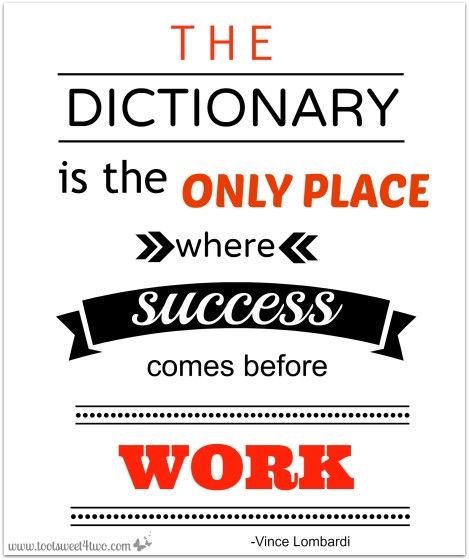
lombardi success

3 FAVORITE PRACTICE THINGS FOR ALL LEVELS

Boxes: Everyone is in a tight box, on the whistle the box completes an action. You can either pick actions before the drill starts, or coach can shout the action before the whistle. Actions can be: rotate right, rotate left, inside line, outside line, hop, front to back, back to front, make a wall, make a line, make a box, speed up, slow down, 180 stop, etc etc etc. Start basic. Work up from there.

Double Pace Lines: Especially if your league needs some long endurance work, double pace lines can be beneficial to teach speed control, footwork, skating proximity, and awareness. You can have individuals weave, teams weave and lead, teams race, individuals block, teams weave and hit between the pace line, and more.

Games: Soccer (use an empty water jug instead of a ball), dodgeball, tag, and more! Get your team distracted from what they are doing by making them do something that isn’t roller derby. It’s amazing how the footwork, stops, awareness, avoidance, cuts, spins, toe stops, and communication improve after just one session. Plus – it’s really really fun!

Check out my Put the FUN in Fundamentals class notes from RollerCon 2014!

OUTSIDE OF PRACTICE

So that “health” corner of the house? Here’s the tough thing: You cannot make people do anything outside of practice time. If a skater wants to live on McDonalds and potato chips and watch 5 hours of television on their non-practice nights, that is their prerogative. Doing the benchmark combine may be the shock some people need to start developing some outside healthy habits, but you cannot count on that (You would think being winded after a lap and dreading the 27 in 5 would be enough motivation, but not everyone motivates the same).

YOU CANNOT WANT IT FOR THEM.

You can give all the Braveheart speeches you want, but each person makes their own decision of what to do with their body. If you are a decided rec team, what you can do is make recommendations as a training committee of how people can train for roller derby outside of practice. If this blog hasn’t tired you out completely, check out my SHIFTING PERSPECTIVE blog about training for our sport.

5efb67fd063f8dc613ff8ee4f8e830a0

Some leagues I have come in contact with have an ‘extra practice’ that they must complete each week on their own – it’s a set of workouts that they can do at home or in a gym. More serious leagues (or leagues that want to become more serious) are requiring their all-stars to have gym memberships (these leagues usually also have some kind of agreement with their local gym for discounted rates). In the future, some may require a level of baseline fitness in order to qualify for all-star rosters.

Every league is different. Do not be afraid to adopt these health requirements for your league, simply because it is unprecedented in your area. Do not be afraid to not adopt such policies because you do not believe it would be right for your league. Either way, it’s a discussion that the league as a whole may want to have.

My first league was not a D1 level of play, but it was understood that we did NOT drink alcohol the week of a bout.

Nutrition is as critical a part of fitness as the weight lifting, yoga, land drills, sprints, etc. As a Derbalife coach, I spend a lot of time simply teaching skaters what is and is not good fuel for the body. Creating a voluntary fitness challenge with rewards within your league could be a great way to get your skaters to do something good for them (and their skating) without the league instating rules and policies. It can be something people ELECT to do.

I guarantee the people who lift weights and do extra conditioning work outside of practice will, in the long run, excel past those who do not.

PROTEIN! HYDRATION! VITAMINS! EATING BEFORE PRACTICE! EATING PROTEIN AFTER PRACTICE! CUTTING DOWN ON SUGAR! These are things that can play a huge role in a skater’s success on the track.

CONCLUSION

Wow you’re still here? Well done!! I hope I have addressed your questions, concerns, and issues at least a little bit. This is a difficult problem for a league to have.

If your league is looking for bodies all the time, then you will continually have to rotate in fresh skaters into your tots. It’s imperative that you develop a new skater check list for each player to practice and complete and be tested on before they make their way onto the track with the vets. This way you can be sure that each player that is introduced to your team have spent time building up each corner of their house before they mix it up with more advanced skaters.

Remember that you are not the only league going through this training process. Pick goals, plan out your trainings a few weeks at a time, keep communication open, and evaluate and adjust after each chunk of training plans.

Skate hard, skate fast, be excellent to each other and do it for THE LOVE OF DERBY!!

Like me, Merry Khaos, on Facebook! Like DNA Coaching on Facebook! Want me to come out to your league to help with this stuff? Need nutrition and fitness help for you or your league? Drop me a line at DerbyAmerica@gmail.com and let’s chat about Derbalife.

League Rebuilding: When a middle ground is needed between ‘competitive’ and ‘rec’ derby

Support Merry Khaos and getting back on skates at GoFundMe.com/KhaosACL

I have worked with a lot of leagues at this point in my career.

I have been a member of and guest coached small leagues, rebuilding leagues, D1 leagues, crumbling leagues, thriving leagues, and leagues in identity crisis. I’ve been with leagues that have had 9 transfers out in the off season, and ones with 9 transfers in during the off season. One reoccurring theme I have come across before guest coaching is this: “We have so many different levels, we don’t know how to coach our team.” A subset of this is: “We have vets who don’t show up, and when they do they don’t want to work as hard as our fresh meat.”

I am going to do my best to be clear and articulate and write this blog in an organized fashion (I really need to do outlines like real writers). I am going to mainly talk about the subset. This is the question I’ve gotten from several leagues recently: We have a league that is small already (under 25 who actively pay dues) and our schedule is built around a core of 14 skaters who started the season with us. However, they haven’t made attendance in months, when they do they don’t do the drills, and they belittle the newer skaters who are working to improve. How do we structure our training, and how do we deal with game day rosters when 8 of our 14 have not made attendance and our fresh meat are not yet prepared to skate?

My answer about training:

If you have a core of fresh meat that are showing up and are dedicated to working hard and building skills and teamwork, why would you tailor your training to girls who aren’t showing up? Create your training schedule (yes, I am a HUGE proponent of building training schedules in 4 week chunks) based around the team you have, not the team you HAD. Maybe this time six months ago you had 9 advanced beginners, 5 beginners, and 2 newborn foals, but now you have 2 advanced beginners, 8 beginners, and 5 newborn foals that show up on the regular. Why would you build your training schedule to include backwards blocking and diamond formations? You need to build the basics first. There are basics of roller skating/footwork, basics of teamwork, basics of roller derby, and basics of cross-training. Each needs time and nourishment.

H.A.R.D. (neon green) faced off against Dutchland at ECDX in 2010. Several HARD vets had transferred to DDR, leaving HARD with an array of skill levels from Rainbow's Revenge & Anida Blade (3-4yrs) to Ivanna Impaler & Spazmanian Devil (3-4 months).
H.A.R.D. (neon green) faced off against Dutchland at ECDX in 2010. Several HARD vets had transferred to DDR, leaving HARD with an array of skill levels. Skating that day were Rainbow’s Revenge (pivot) & Anida Blade (purple helmet) who had 3-4yrs of derby to Ivanna Impaler & Spazmanian Devil who had 3-4 months. The vets always showed up, though. They put in the work, respected the coaching staff, and helped the newbs get their skates under their feet. It’s part of why we had a winning season in 2011. Photo by Jim Rhoades 2010

When ‘sporadic vets’ decide to show up, they need to fall in line and do the drills of the day and have respect for their coaches, team mates, and the process. If they’re not coming to practice regularly, they probably need the fundamentals as much as the Skater Tots do (especially the fundamentals of teamwork). Packs of skaters are jenga puzzles – if you have one piece that is not in sync, the pack is wobbly. If you have more than one skater not in sync, the puzzle is going to fall. The only way to develop teamwork and trust is through time, experience, and work. Wall work is not a magic thing that just happens for 60 minutes of game play. The teams that can maintain strong, appropriately fluid walls, are the ones who have spent hours drilling it. Texas is Texas for a reason.

From: http://rdjunkies.tumblr.com/post/78852536403/wall-study-texas-vs-atlanta
From: RDJunkies

“But we don’t want to be Texas.”

Really? Why not? (JOKING!!) Honestly though, do you all feel that way or are you just being defensive in the name of what your league has accomplished thus far?

Most of the leagues that bring the scenario of a handful of rogue vets to me will present me with “but we don’t want to be competitive, so doesn’t that make a difference?” And then when I dig a little deeper, what I find is that a handful of people don’t want to be competitive. SOME people don’t want the challenge, but there are more people that do want the challenge and the improvement, but maybe they’re used to being quieted at meetings or at practice. Maybe they are the ones being belittled during drills.

I rarely meet any skater that shows up 2-3x a week, pays $30+ per month and DOESN’T want to be competitive. The skaters that skate for funsies or as their gym membership are usually the ones that, in the long run, don’t make attendance, don’t come to league events, don’t participate in fundraisers, and therefore should not be making a roster.

Yes, even if that skater is ‘more skilled’ than the others on the team.

Remember how I said that packs are jenga pieces? I would rather have a team of 9 pieces that know how to skate with one another because they’ve shown up to practice, than a team of 14 pieces that have one or two ‘superstar-exception-to-the-rule’ in every pack. They make each line unstable. They do not know the strategies that have been worked on in practice. They fall out of their lines. They become rogue, big hit blockers (or “Points for the other team” we can also call them), play offense inappropriately, don’t have experience with specific scenarios, don’t know how to communicate or receive communication from the others in their pack, and, in general, cause dissent in the league.

Dissent? Que?

Yes. If you have a girl who is ‘super talented’ or ‘vet’ who gets on a roster AND significant play time despite chronically breaking league policy and attendance, how will that bolster team morale? What it shows is that the coaching and training committee rewards talent and time claiming derby girl status. It shows that the coaching does not value sweat, work, and time on the track as a team. Resentment is a cancer.

“But we only have 9 players that show up to practice and that qualify to skate! Should we borrow?” No. You play those 9. “But we’ll lose!” Ok. So what? It’s just f***ing roller derby. “But what about our fans?” Will your fans value seeing a consistent group of core skaters whom they can cheer for and get behind (and one day have “I remember when…” moments) or would your fans rather have an ever rotating roster of borrowed skaters in sharpie-written t-shirts?

Your team will attract the kind of players that your practice and rosters nurture. If you nurture individual skaters who can come and go as they please, mouth off to coaches, skip drills that they don’t like (though they’ll tell you it’s because ‘it’s too easy), and disrespect their teammates, you are going to continue to attract those skaters that are in it for the derby name, disrespectful, lazy, and unreliable.

If you nurture a positive, athletic environment with a schedule and focus; if you nip negativity in the bud and encourage skaters to improve and push themselves, you are going to attract skaters that are willing to work during the paid practice time and invest themselves in the league. If you respect the process of roller derby, you will draw people to you that also respect the process of real, strong, athletic, revolutionary.

Mother State decided what they were going to do, and go for it. They are notorious in the northeast for skating short. Only 5 skaters went to Alaska to play Rage City.
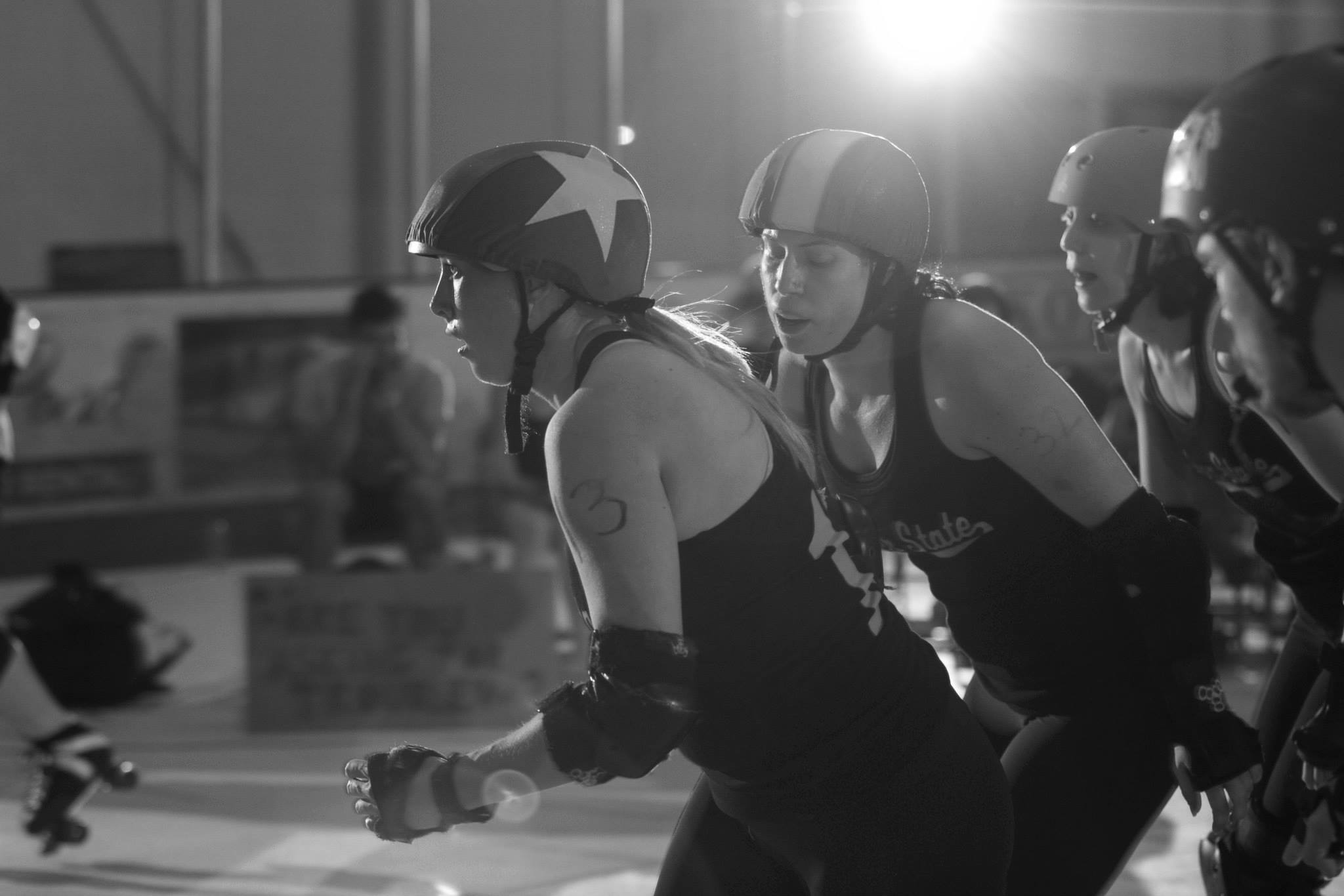
Mother State decided what they were going to do, and go for it. They are notorious in the northeast for skating short. Only 5 skaters went to Alaska to play Rage City. Real, Strong, Athletic, Revolutionary. They attract the skaters they want. Photo by Down’n’Out Photography

Ok, conjecture aside. Your league has mostly skater tots (again), some mouthy advanced beginners (who don’t want to admit that they are still beginners), some awesome intermediate-advanced beginners, and a couple orbiters that don’t really fit anywhere. ‘Vets’ are inconsistent at practice. We have issues. What next?

Before we get to track time, let’s look at league policy and communication. Confrontation is hard. I have never met so many leagues with so many people in the BoD who do not like to talk about the elephants trampling the team. Call a league meeting. Tell everyone that it is going to be a roundtable discussion on the future of the team, policies currently in place, and policies moving forward. This is not a time for league voting. There will be people who get riled (and you should have a moderator designated who is good at cooling people off and putting out fires to slow the conversation down when people get heated). Have every skater bring a list of no more than five things they would like to address, and have each skater bring a list of at least three things that they feel are going well with the league.

NOTE: NO ALCOHOL AT THIS MEETING.

Before things start, it may be a good idea to do a team building exercise. I very much like this one: Write each person’s name on individual note cards. Hand out colored writing implements to everyone there. Each person gets a note card (if there are people not there, some people will start with multiple). One person has a stop watch. You have 30 seconds to write down a positive word or phrase about that person. At 30s your timer says “Pass” and everyone passes the cards to the LEFT. When the cards have made a circuit, put those cards in a box. You will pass them out AFTER the meeting is done. (PS this is a great locker room exercise too.)

After your meeting is done, hand out these cards. You can even go around the room and have everyone pick out one word or phrase that they are going to choose to embody during upcoming bouts or practices.

I didn't have note cards, but you get the idea. Names on one side, positive words on the other!
I didn’t have note cards, but you get the idea. Names on one side, positive words on the other! (My writing is terrible, yes that says “Fast!” on Bill Coulter’s card.

Move forward from your meeting with the positive idea that despite change being scary, you are going to be steps closer to a more smoothly running league. All the things that people brought to the table? Well the BoD should have brought their own list of topics. Talk about what the BoD has brought to the table, and after the meeting create a master list of things that people want addressed. This is where committees/BoD will focus their efforts in the upcoming weeks. This is not an easy or clean process, but this is step one. You are playing 52 card pick up, and this is stage where you’re taking the pile of messy cards and working to shuffle them back into a one deck that can work as it’s supposed to.

COMMUNICATION AND RESPECT is critical for this process. Mediation is necessary. No name calling. Set ground rules for the meeting. If people who show up to the meeting (which you may see faces you haven’t seen for a while) are breaking ground rules set at the beginning of the meeting, the mediator is allowed to throw the Insubordination sign and ask them to leave (or at least to sit outside an cool down for a moment).

No one in roller derby wants to be angry at their team, no one comes into this for ‘drama’. A league meeting doesn’t have to be ‘drama’, but each team is a business. So think of it as a business meeting. A State of the Union meeting. A “let’s talk about what is good and what is bad and how to move forward from here”. I say this is not a place for league votes because things can get heated, and if you have people showing up that haven’t been there in weeks, they may come in with blinders on. You want people to have a chance to digest.

I am also a fan of people having to be in good standing with the league (dues paid, committee hours accounted for, attendance in, etc) in order to be allowed to participate in any league vote. I know. I’m a Maverick.

Make sure you have some sort of Team Gathering scheduled in a couple weeks after the league meeting that is not derby, and just hangout time! We want to remind the skaters that it is more than a league – it’s a family. And family members may get mad at each other now and again, but it doesn’t mean they stop loving each other. This one, alcohol is allowed (though it’s bad for gains, I’ll allow it)

team bonding

Training different levels at once: This is going to be a separate blog. Once I’ve gotten to this, I realized that I have written so much already, your eyes probably want a break. Thank you for reading through, and I hope you have gotten some good ideas on how to move forward within your league. Any anger, resentment, fracturing OFF the track will be directly reflected ON the track. When I watch a team play, I can almost immediately tell when they have poor league communication, attendance issues, or unchecked egos.

http://www.facebook.com/merrykhaos1918
http://www.DNAderbyCoaching.com

So … About those 2013 All Star Articles….

So about 7 months ago I began writing All Star Articles for 2013 for several regions of the world. Then as I began writing them several things occurred: I realized I bit off FAR more than I could chew, the platform I was posting on (Examiner.com) changed a whole bunch of policies and it became miserable to post on (and unenjoyable to read), and the site also lessened the quality of photograph appearance, so many of my photographer friends were very upset at how their work was presented. For these reasons the articles fell to the wayside. I was frustrated and angry with the site and with the whole process.

Forty Ounce Bounce of River City Rollergirls


I am not going to write articles for each individual skater, but what I WILL do is release all the lists and include whatever pictures and quotes and snippets I have for those folks. I’m loaded up with Sugar Free Monster (ran out of my Herbalife LiftOff….) and have energy to burn so hang tight.

Cloudkicker Photo by Jeffery Kerekes
Cloudkicker
Photo by Jeffery Kerekes

This might be the way I release them next year too. I don’t want to let the All Star vote fall away completely, but I don’t know if I can handle the full shebang next year. I may do some pre-votes as well to help narrow down choices and actually get a lot of people voting. If you have recommendations on how I could streamline the process or increase voting numbers , please let me know! Last year I simply posted a lot on different social sites asking people to send me an e-mail with their list of favorite skaters. I know there is going to be a better way.


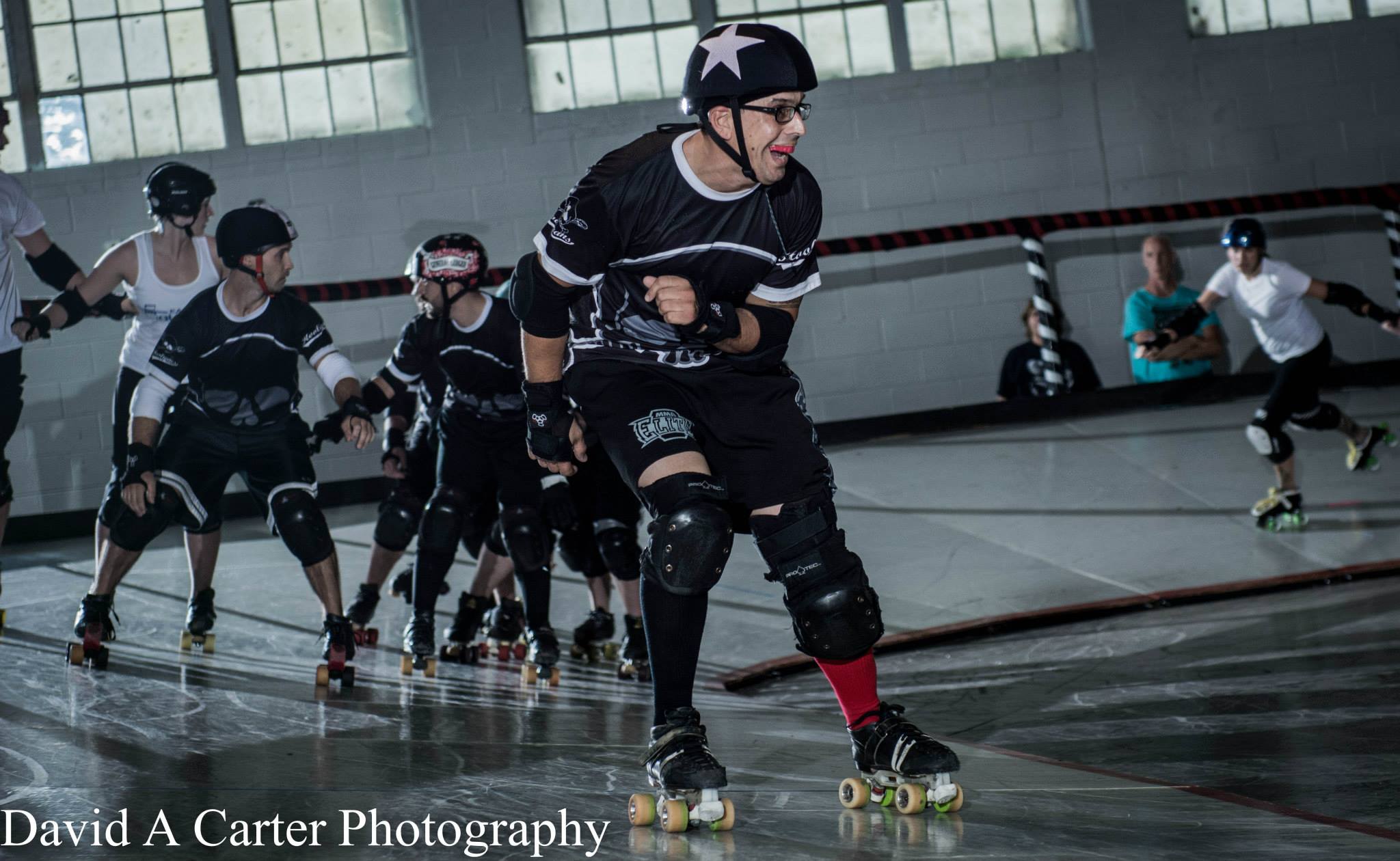
Wags of the PJRD Hooligans by David A Carter

Thank you again!

Perspective Shift: Roller derby & shifting the way we look at training

Living in a house with powerlifters and bodybuilders, and going to a ‘sweat on the walls’ gym has opened my eyes about training in the last eight months. Not just training for personal gains, but the way roller derby, as a sport trains itself on the track and off. There have been many conversations breaking down the conventions of training in roller derby, and comparing to the conventions of other sports.

Along with rhetoric, I have seen my own progress jump dramatically since beginning a 5×5 powerlifting scheme. I was able to track a noticeable difference in a new league from January (first practices) to May (home team champs), and for me the proof is in the pudding.

Me powering past Allie B Back - a thing I could not do when I came to Charm City. Photos by Tyler Shaw - Prints Charming
Me powering past Allie B Back – a thing I could not do when I came to Charm City.
Photos by Tyler Shaw – Prints Charming

We are a new sport. We’re still trying to figure out how to play the game, much less how to train for it. I’ve noticed some habits and some structure about our training process that is not helping us improve ourselves and will not help the sport as we pass it on to our daughters and sons. I wanted to share some things, quickly, that I have been pondering. I’ll be doing expanded writings and I am restructuring the training book I was writing to reflect these new insights.

I think I’m going to get a lot of finger waving at the end of this article. We, as a community, have not be super stoked to hear that we may need to change things. We certainly don’t like hearing that there are ways outside of our league to look at training, business, or the basics of derby. Trust me. I have seen the wrath of derby girls faced with change. However, here I go again, putting my ‘radical’ ideas out there. Feel free to post at the bottom how much you disagree with everything.  😀


Background

When looking at our history, I believe the protocol of training today is largely based on what the women of 2008-2010 did for their own training. Stick with me on this one: This is when the sport started to boom. Suddenly, women of all ages and skills were coming into a rapidly evolving sport. At this time, the average age of the derby skater was PROBABLY between 28-32 years old.

Many of these women had never played a sport before; their way to train to improve was to simply skate more (and that definitely has to be considered in a training plan when you have no experience on roller skates).  Some of us caught on that we needed better fitness in order to compete with the women who already had a few years jump on us. This led many of skaters to begin using that derby buzz word: Cross training.

Most of us didn’t know what cross training really meant, or how to approach off skates training for roller derby. So this misconstrued system of Insanity training, land drills, and long distance running started cropping up as part of our system of preparation for bouts.


Myself and Trixie Twelvegauge were the first at HARD to hit the workout bandwagon. She was doing P90X, I hitting weight machines and cardio at the gym.

This brings up my first point:

We need to stop training for fitness

Most of the derby skaters I meet do their ‘cross training’ in the form of high fitness workouts (CrossFit WoDs 4x a week, P90X, elliptical training, Zumba, hours of yoga). Ok, before you get angry let me explain where I’m coming from:

If you are skating 3 times a week at practice, and then going to the gym and doing 2-4 days a week of high cardio work, you are really just burning muscle (and some fat) and [if you’re eating right] getting cut muscles. To look cut is rad, but does not help your explosive power or your recovery from one burst of power in a jam to the next (and it certainly does not help when you get slammed by that 200# blocker looking to take your legs out). Elliptical training does not help prevent bone injury. P90X won’t help you break a wall.

Training like you’re trying to lose the Freshman Forty is not the way you should train for roller derby to be successful in the long term. Training in a way that is purely fun or aligns with your social conventions does not make you better at any sport. These workouts that we’re talking about should be done as secondary conditioning and accessory work. They should not be your primary source of training off skates.

From my instagram in 2012: "Woke up early. Was slightly dehydrated from drinking last night. Went running anyway. Goal: Patrick Aitforce Base. There and back: 9.67 mi. One hour, 55 minutes. No one thought I'd do it." Though impressive .. WHY DID I FEEL THE NEED TO RUN 10 MI FOR DERBY TRAINING?
From my instagram in 2012:
“Woke up early. Was slightly dehydrated from drinking last night. Went running anyway. Goal: Patrick Aitforce Base. There and back: 9.67 mi. One hour, 55 minutes. No one thought I’d do it.”
Though impressive .. WHY DID I FEEL THE NEED TO RUN 10 MI FOR DERBY TRAINING?


We need to redefine ‘beauty’ within our sport

Oh yea, roller derby loves say that “every shape is beautiful.” Our at home ‘lose weight’ training mentality shows that we are more generally more concerned with 6 pack abs and long, lean limbs than any of us realize. We are fighting the conventions of beauty, especially those of us over 30; we get easily concerned with the myth of a slowing metabolism and how our younger team mates, or the folks at the pool of ECDX will view us. We are more concerned with society’s vision of beauty than we are with what it means to be strong and at low risk for injury in a contact sport (ie having some cushion and mass).

And it’s not just women. Men are not safe from these social norms of beauty and sex, and I have many friends that end up questioning themselves over it, regardless of their strength or abilities.

At RollerCon, there was a very short challenge bout with shirtless men: Magic Mike v Chippendales. On social media sites, admittedly, I was part of the sexist storm of commenters. (One, it’s fun. Two, men in our sport is still pretty new. As a derby-obsessed, straight, single woman of not as many years – it’s nice to be able to turn the male gaze away from the sexy derby girls in fishnets and pigtails and put the female gaze on the shirtless men sweating and hitting each other.)

 Side note: I was just excited to see an all-male challenge bout. The shirt off thing was just an added bonus.

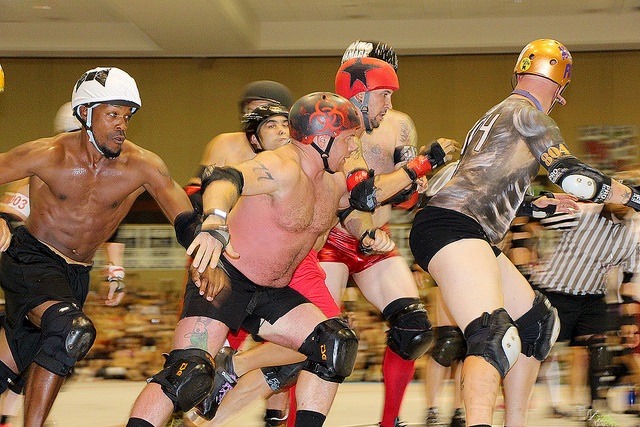
The men of Magic Mike and Chippendales (and there was about $1000 raised for charity too!) Photo by Jill "Jilljitsu" Dickens 2014
The men of Magic Mike and Chippendales (and there was about $1000 raised for charity too!)
Photo by Jill “Jilljitsu” Dickens 2014

Leading up to it, I had several men contact me asking if there was any way to adjust their fitness or nutrition to get better abs in the couple weeks leading up to RC. (I had to disappoint them and say, “unless you want to do some drastic changes and not drink before the bout, there’s no magic pill to shed all the fat in a week”) After the bout, I was asked a question by a skater who is arguably one of the top 5 male skaters in the world: “Did I look gross out there? You know, with my shirt off.”

**Mouth Gaping Open**

First of all – do you know who you are? Are you sure? Secondly, yes, you look great! (I was trying NOT to look too much, actually. I know many women who did NOT restrain themselves.) I wanted to yell at him: “You may not have the photoshop-crafted abs of an Ambercrombie ad, but that’s ok. Know why? DO YOU KNOW WHO YOU ARE?” Seriously! That bout was sexy in every way, but mostly because highly skilled men were playing roller derby. They could have been playing in parkas and it would have been an amazing bout (though you’d probably have to burn the parkas afterwards due to all the sweat).

The men of Magic Mike v Chippendales - all shapes, sizes, but all beautiful and skilled. Photo by Jill "Jilljitsu" Dickens
The men of Magic Mike v Chippendales – all shapes, sizes, but all beautiful and skilled.
Photo by Jill “Jilljitsu” Dickens

We need to release the ideals of Western beauty and embrace the awesome of each of us. If you’re skinny: fantastic! If you’re not: fantastic! If you’re jacked naturally: great! If you have skinny arms: that’s cool! Now let’s lift some heavy shit, flip some tires, put on our skates, and hit each other without worrying about being judged by our team mates about our body.

I have written about this before. It’s a struggle for me big time. I’m single in a growingly co-ed sport. I also powerlift. I am trying to be highly competitive at roller derby. I had the internal conflict months before RollerCon: do I want to look awesome in my bathing suit, or do I want to be able to get past Tink on the track?

There was a moment where I thought to myself, “Oh wait.. it is hella sexy to be able to get past Tink on the track. So, in theory, if I accomplish THAT, I will look AMAZING in my two piece, because it’ll be ME.” (At least that’s what I keep telling myself)

When I really think about it, beauty conventions vs training modes may be our biggest adversary.


Also, friends don't care what friends look like in bathing suits. Right, Icewolf?
Also, friends don’t care what friends look like in bathing suits. Right, Icewolf?


We need to start training for a contact sport

No football player is doing 5000 burpees to prep for the season. No rugby player is only doing yoga to prepare for the pitch. No hockey player is trying to cut to a ridiculous body fat percentage mid-season. Roller derby is a brutal, physical sport. We need our training to reflect that physicality and hardness.

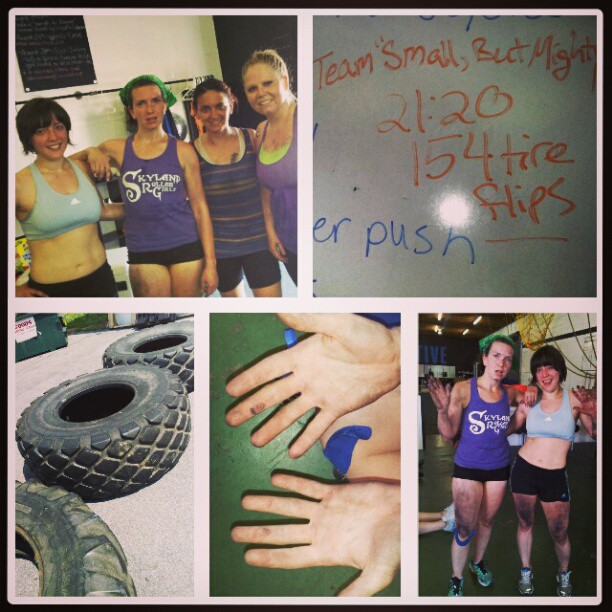
A Conditioning day at CrossFit is awesome. Remember that time the smallest team kicked everyone's ass in tire flips? I do. Joc and I did 115 of the 154 on our own. BOOM.
A CONDITIONING day at CrossFit is awesome. Remember that time the smallest team kicked everyone’s ass in tire flips? I do. Joc and I did 115 of the 154 on our own. BOOM.

Like any other sport, there are a variety of pieces to the training puzzle. I am not implying that anyone should cut their WoDs, or their yoga, or their P90X completely. To be successful, the incorporation of weight training and conditioning must be included in our system of norms as the primary ‘cross training’ piece, with the other stuff as accessory work. We need to train for strength, not weight loss.

Side note: Many skaters come in, as I had said, with no athletic background. Many come in overweight and out of shape. For many skaters, fat loss does need to be a part of their training consideration. Too much weight in a roller sport means extra strain on knees and hips, and the higher probability of injury. However, let’s not get obsessed with getting from 23% body fat to 19% body fat [like I was].


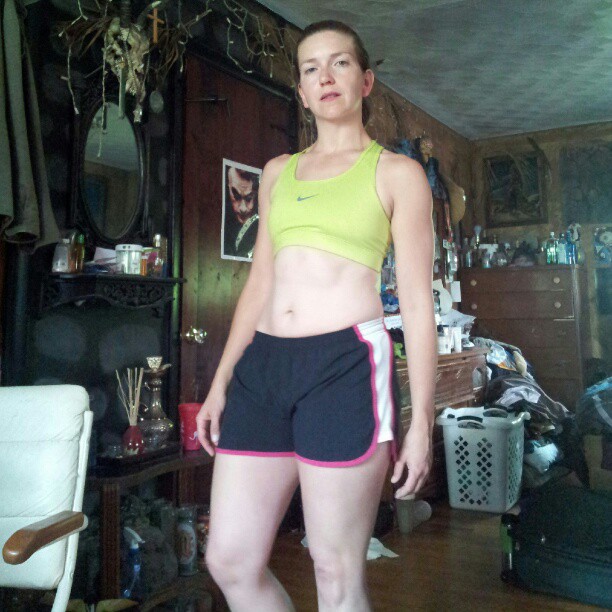
Was I proud of my 135# runner body? Yes! Could I survive a hit? NO.

“The improvement of performance in athletics over the past few years has been phenomenal. For example, twenty years ago the average football lineman weighed 250 pounds and ran a 5.2-second 40-yard dash. This was considered to be nearing the genetic limit for a player. Now running backs that weigh what the lineman used to weigh are running 4.4-second 40-yard dashes! Strength training has made the single, most positive contribution to this type of improvement. Today strength training influences every athletic program in the country, no matter what the sport – male or female. Athletes now find it necessary to lift weights and participate in conditioning programs to better prepare themselves for the competitive rigors of the athletic season.

Just a short time ago, most coaches thought that strength training would cause athletes to become muscle-bound and would be counterproductive to good technique. Now it has been proven that athletic performance depends either directly or indirectly on qualities of muscular strength. We must remember that strength builds the foundation for ALL other athletic qualities. For example, if you do not possess great relative body strength (strength in relation to your body weight), you will never be able to run fast. This is due to the fact that all aspects of proper running technique require high levels of muscular strength. In other words, if you can’t achieve the proper knee drive, arm swing, posture and push-off, you can’t be fast.” (DeFranco)

 You call it extreme, I call it "what it feels like 185# on my back"

You call it extreme, I call it “what it feels like 185# on my back”

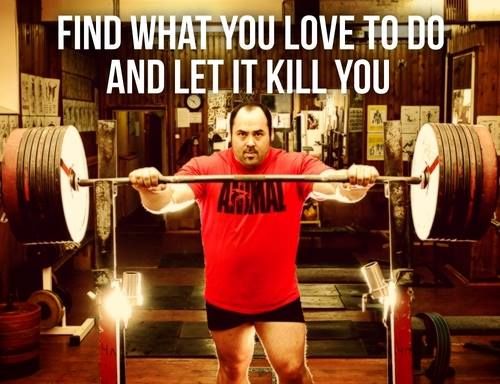
Let’s be real honest here: Weight training isn’t fun. It’s fun when it’s over. It’s fun when you successfully lock out twice your body weight on deadlift the first time. It is fun when your friends tell you that your arms are awesome (Your derby friends will say this, of course. Your lifter friends will comment about the improvement, but will never imply that you are at the pinnacle of your journey). Not every hockey player likes to lift weights, but they do it because it is necessary for improvement. Every player of every competitive sport lifts weights because it is necessary.

“But Khaos! We’re on roller skates. Look at how successful all the speed skaters are in our game. They don’t lift weights. If we just spend more time on our skates, we’ll be successful.”

speeed

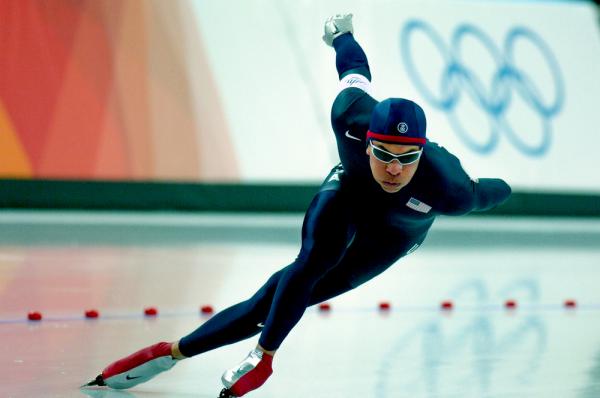
Weight training for speed skaters is not all that different from what you see in other athlete strength programs. The key for skaters is to build up strong legs and core. They also put quite a bit of emphasis on balance. As for the legs, squats of several varieties are important, as are leg extensions and hamstring curls (and so much more). The upper body work is also important and typically includes a tremendous amount of midline work. It is typical to see these athletes utilize some basic strength programming including supersets and dropsets in different capacities and arrangements.”  Read the whole article here (it’s got a lot of good training tips in it!!) (Chasey)

Also, can I make a note that the top men’s team in the world, Your Mom, does not spend all THAT much time on their skates? They don’t have to train their skaters how to do crossovers, they can do that on their own time (and I’m talking the none speed skaters too, folks). And Gotham? They have weights in their warehouse so they can make weight training part of the weekly program. The focus is more on the strategy, the training, the understanding of the game than it is on using practice time to go over 360 turns.


We need to properly warm-up and cool down for practice time

A 2 minute dynamic stretch is not enough to get our bodies primed for the hell we put it through on roller skates. We are not teaching our new skaters how properly warm up before activity and subjecting all of us to the probability of injury. On the other side, it is rare that I have been a part of a practice of any league that has a proper cool down.

Full Commando is disappointed at your lack of cool down.

When I was with Harrisburg Area Roller Derby, we had an amazing volunteer who was dubbed Full Commando. He was our Yogi. At the end of each practice, we would spend 15 minutes doing yoga designed to bring down our heart rate, stretch us out, prep us for bed (Harrisburg practices ended at 11:30p), and prevented future injury. When our sister-in-arms, Stella Stitc’Her broke just above her ankle, she had minimal ligament damage. She told us that the doctor had attributed to the flexibility developed through skating and yoga at the end of practice.


We need to understand that sometimes, less is more

I came from the P90X-obsessed mentality of “If I’m not wasted at the end of my workout than it wasn’t a good workout”. I have come to learn that you can put in excellent work, and an appropriate amount of excellent, hard, teeth-grinding work … and sometimes you feel like you have more to give at the end of the workout. And that’s ok. In theory, everyone should be running a specific program (do what the numbers on the sheet tell you – don’t make it up as you go). Programs are designed for certain things on certain days. Deload weeks in weight training may be boring, but they allow your body to rest so that you can perform stronger the following week.

This also touches on the subject of CrossFit. Those of us who have done work in a CF box may have the thought ingrained that you have to go until failure. True progress does not [always] require that. Look, imam just leave this editorial (written by a certified CrossFit coach) RIGHT HERE about the “keep going” culture created in CF gyms. There should be pain and struggle and a question as to whether you’ll finish your rep, but having been lifting for a while now – that last set of 10 pause squats feels SIGNIFICANTLY different than that last 5 minutes of “Super” Angie.

The CF mentality. While kind of funny, and kind of motivational, when you look at the core: it's scary. You're EXPECTED to pass out. There is a difference between pushing to limits and pushing to unsafe measures.
The CF mentality. While kind of funny, and kind of motivational, when you look at the core: it’s scary. You’re EXPECTED to pass out. There is a difference between pushing to limits and pushing to unsafe measures. PS I know not all CFs encourage that culture. But a lot do.

If I didn’t get enough people riled with that section, let’s see if I can stir the pot with:


We need to restructure our season

And in turn, how our rankings are created. Have you ever encountered any sport where athletes train 11 months out of the year?

Roller derby athletes do not have the benefit of the pre-season/season/post-season/off-season structure that other sports have firmly in place, that determine their intensity and type of training. Derby is forced to ignore the season and mash all of their training, as best as possible, into each week of the year.

Strictly home team players are the only ones that [seem] to get any kind of break from gameplay, but it is the travel team skaters that you want to be fresh. January through June is when most travel teams smush most of their game play into, right?

But now with the new WFTDA rankings, more all-star teams are pushing their seasons later into the fall to be sure they maximize the equation in place currently. Plus, if you do make a divisional tournament, your now have an extra 3 game week of intense play put onto the end of your season [a month or two later]. If you make champs, you again have another intense weekend ahead. If you play on a home team (which most leagues require of their travel teams), then you have extra competitions layered into your already intense season.

2014 WFTDA Divisional Post-Season Photo by the WFTDA
2014 WFTDA Divisional Post-Season
Photo by the WFTDA

Men are running into this too. The MRDA ranking system is still shaking out its bugs, and as of right now the majority of rankings come from the January – June season. However, July and August are the months where you get your final shot to break that Top 8 for champs. There are teams playing tournaments into these months for a shot to increase their rank. Then? They won’t play until October.

From what I understand, USARS has a similar schedule for their championships. Oh, which some flat track teams have been participating in. Add one more piece of your season in. Then there are also the extra tournaments…

The last couple years we have another element to think about:  mash-up teams. All-Star mash-up games and tournaments are being placed in the only off season that organizers can find: the winter. This means that players on your top tier are never resting. Their only chance for a recovery period is if they actually injure themselves.

Battle of the All-Stars. State Wars. World Cup. All extra tournaments played by top tier athletes on non-ranked teams.

This is a real problem. This is seriously going to hinder our sport from achieving maximum levels of top competition. We are destroying our athletes. This needs to seriously be taken into consideration. We are the only sport I have found where ranking competition can (and does) take place in any month of the year.

Recently, I took a couple weeks off to start to heal up my ankle. I skated a scrimmage here or there, but really nothing major. I was concerned about getting to RollerCon and having no idea what I was doing. They say you lose it a bit as you stay away from the sport. You know what actually happened? 7 out 9 bouts I felt on top of my game like never before. Coincidence? Maybe. Rested? Definitely.

SUBTOPIC: Rest is cool

In general, derby doesn’t like to rest. #NoRest. But recovery in your weekly routine is critical for healing, progress, and injury prevention. Teams that play a 4 game event on Saturday/Sunday and then turn up for practice on Monday BECAUSE IT’S REQUIRED are at a greater risk for injury. Your muscles need to a chance to rebuild after a game. Teams really need to look at their practice schedule and include ‘deload’ time before a game (like not scrimmaging), and recovery time right after a game (like canceling practice or doing a couple days of non-contact, lighter skills, and team work basics).


We need to stop encouraging a culture where unhealthy eating is cool

That’s great that you got cheese fries and a beer after practice. It won’t help you recover. That’s awesome that you’re taunting your friend who is drinking her shake for the first time that you’re eating a burger while they’re trying to limit saturated fat. You’re making her feel bad for a healthy decision just because you don’t want to make it.

Not everyone is going to be into eating like an athlete, and I understand that. But can we please stop this culture of “Doesn’t bending over for a cupcake count as a squat?” No. It doesn’t. It’s fine that you don’t want to be at the peak of your game, but don’t mock others for their athletic nutrition. And if you do mock? Don’t be offended when they lap you during cardio, start getting more play time on the team, or transfer to a better league because the current league has encouraged the bully culture.

The sad thing is that it’s usually our friends making the jokes. They think their being funny. It’s not funny.

One more thing to make me unpopular… our AFTER PARTIES. Can we please talk about not encouraging our athletes to drink copious amounts of alcohol, while providing fried bits of vegetable-like substances, and dinner rolls? Can we talk about an after party that is for the fans, not for the athletes so much? You can try and tell me (and yourself) all you want that beer is a fine post recovery drink, but guess what? It isn’t. Plain. Simple. It doesn’t count. Here’s a short read for you.


Final thoughts

Ok, this blog ended up being WAY longer than intended, but I needed to start putting these things out to the universe. I feel very strongly about starting this health and strength revolution, and I’m glad to know I do have some other people on my side. For our sport to get to the next level of athleticism, and to be one step closer to professional play, we must take a hard look at our training: How it is structured, why it is structured that way, the culture that supports/negates it, and our behavior to our fellow skaters. We need to put these things on the table within each league so that, one by one, we can revolutionize roller derby for the betterment of the sport and our athletes.


Strong, unafraid to have guns, eating healthy, lifting weights. Watch out WFTDA.


My name is Merry Khaos, I am a member of DNA Coaching and a health and wellness coach with Derbalife. We are currently booking boot camps for the next 15 months. Send me an e-mail at DerbyAmerica@gmail.com to get the ball rolling on having us come to your league. Want to incorporate a “how to train for roller derby” day? Let’s do it! I am also available to help you piece together a nutrition plan and training schedule so you can smash through your goals. Let’s work hard together!