To Pivot Line, or not…

To pivot line, or not to pivot line … that is the question:

Whether ‘tis nobler in the mind to suffer
The speed and angles of outrageous jammers,
Or take direct hits against a sea of blocks
And by opposing [hopefully] stop them.

Soliloquy aside, it seems like every time blockers step on the floor between jams now, they ask themselves “No seriously, where should we go?” 

The answer is inconsistent and often comes with groans from one or more players on the track. How did we get here, and what does this all mean for the newer derby player? 

Come children, gather around the Snapchat, and let me spin you a tale of a different time.
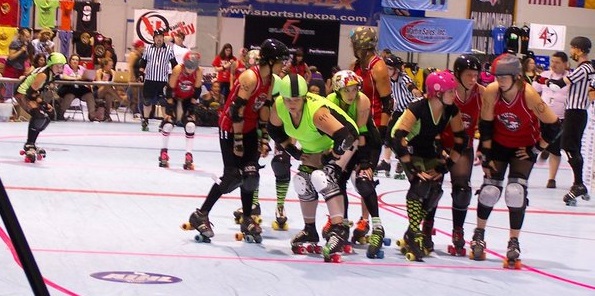
Let’s remember that our sport is still under 30 years old, and most leagues that exist aren’t old enough to legally imbibe in the US. The sport has undergone rapid change and development in that time, more so than other sports since we have the global sharing of knowledge known as the internet. At the beginning, tactics spread slowly and took time for adaptation. Now teams of 20 in New Mexico can see what is happening from top coaches in Europe at any time.

The sport was originally very fast, and focused on space and forward momentum. There were two starts to a jam: one whistle to release the blockers, a second set of two whistles (like lead jam) to release the jammers. Jammers would only be released after the last blocker passed the pivot line (or one other scenario but let’s pause on that). Blockers were fast, so jammers had to be faster.
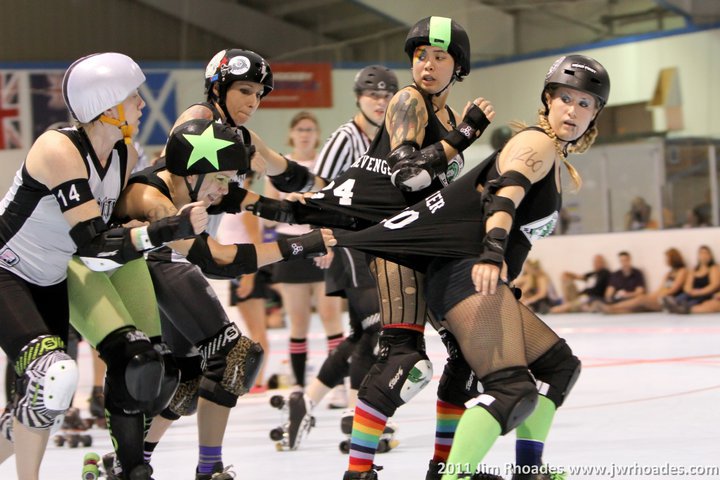
Speed was always a challenge. Thank you to my teammates for getting me out of that one & getting me lead at ECDX 2011. Photo by Jim Rhoades.

Lining up at the pivot line was advantageous in those days because the quicker you released the jammer, the quicker you could earn lead and score points. Pivots would fight for their toe on the pivot line because blockers have to establish behind the hips of a pivot in that position (still do). A pivot in a superior position from the start could run away faster, and control the speed of the pack. Derby generally moved at a racing pace as a result. Blockers had to be fast, jammers had to be ungodly fast.

This was not just because of the rules, but because honestly, most of us were not very good at skating or control back then. With little experience, you could still be successful while skating fast in a straight line. It’s way easier than the cuts, edgework, and mobility that we see today from all positions.

And star passes? I think I saw 4 total between 2009 and 2012 (and I watched a LOT of derby y’all).

Then in 2010 there was a thing introduced that changed everything: the Knee Down Start (KDS). I saw it the first time when Gotham Roller Derby did it at ECDX (I believe against Philly). High level teams figured out that the jammers would also be released if there was a no pack called, and they challenged the idea that you had to start so far away from their jammers. 
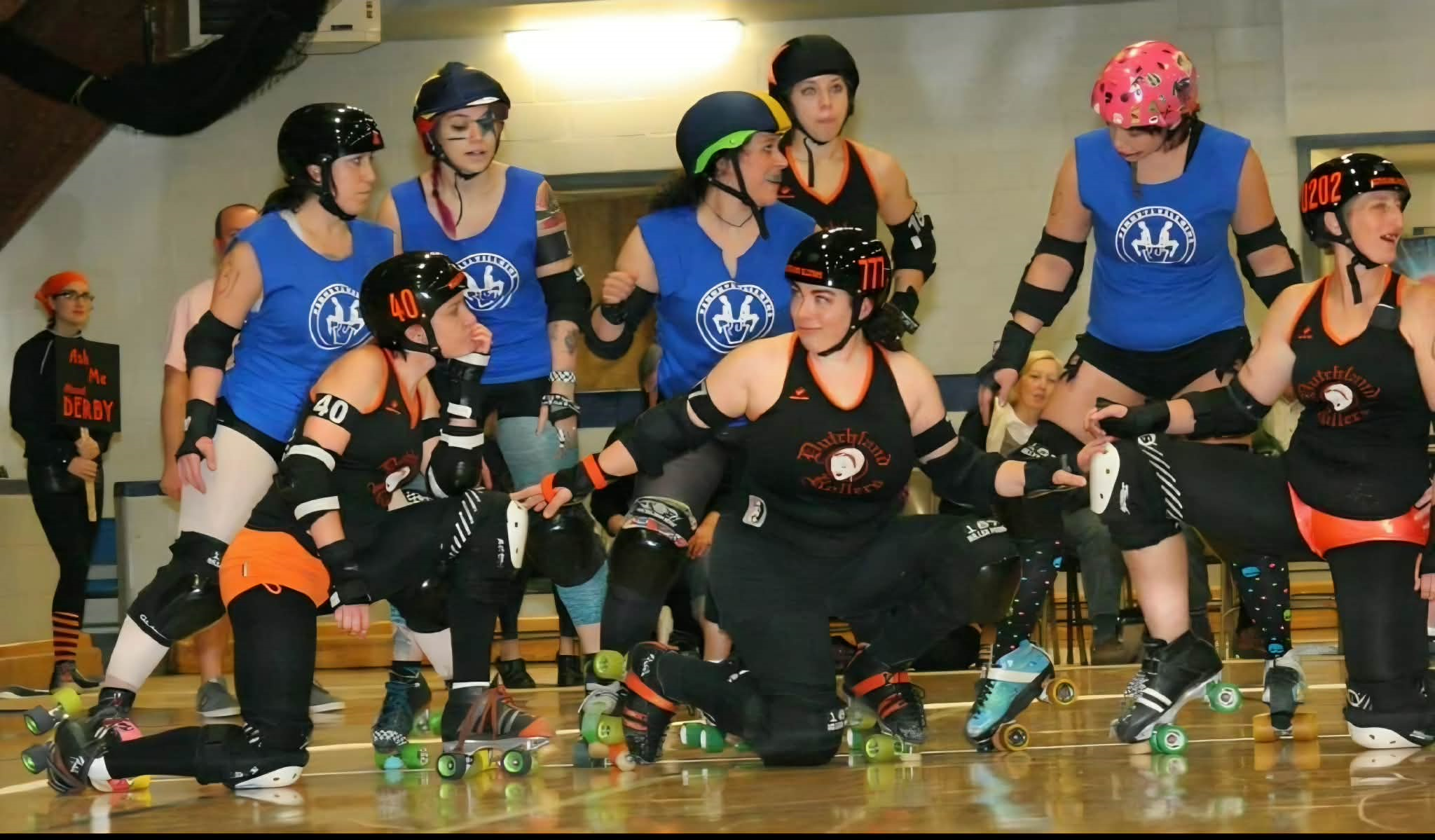
2012 Pennsylvillains vs Dutchland Roller Derby. We think the photo is by Jim Rhoades (If you know otherwise, please comment!)

If the pack is closer to the jam line, and the jammers are released right away, you have more opportunity to gain lead. ESPECIALLY if the other team is not used to the strategy and spends the whole time going “What is happening?” And further if you utilize good roller skating to keep the game slow, so that your ungodly fast jammers can just do laps instead of having to catch up to a pack.

EVOLUTION BABY

KDS became so popular that WFTDA quickly removed the two whistle starts, thus removing the need to start on the ground. There are so many more strats and reasons and background but let’s just say that KDS were a brief, but vital, moment in time for the sport.

Great, so now we all start on the jam line. Now we jockey for who can be closest to the jammer to contain them at the start. So for a minute there we all fought for the BACK line. Not every jammer (It’s me, hi, I’m the problem, it’s me) loves having to avoid their team before encountering the opposition.

So now we have people starting on the pivot line in order to force the other team to be on the back line, because ALWAYS blockers would roll back to the back line on 5 seconds. Why? It’s what we did, it’s what we were comfy with, it’s what we were told we should do, and we also were told, “Well if you roll back than the other team has to adjust to you.”
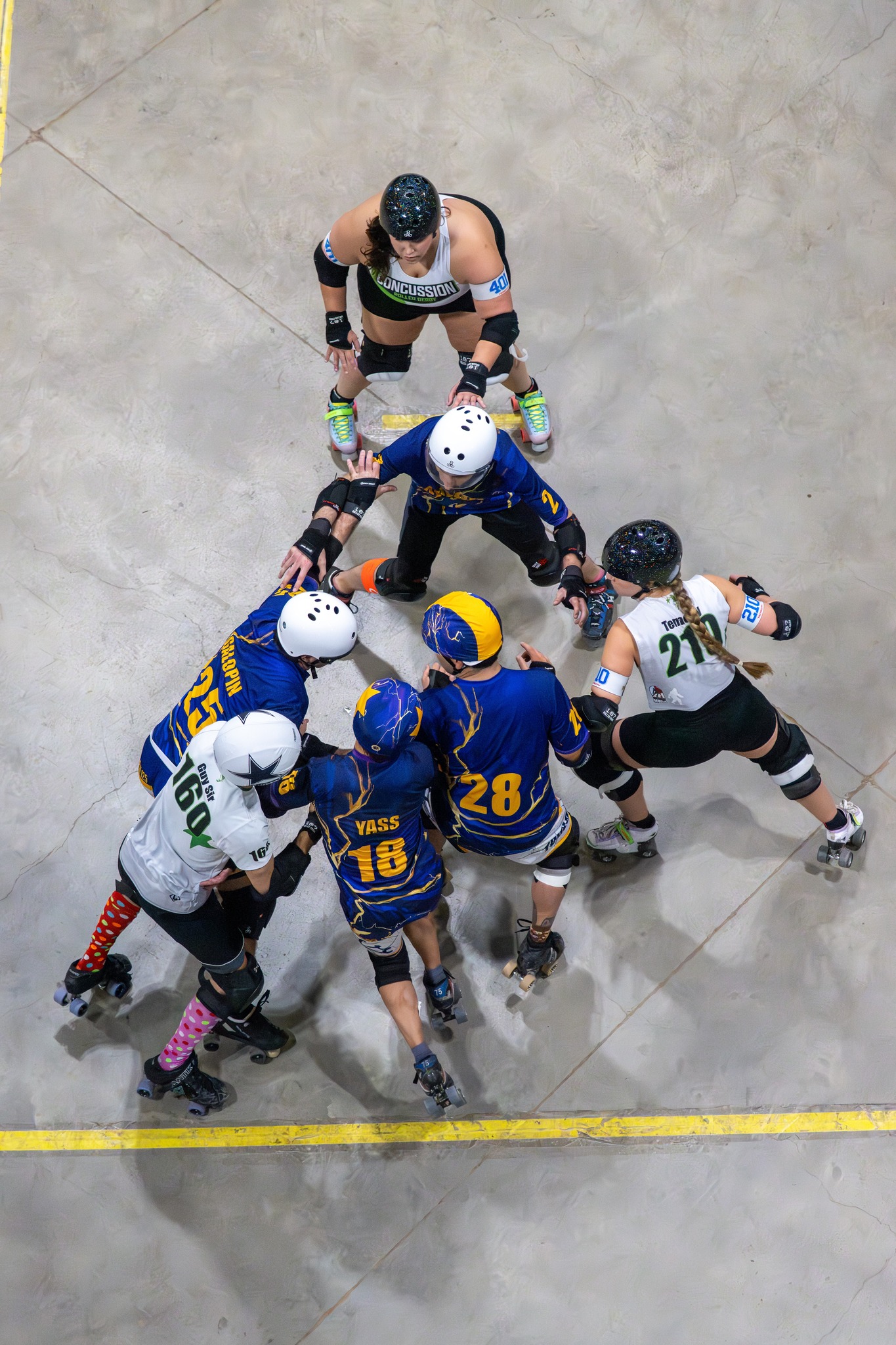
Jam line start between Concussion Roller Derby and Roller Derby Toulouse at the 2025 MRDA Championships. Photo by Life Thru Argo’s Lens.

Now we’re back. History class is over, and it’s time to head into Game Psychology.

When lining up as blockers you have an array of decisions to make for your initial placement. My favorite way to have people line up on game day is HOW YOU PRACTICE LINING UP. Don’t get weird until either 1) You’re way up or 2) You’re way down. 

Photo by Wik’s Pix

Advantages of starting at the Pivot Line:

  1. You have the ability to run away from jammers & other blockers. This is especially helpful if you are defending a power start where your jammer is standing.
  2. You are close to the turn, which is helpful when ON a power start and you want your jammer to have more space to move.
  3. Occasionally you can catch someone on a false start or Failure to Yield by doing the Pivot-touching-the-line trick if they are unaware of their hips & the rules.
  4. It can freak out a jammer that’s not used to having space to run.
  5. If you have a fast & powerful jammer it gives them a head of speed.

Disadvantages of starting at the Pivot Line:

  1. Very close to the corner when you start. In order for a run tactic to work when defending on the power start, you have to be able to guarantee that all of your blockers will be faster and more evasive than the opposition. If someone gets picked off, the opponents now control the pack in the turn, where your team is split up.
  2. If you’re on a power start and you start at the line, but the other team does not move forward with you, you risk a Destruction Penalty AND your jammer will have a regular wall to contend with.
  3. If your team doesn’t know the Pivot-touching-the-line trick, you may lose someone to the box.
  4. It can freak out your jammer if they’re not used to seeing this arrangement.
  5. If the other jammer is a powerful or super agile, you may not be able to stop them as easily when they get that full head of steam.

What else can happen when you’re starting on the pivot line?

  1. The other team can say “Nuts to this” and draw back to the back line.
  2. The other team can say “Nah” and go HALFWAY back.
  3. The other team can say “Raise you” and establish on the pivot line, forcing your blockers behind them.
  4. The other team can position themselves to box in your blockers after the first whistle, abandoning the classic line formation.

Some of the fun of derby is getting to deal with these various scenarios as a collective group of individuals. It’s why a Pod System works well for many teams – if you can get like minded blockers working together consistently, when things get weird (and they will), everyone has a similar mindset of how to contend with it.
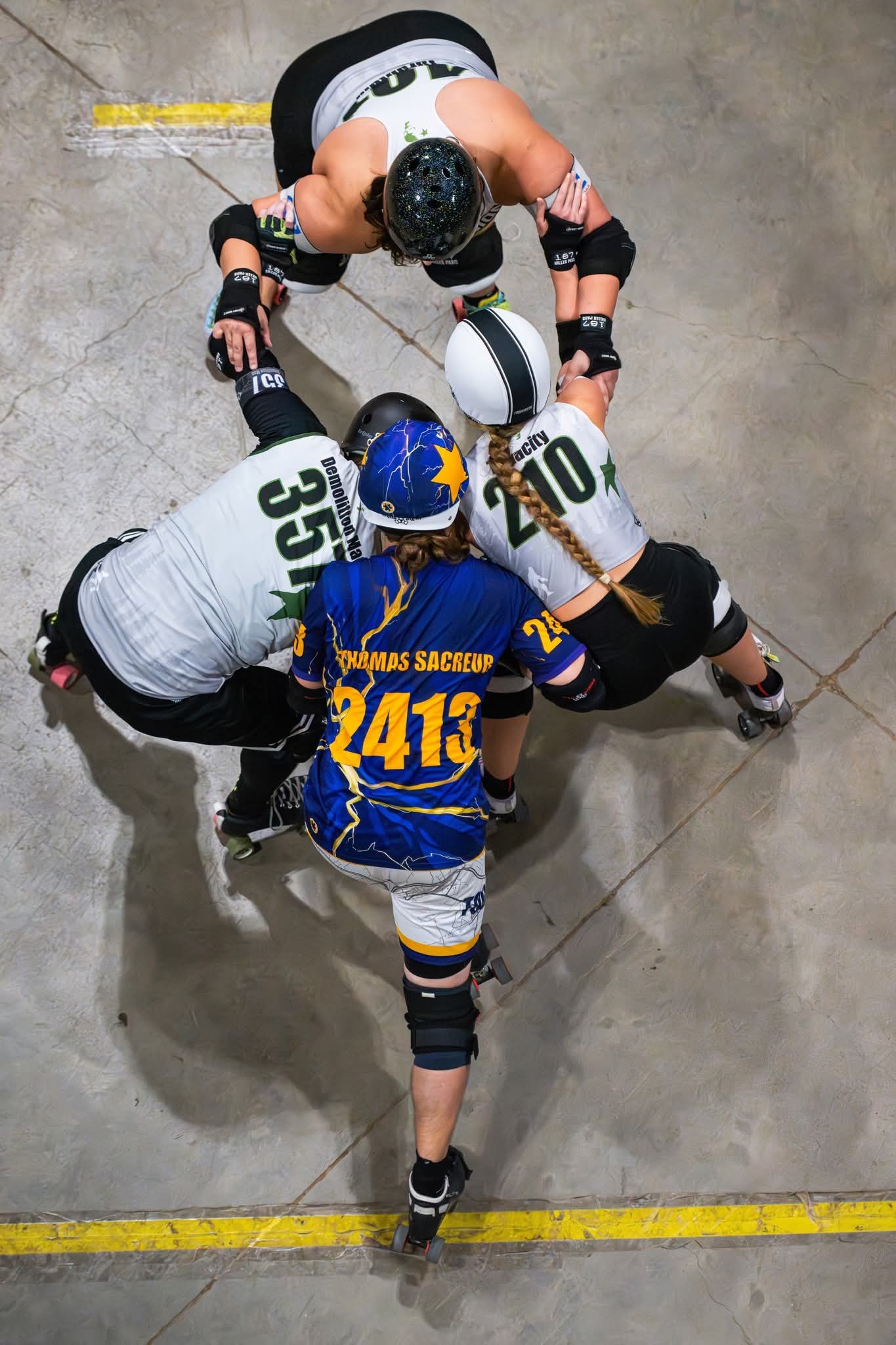
Photo by Life Thru Argo’s Lens

So what are some options when the other team changes it up?

If they draw all the way to the back line, you can stay or you can follow. Easy enough. 

If you follow, YOU MUST COMMIT TO IT. You don’t want to be caught halfway, or still moving backwards when the start whistle blows. Chase back, set, smush, derbz. If you don’t follow, make sure your whole team is on board and at that Pivot Line; no one halfway. Let the opposing team be on the Jam Line, you stay on the Pivot Line.

The whole pack AND your jammer must be mindful of the No Pack scenario that is about to occur because of the pack being split at the start of the jam. During a No Pack, no one can meaningfully engage in a block AND the back pack must make an effort to reform. The temptation is for your pack to jump backwards when they hear the No Pack Call, however you need to give it a beat.

Your jammer can take this opportunity to come through the pack as long as they don’t hit anyone significantly off balance while doing so in the No Pack situation. Since the blockers are also not allowed to engage impactfully they can’t blast your jammer either.
Photo by WiK’s Pix

Can they be moving forward to reform and still position in front of your jammer? Yes, as long as they are doing so while reforming. A No Pack is not a guarantee that your jammer goes unhindered, but often the blockers will be too busy putting their hands in the air to make an effort to disrupt your initial pass.

Doesn’t that mean we, at the top, ALSO can’t meaningfully engage during a No Pack? Yes. Do we HAVE to make an effort to reform? No, we simply cannot skate forward.

By the time the opposing jammer reaches the pivot line, there should be a pack from the back players scooting up. However, if they do not, a Failure to Reform will be called. Make sure one of your blockers is assigned to keep an eye on this so they can drop back to reform the pack before the jammers hit so the other blockers can engage.

SPEED CHESS! Isn’t it fun? Y’all keeping up?

What if the other team decides to start halfway between the Jam Line and Pivot Line? That’s kinda weird honestly. They either are very unsure of what they’re doing or 

To find out if it’s a trap, drift backwards a bit. If they respond, it’s probably a trap. 

I’m a big fan of keeping my pack at the Pivot Line regardless, and waiting for the jam starting whistle. The moment it happens, have a solo drop for an offensive clear on the line, while your other three blockers come backwards in a tripod formation to catch the opposing jammer as they clear their own blockers.

Another fun option is, after the whistle, have the whole pack drop back and surround the tripod in an Old School Funnel Cake. Like this:
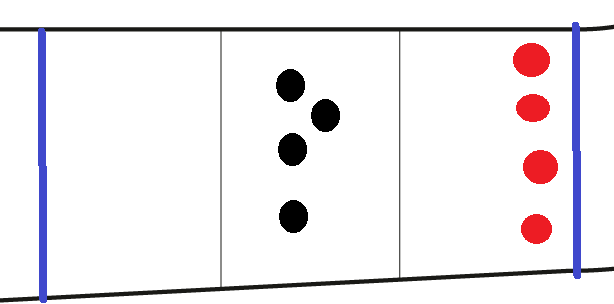
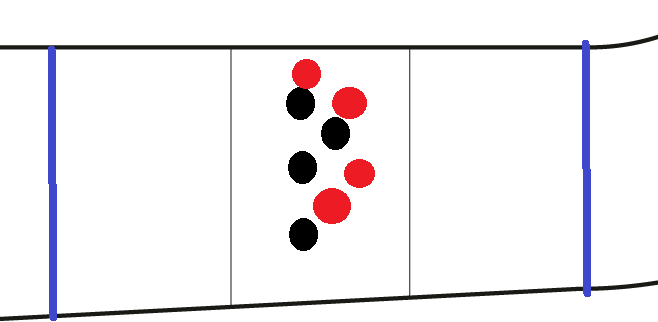
This is a quick offense for your jammer, while giving your blockers the opportunity to use the opposing team against their own jammer.

If they fight you for the Pivot Line, if you fight back, then we’ve got some Off to the Races 2010 Style Run derby that is not great for the longevity of your jammers. Effective for a box clear, not effective for long-term successful derby.

The other option is to drop back into a regular formation further back. If you go halfway to the Jam Line, congrats! You’re setting a trap! If the other team follows you and sets up a press at five seconds before the jam start whistle, then you drop back to the Jam Line at three seconds.

Finally [at least in this piece] there is the option of the other team boxing you in. With Four Corners, the goal is to take the Four Corners of the opposing team and at the right time, smush.
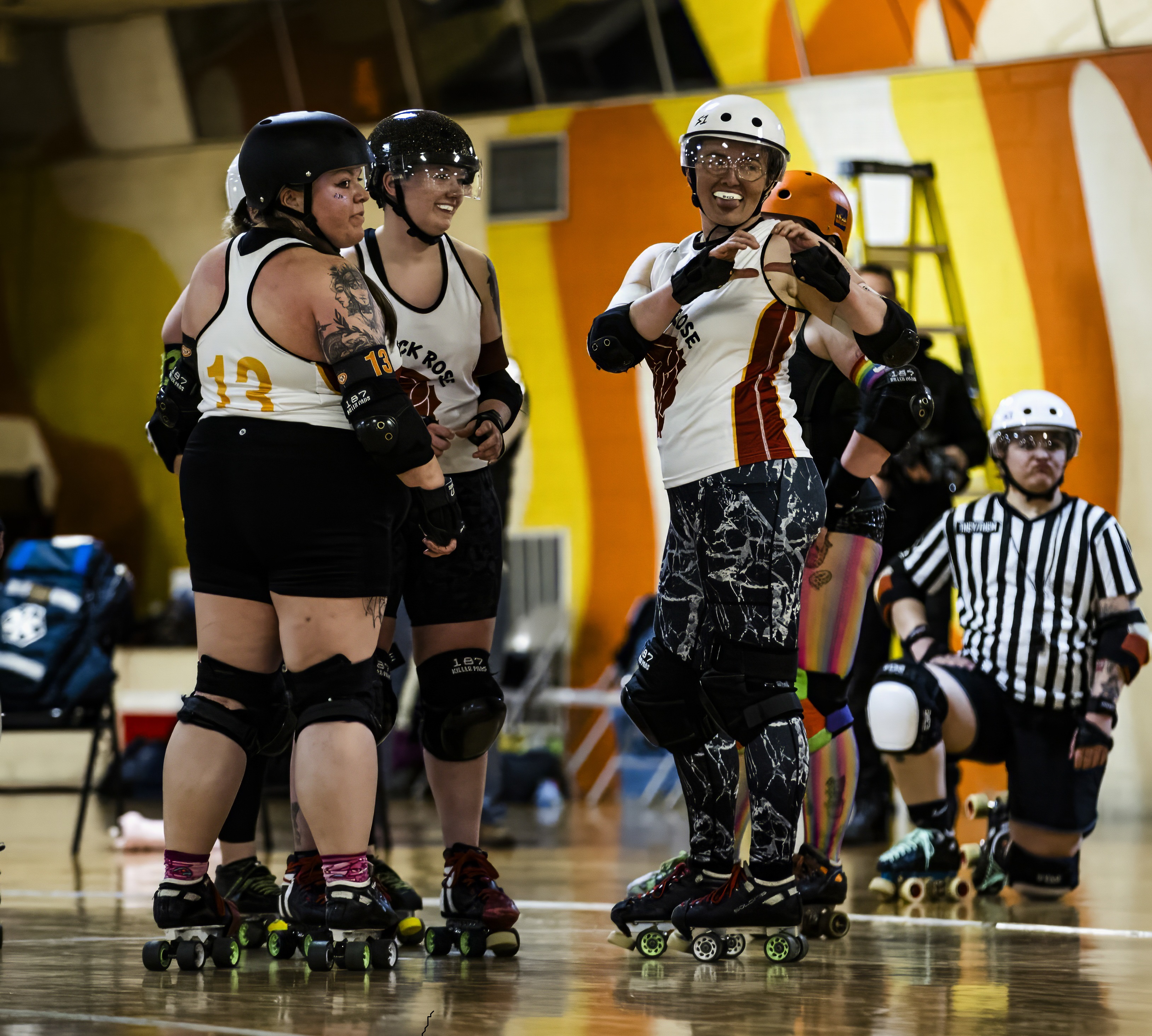
Photo by WiK’s Pix

If you do nothing with your positioning, some of you will get smushed, even if you try and jump at the Jam Start whistle. The front to opponents are positioned in a way to pick off two of your people. So once more, you are faced with the choice: Drop backwards or run forwards?

If your team is not well practiced at quick start & stops, running forwards will likely put you in the bad position of being slightly split up in the corner of the track; which is a jammer’s feeding ground.

If you drop backwards, do so at the last moment to prevent the other team from just resetting into Four Corners but with MORE space.
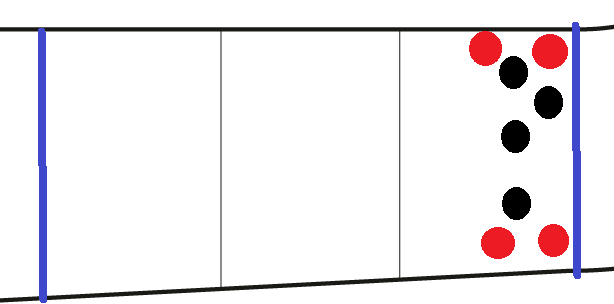
So To Pivot Line or Not to Pivot Line? It still remains the question. Getting “The Front” is not always about establishing yourself at the Pivot Line itself, but about being in front of the other team at the jam start, and using the Pivot Line is a handy way to do that.

As a team, or more specifically, as a Pod, you need to decide if you’re going to just take the back line regardless, or if you want to try and establish yourself up front. This is not just about your strengths, but also your jammer, if there’s anyone on either side in the box, game timing, and how well y’all are vibing in that moment.

Hopefully this quick glimpse into one part of the Psychology of Blocking has resonated with you in some way. Drop notes, thoughts, insights, or what I missed down below. Do you like this sort of blog? Should I do more?

Follow me on Instagram too for instruction videos when I have the spoons!

The reality of returning to roller derby after injury

They always tell you that coming back from injury is hard. They always tell you to ‘ease in’, ‘listen to your body’, and that ‘it takes time’.

No matter how many times you hear those words, it never truly sinks in until you’re three weeks back into a full derby schedule competing for a travel team position with a D1 league.

August 31, 2015 was my last practice of the season pre-injury. 7 months later I had surgery.

12494867_10156715946020494_7524896798380786576_n-copy
8 days post ACL reconstruction with hamstring graft. “Gotta be weak before you can be strong”

4 months later I was back on my skates. In another 2 months, I could hit people! But the thing we all dread happened: I incurred a different injury a month after contact clearance.

Luckily, it was a medium sprain and not a major tear. Once I returned home from Europe (it happened on day 3 of a 5 week trip) I was able to secure the blessing from my ortho (as long as I wore my SECOND KNEE & DonJoy when skating), and made my way back into training.

I was lucky. We all say that we’re going to come back quickly, but I actually did. I worked hard, set goals, and was lucky enough not to go through any major set backs.

On January 4, 2017 (with a desire to throw up all over the place), I went back to Tampa Roller Derby for the first practice of the New Year.

The thing about returning from injury [that the non-injured don’t realize] is that you relive your injury over and over again in those first practices. All you think about is “What happens if I feel ______?” and “Oh gosh, that person is coming at me fast”. At some point, you contemplate the injury, and the possibility of re-injuring (especially if you have already experienced a re-injury).

No matter how many people you ask about “How do I conquer the mental hurdle of attacking practice after injury?” you will never find a true answer. You may get those answers in the first paragraph. Maybe someone will talk about how they visualized success (this was something I did), or how they tried to distract themselves through the first practice. There is no trick that I have found to click your mind into being confident returning back to practice.

12799290_1111777882180416_1482625922181567117_n
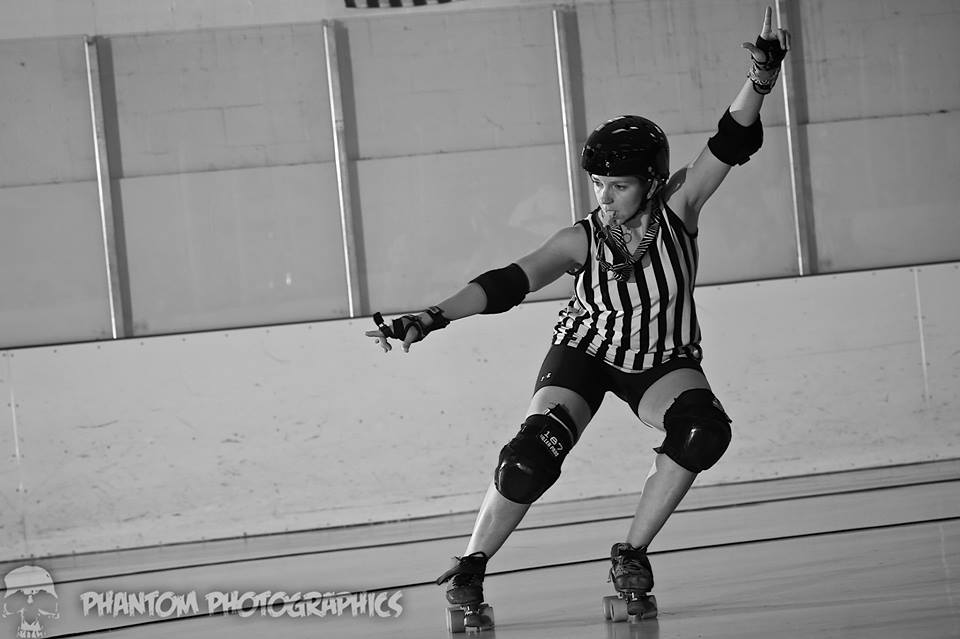
I spent my time during injury reffing to keep my skating skills, reflexes, mind, and eyes sharp. Plus, being a Zebra is kind of fun. Photo by Phantom Photographics

Step one to coming back: Don’t beat yourself up for being scared or tentative. That said, if you are SKATING scared, you need to knock it off. Skating scared is how you hurt yourself or someone else. So if you’re on the floor and you can tell that you’re stiff or tentative, remove yourself. Go to the side of the rink, and get your legs under you a bit. There is no shame in nervousness; there is no shame in taking a step back.

The caveat is this: Eventually you have to trust yourself and try. Just like how we all have to be able to define the difference between “injury” and “effort” when it comes to pain; we have to be able to discern trepidation from actual physical inability. Yes, it’s scary. The mind is a powerful place.

I was so scared on my first night of real hitting. I kept thinking about what it felt like for my left leg to be “plucked” when I would hit someone to the outside. My ortho told me to stop being scared and play my sport. I pulled aside a skater who I trusted and asked them if I could hit them a bit at a standstill. It gave me confidence that it wasn’t going to pop at first contact. From there, I moved into the drills. I primarily made hits to the inside, gaining back my confidence.

A team mate told me that I can’t play derby if I’m afraid of hitting. So the next time I was up, breathing steadily, I took my old inside position, and just played roller derby. Did I hit as hard as I used to? No. But with each repetition I gained confidence. With each scenario, I focused more on derby, less on my leg. Trust your PT, trust your training.

step-down-collage-2
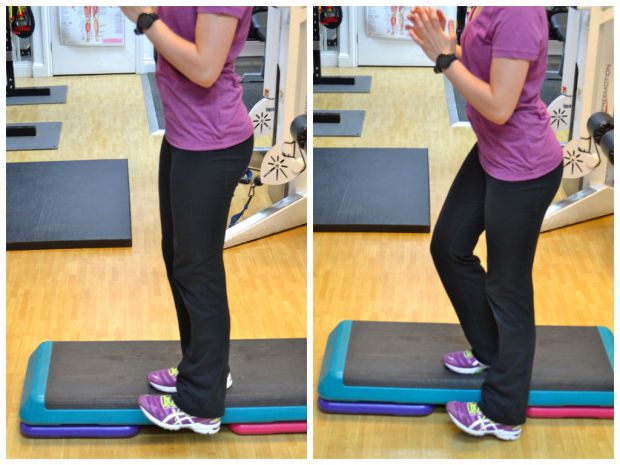
Don’t trust your quad strength? Add in this exercise! Increase the height continuously. I love using treadmills, they’re tall, they have tread on the sides, and you can increase the incline for more challenge

The thing they don’t tell you is how much it’s going to hurt to come back.

Not your injury (well maybe your injury depending on circumstances), but everything else. You see, I spent 6 years getting beat up by my friends 3-5x a week. I started with lower impacts at the beginning, and worked my way into D1 leagues. The hits are heavy and precise [mostly]. Coming back from injury, I hopped right back into the level I left, there was not a gradual ramp up. I went from 0 impact to 100% impact.

Yes, you get bruises. We’ve all seen the grape-shaped prints of our friends blushing into a nice purple shade on our arms and shoulders. We all get pad burns from our team mate’s Velcro. We get bumped in the nose by a stray helmet. These are typical and expected.

What I didn’t expect was how sore my chest and shoulders were from being braced. I have spent my off time doing push-ups, pull-ups, bench press, and every other shoulder/back/chest exercise possible. It didn’t matter. Also, the debilitating stiffness brought on from absorbing impact as a blocker seeped its way into my back, core, hips, and legs. It doesn’t matter how much you’ve run, deadlifted, squatted, sprinted, or jumped. There is no way to train on your own for being run into incessantly by world class blockers and jammers.

I actually just recommended to a team mate who is 12 weeks post op, that she should get a foam bat and she and her girlfriend could take turns hitting each other with to prepare them to come back to derby! Could be a fun destresser, and no foam bat is going to hit anywhere as hard as Tazmaniac coming in full steam.

What else I didn’t expect is the continued feeling of dehydration, mental exhaustion, and hunger. I’ve been on Team Always Hungry for a long time now, but my body is craving more food than ever. Even when I drink a gallon of water a day, it doesn’t seem to be enough. My body can’t seem to get enough protein and good fats! I crave them always.

I knew my body was going to experience some bumps, but after 2 weeks of 3-4 practices of 2-3 hours each, I feel like I have been run over by a truck. I may have been. Her name may have been Dakota Dynamite actually….

bc
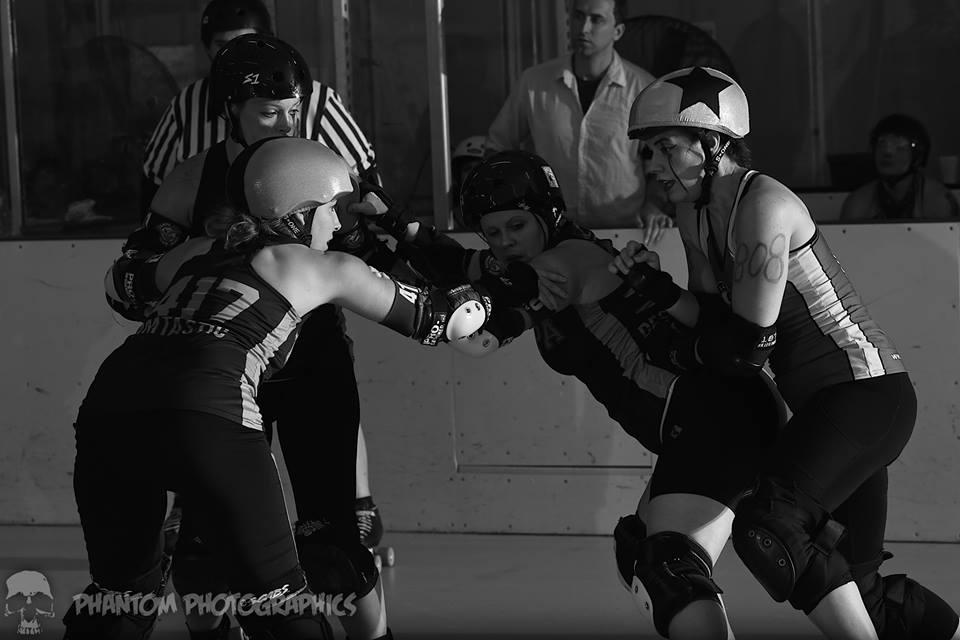
Tampa always relies heavily on bracing and positional blocking. It’s up to one or two blockers to absorb the impact of full steam jammers. Photo by Phantom Photographics

They also don’t mention that you ARE going to injure something else. At least, you’re very likely to. Will it be as serious as your first injury? Probably not. Even ‘easing’ into full game play, there is an element of ‘jumping ahead that happens’. I was not going to spend 6 years getting back to D1 level play, but those 6 years had prepped my body, joints, and muscles for it.

If you had a knee or ankle injury, prepare for a hip flexor, hamstring, or groin muscle to be in pain. If you had a shoulder injury, chances are your other shoulder is going to ache more than usual. It’s the nature of imbalance. Subconsciously, we favor. Even when we’re diligent, it’s common to pull something else. Your whole body tightens unless you are forever diligent. If your calf and feet are tight, your hip flexor may pull. If your hips are tight, your hamstring may suffer.

15542424_10157933308580494_844628776821893456_n
A scene all too familiar to many of us. At least I had SKIN WARS to keep me company.

The social side of returning to derby can be odd.

Some people will come back to cheering crowds of friends, and open arms. They will have felt missed, and like their team was with them through the whole recovery process. Most of us, somewhere along the way, lose touch with people and leagues a little bit. Sometimes we do on purpose.

I know many people that have said to me, “Wow! I can’t believe how involved you’ve been while injured” (I jam coached Molly Rogers RG, reffed, and announced) “I couldn’t do it when I was injured, I was too sad.”  Pulling away was their defense mechanism. For me, being involved was my way to keep sane.

roller derby announcing ref
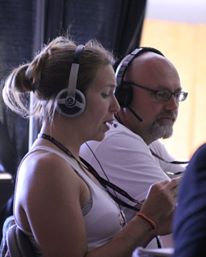
I went to Sting of the Hill to ref, but when I had free time, I got to work with the golden voice of Sweet Willy T. Staying involved kept me happy.

Most of us actually come back to leagues that are happy to have us, and excited we’re back but they’re not throwing parties for us. You should not anticipate a great homecoming or outpouring of affection. Know that people want you there, but they are not going to fall all over you upon your return. For me, it felt like I was transferring in again. I had been gone for almost a year and a half, living on the other side of the state. Many people were still there, but many were new. I have had to re-earn trust, demonstrate commitment, and show that I am healthy and able-bodied.

Just because you had to earn respect among your peers once, don’t think you don’t have to do it again. Just because you were on the A team before, don’t expect them to just save you a space; always expect to work for it.

Be hungry to work for it.

acl
From the moment I found out I was going to have surgery, I focused on the end goal of returning to play. Stay hungry.

If there’s anything I’ve learned from coming back it’s that you’ve gotta have a plan of recovery for after each practice day. Incorporate yoga before you come back. If you’re tight when you show up, it’s just going to get worse for you. Keep doing your PT every day. Incorporate new PT as your back, hips, and legs tighten and react to the new world of pain. Drink all the water now, so that you’re already hydrated when you get to practice down the road. If you haven’t flipped or rotated your mattress in a while – DO IT. It can make a world of difference. If your pillow is too small or flat, go to Marshall’s and nab a new one. It’s worth the $15.

Get a tennis ball, lacrosse ball, and make a foam roller out of PVC pipe. Use them liberally.

Use this time to get new gear. What hasn’t been replaced in a year? Get a new one. Just do it. Also, pick up some compression gear and impact gear; obviously I’m a big fan of Steaks Roller Derby Accessories. If you have been contemplating shin guards, go check out the soccer goodness of ArmourFlex Sport.

Cross train. Pick up a sport other than derby. Be smart about your choices, but doing something more than just skating will help your body be strong in many ways. Weights. Plyo. Sprints. Other sport. (I am fond of rock climbing personally)

Eat after practice (your body needs the supplies to rebuild your muscles), and eat in the morning (your body needs to be fed after the 7-9 hours of rest). Meal supplements, post-workout shakes, electrolyte support, multivitamins, other vitamins … you may think it’s hogwash, but I can promise you it helps. Your body needs calories, protein, fats, fiber, and carbs to keep up your energy and performance. Drop me a line at DerbyAmerica@gmail.com if you want to talk nutrition and supplement support.

14055115_10157317457075494_6299933838257533843_n

Most importantly:

EMBRACE THE FUN OF THE GAME.

I really feel that those of us who have come back from long injuries have a really great appreciation for the sport that we get to play, and we should cherish each moment that we get to execute on roller skates. I know that once my nerves about my leg subsided, I settled into really loving and executing. Yes, I still get frustrated with myself, but I am also way quicker to laugh and smile when my team mate levels me or pushes me out of bounds.

13902701_10157220895670494_4940577068614876627_n
The game and the people in it are way too much fun to be a seriouz face all the time! Laugh and love your sport!


I love this game. You have to love it to suffer an injury and spend the next year and a half obsessing to jump back in. Good luck, Fellow Gimps! If you have anything you’ve learned along the way, or tips on how you came back to sport from injury, please share in the comments!!

Do you love Khaos Theory? I need your help to keep it running! I pay for it out of pocket and the domain name is coming up for renewal! Want to help keep it going?
Donate Now Button
 (KTD only needs $65 to keep going!! This year I want to expand into video recipes and more HOW TO’s!)

Thank you, Phantom Photographics, for the pictures used in this blog. (Go buy photos or a shirt from him)

Phantom Photograhics